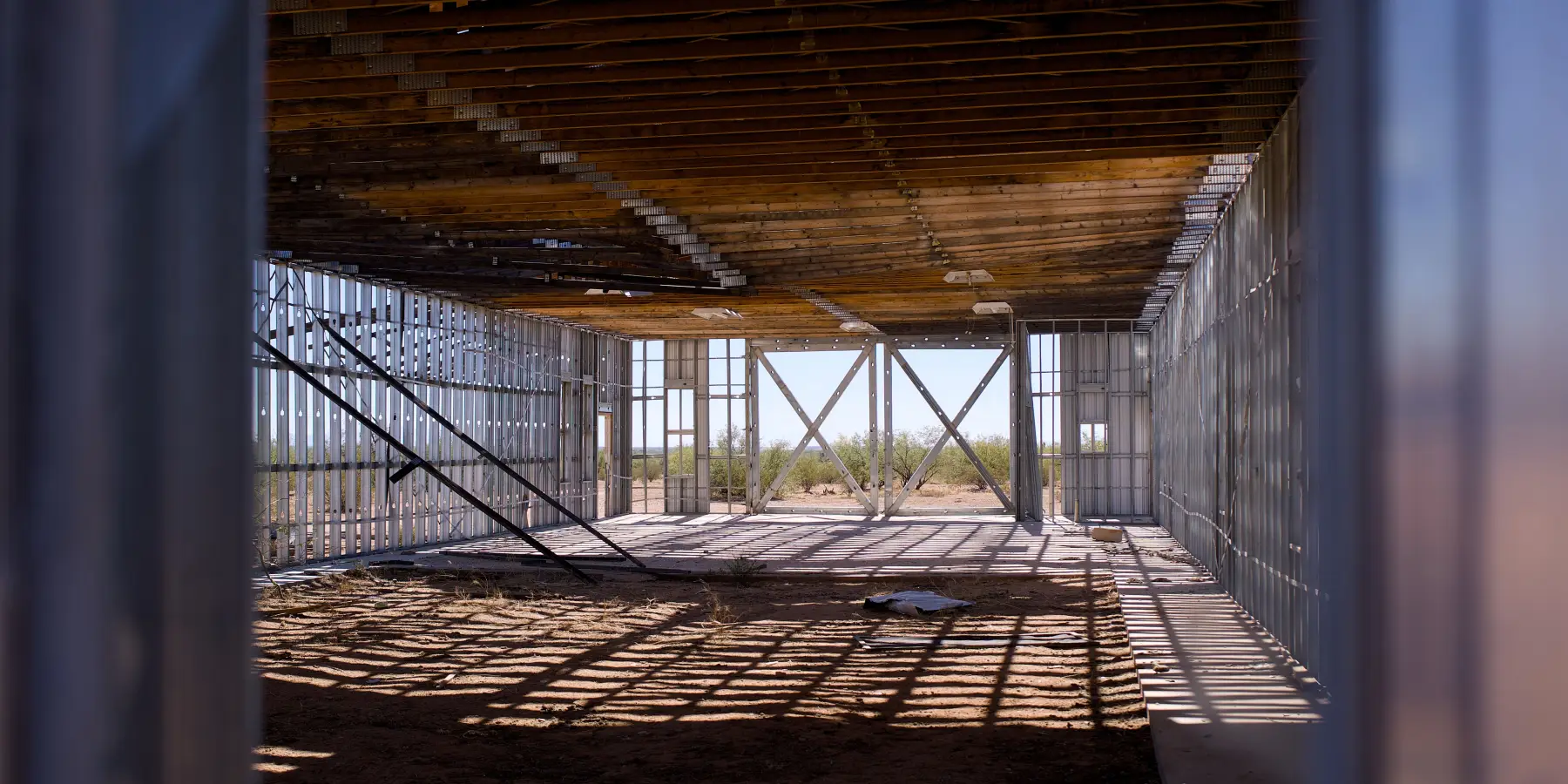
Reference
Metal stud sizes
A steel stud is sized three ways: how deep its web is, how wide its flanges are and how thick the steel is. The depth sets the wall thickness; the steel decides whether the wall can carry a load.
What are the standard metal stud sizes? Non-structural metal studs come 1⅝, 2½, 3½, 3⅝, 4, 5½ and 6 in deep (and 8 in from 33 mil) with 1¼ in (32 mm) flanges; structural studs run to 14 in with 1⅜ in flanges and up. A 3⅝ in stud (92 mm) stands in for a 2x4 (3½ in) and a 6 in stud (152 mm) for a 2x6 (5½ in). Standard steel runs from 18 mil (25 gauge) to 118 mil.
What are the standard metal stud sizes? (steel stud sizes chart)
The depth of the web is the size a stud is sold by. Non-structural studs, for interior walls that carry no load, are made from 1⅝ to 6 in deep in every thickness and 8 in deep from 33 mil; structural studs from 2½ to 14 in, in the thickness ranges below. The size code is the depth in hundredths of an inch, so 362 is a 3⅝ in stud.
| Web depth | Size code | Non-structural | Structural thickness | Wood stud of the same wall |
|---|---|---|---|---|
| 1⅝ in (41 mm) | 162 | Yes | — | — |
| 2½ in (64 mm) | 250 | Yes | 33–68 mil | — |
| 3½ in (89 mm) | 350 | Yes | 33–68 mil | 2x4 (3½ in) |
| 3⅝ in (92 mm) | 362 | Yes | 33–97 mil | 2x4 (3½ in) |
| 4 in (102 mm) | 400 | Yes | 33–97 mil | — |
| 5½ in (140 mm) | 550 | Yes | 33–97 mil | 2x6 (5½ in) |
| 6 in (152 mm) | 600 | Yes | 33–97 mil | 2x6 (5½ in) |
| 8 in (203 mm) | 800 | 33 mil only | 33–97 mil | — |
| 9¼ in (235 mm) | 925 | No | 43–97 mil | — |
| 10 in (254 mm) | 1000 | No | 43–97 mil | — |
| 12 in (305 mm) | 1200 | No | 54–97 mil | — |
| 14 in (356 mm) | 1400 | No | 54–97 mil | — |
Metal stud dimensions are depth × flange: a 3 5/8 metal stud measures 3⅝ × 1¼ in with ¼ in lips (362S125); a 6 inch metal stud is 6 × 1¼ in (600S125) or, structural, 6 × 1⅝ in (600S162). The IRC's prescriptive steel walls use the 3½ in and 5½ in studs (350S162 and 550S162), the same depth as a 2x4 and a 2x6, so a steel wall drawn from a wood plan keeps its thickness. The 3⅝ and 6 in steel studs are ⅛ in and ½ in deeper than the wood they stand in for.
Metal stud gauge chart: mils, gauge and thickness
Steel framing is specified in mils, thousandths of an inch of bare steel; the gauge number is the older name still used in stores. The mil figure is the minimum the steel may measure, which is 95% of the design thickness engineers calculate with. Note that two different studs are both called 20 gauge.
| Mils | Gauge | Minimum thickness | Design thickness | Used as |
|---|---|---|---|---|
| 18 mil | 25 | 0.0179 in (0.45 mm) | 0.0188 in (0.48 mm) | Non-structural |
| 27 mil | 22 | 0.0269 in (0.68 mm) | 0.0283 in (0.72 mm) | Non-structural |
| 30 mil | 20 (drywall) | 0.0296 in (0.75 mm) | 0.0312 in (0.79 mm) | Non-structural |
| 33 mil | 20 (structural) | 0.0329 in (0.84 mm) | 0.0346 in (0.88 mm) | Non-structural or structural |
| 43 mil | 18 | 0.0428 in (1.09 mm) | 0.0451 in (1.15 mm) | Structural |
| 54 mil | 16 | 0.0538 in (1.37 mm) | 0.0566 in (1.44 mm) | Structural |
| 68 mil | 14 | 0.0677 in (1.72 mm) | 0.0713 in (1.81 mm) | Structural |
| 97 mil | 12 | 0.0966 in (2.45 mm) | 0.1017 in (2.58 mm) | Structural |
| 118 mil | — | 0.1180 in (3.00 mm) | 0.1242 in (3.15 mm) | Structural |
Non-structural studs (18 to 33 mil) are for interior walls that carry no load; a load-bearing or exterior wall needs a structural stud, and the IRC never lets an exterior steel stud go under 33 mil. Most non-structural studs are now EQ studs — 90% of those produced in the US, by the Steel Framing Industry Association's 2018 count: thinner, higher-strength steel with stiffening ribs, tested to perform like the standard stud. A "20 gauge EQ" stud is not 20 gauge steel, and its thickness varies by maker, so order them by mils:
| Sold as | Example steel (varies by maker) | Design thickness | Example |
|---|---|---|---|
| 25 gauge EQ | 15 mil | 0.0158 in (0.40 mm) | ClarkDietrich ProSTUD 25 |
| 20 gauge EQ | 18 mil | 0.0190 in (0.48 mm) | ClarkDietrich ProSTUD 20 |
How do you read a metal stud size like 362S125-18?
Formula: web depth = first number ÷ 100, the letter is the shape (S stud, T track, U channel, F furring), flange width = second number ÷ 100, and the last number is the steel thickness in mils, thousandths of an inch. Worked figure: 362S125-18 = 362 ÷ 100 = 3.62, a 3⅝ in web; 125 ÷ 100 = 1¼ in flanges; 18 mil = 0.0179 in minimum (0.0188 in design), the 25 gauge non-structural stud.
| Letter | Member |
|---|---|
| S | Stud or joist (C-shape with lips) |
| T | Track (no lips; holds the studs top and bottom) |
| U | Channel (cold-rolled, no lips) |
| F | Furring channel (hat shape) |
This is the industry-standard designator, published by the Steel Stud Manufacturers Association and AISI and used in US makers' catalogs. Track is read the same way, but its depth is measured inside, so it takes a stud of the same number: 362T125 track holds 362S125 studs.
Metal stud track sizes and flange widths
| Flange | Code | Return lip | Used on |
|---|---|---|---|
| 1¼ in (32 mm) | 125 | ¼ in | Nonstructural studs |
| 1⅜ in (35 mm) | 137 | ⅜ in | Structural studs |
| 1⅝ in (41 mm) | 162 | ½ in | Structural studs; the IRC prescriptive stud |
| 2 in (51 mm) | 200 | ⅝ in | Structural studs |
| 2½ in (64 mm) | 250 | ⅝ in | Structural studs |
| 3 in (76 mm) | 300 | ⅝ in | Structural studs, 6 in deep and up |
The lip is the short return on the flange edge that stiffens it; some makers' tables give 0.188 in rather than ¼ in on the 1¼ in stud. The 2012 IRC (Table R603.2(1)) set a 1⅝ in minimum flange and ½ in lip for load-bearing studs; the 2021 code points to AISI S230 for dimensions. Track — the U-shaped runner at the floor and ceiling — has no lip; it comes with 1¼ in legs as standard, and 1½ in and 2 in deep-leg track is also made, in 10 ft lengths.
Metal vs wood stud sizes
| Stud | Depth | Wall with ½ in drywall each side |
|---|---|---|
| 2x4 wood | 3½ in (89 mm) | 4½ in (114 mm) |
| 3⅝ in steel (362) | 3⅝ in (92 mm) | 4⅝ in (117 mm) |
| 2x6 wood | 5½ in (140 mm) | 6½ in (165 mm) |
| 6 in steel (600) | 6 in (152 mm) | 7 in (178 mm) |
Drywall is screwed through the steel stud's flange, and on light steel that takes fine-thread screws, sized in the drywall screw size guide. A wood stud's actual size is in the lumber sizes guide, and the wall framing calculator counts wood studs for a wall.
Metal stud weight per foot
| Stud | Per foot | 10 ft stud |
|---|---|---|
| 362S125-18 (3⅝ in, 18 mil) | 0.40 lb (0.60 kg/m) | 4.0 lb (1.8 kg) |
| 362S125-30 (3⅝ in, 30 mil) | 0.66 lb (0.98 kg/m) | 6.6 lb (3.0 kg) |
| 362S162-33 (3⅝ in, 33 mil) | 0.89 lb (1.32 kg/m) | 8.9 lb (4.0 kg) |
| 600S162-43 (6 in, 43 mil) | 1.52 lb (2.26 kg/m) | 15.2 lb (6.9 kg) |
| 600S162-54 (6 in, 54 mil) | 1.89 lb (2.81 kg/m) | 18.9 lb (8.6 kg) |
| ProSTUD 25 EQ, 362PDS125-15 (3⅝ in, 15 mil) | 0.35 lb (0.52 kg/m) | 3.5 lb (1.6 kg) |
| ProSTUD 20 EQ, 362PDS125-18 (3⅝ in, 18 mil) | 0.43 lb (0.64 kg/m) | 4.3 lb (1.9 kg) |
What you'll need to frame with metal studs
| Item | What it's for |
|---|---|
| Aviation snips Amazon | Cutting studs and track to length |
| Stud crimper Amazon | Crimping a stud to the track to hold it, in place of a screw where that is allowed |
| #8 × ½ in pan-head framing screws Amazon | Stud to track, steel to steel |
| Locking C-clamp pliers Amazon | Holding stud and track together while you drive the screw |
| #6 × 1 in fine-thread drywall screws Amazon | ½ in drywall on light steel studs |
As an Amazon Associate I earn from qualifying purchases.
Count studs and track for a partition →Figures: SSMA Product Technical Information (ICBO ER-4943P, 2001): the industry-standard designator (also published by AISI) — web depth and flange width in hundredths of an inch, S stud or joist, T track, U channel, F furring channel, thickness in mils (thousandths of an inch) of minimum base steel; track depth is measured inside to inside. ICC-ES ESR-3064P (SSMA cold-formed steel framing, reissued March 2025) §5.2: minimum base-steel thickness is 95% of the design thickness. SFIA Technical Bulletin, Measuring Best Practices for the SFIA Code Compliance Certification Program (April 15, 2025), Tables 1 and 2: minimum and design base-steel thickness of nonstructural (18, 27, 30, 33 mil) and structural (33 to 118 mil) members (no reference gauge is given for 118 mil); reference gauges from the SSMA Product Technical Information and MBA Building Supplies Drywall Studs & Track product data. Nonstructural studs are for interior non-load-bearing walls only (MBA product data; ESR-3064P §5.4: 10 psf or less). Standards: AISI S220 (nonstructural, formerly ASTM C645) and AISI S240 (structural, formerly ASTM C955), as ClarkDietrich labels cite them. SFIA Tech Bulletin Vol. 2 No. 3, Limiting Heights for Nonstructural Standard and EQ Wall Studs (March 2018): EQ studs are thinner, higher-strength, stiffened studs with performance equivalent to standard studs, approved under IBC 104.11 and tested to ICC-ES AC86, EQ studs represent 90 percent of the nonstructural steel studs produced in the United States. ClarkDietrich submittals: ProSTUD 25 (362PDS125-15) 15 mil, design 0.0158 in, 50 ksi; ProSTUD 20 (362PDS125-18) 18 mil, design 0.0190 in, 70 ksi. CFSEI technical note What is an EQ Stud? (Walls & Ceilings, October 2023): specify EQ studs by mils, not gauge. The mil thickness of an EQ stud varies by manufacturer. ClarkDietrich, Product Information: How to Identify Our Products (effective 06/01/24): web depths 1-5/8 to 14 in and the thickness ranges made in each; SSMA Product Technical Guide, Nonstructural (S) Section Properties, for the 1-5/8 in nonstructural stud and the 8 in nonstructural stud, listed from 33 mil only (ClarkDietrich and MBA drywall studs stop at 6 in). IRC 2021 R603.3.2 prescriptive load-bearing walls use 350S162 and 550S162. ClarkDietrich, Product Information: How to Identify Our Products (effective 06/01/24) and SSMA Product Technical Information: flange widths and return lips. The 1-1/4 in nonstructural lip is 1/4 in at ClarkDietrich but 0.188 in per the SSMA 2001 and MBA tables. Track: SSMA Product Technical Information track tables (T125, T150 and T200 legs; MBA's drywall track list is T125 and T200); ClarkDietrich TRAKLOC catalog and Dietrich's DIY partition guide (track sold in 10 ft lengths). Gross-section weight per foot: SSMA Product Technical Guide, Nonstructural (S) Section Properties (362S125-18, 362S125-30); SSMA Product Technical Information (362S162-33, 600S162-43, 600S162-54); ClarkDietrich submittals (600S162-54 matches; ProSTUD 25 0.348 and ProSTUD 20 0.428 lb/ft). IRC 2021 R603.3.2 (minimum stud sizes for cold-formed steel load-bearing walls, Tables R603.3.2(2) to R603.3.2(16)): 350S162 and 550S162 studs at 16 or 24 in on center, 33 to 68 mil by wind and snow load, walls 8 to 10 ft; exterior studs never under 33 mil; dimensions per AISI S230. IRC 2012 Table R603.2(1): minimum flange 1.625 in, minimum lip 0.5 in. Wood stud sizes: Nominal and dressed sizes: American Softwood Lumber Standard, Voluntary Product Standard PS 20-20, Table 3 (dry and green dressed sizes). Standard lengths: PS 20, WWPA and SPIB grading rules — dimension lumber in 2 ft steps, normally 8 to 24 ft. Weights per foot: USDA Forest Products Laboratory Wood Handbook (FPL-GTR-282) and NDS Supplement specific gravities at about 12% moisture content — spruce-pine-fir about 28 lb/ft³, Douglas fir-larch 34, southern yellow pine 38 — multiplied by the dressed cross-section; wet pressure-treated southern pine at about 57 lb/ft³ from Southern Forest Products Association and treater shipping weights (an 8 ft 2x4 at 15–18 lb). Pre-cut stud lengths: retailer stud listings; the 1964 dressed-size change: PS 20 history. Accessed 2026-10-14.
Good to know
Questions, answered
Interior walls that carry no load use non-structural studs, 1⅝, 2½, 3½, 3⅝, 4, 5½ and 6 in deep with 1¼ in flanges. 3⅝ in stands in for a 2x4 wall and 6 in for a 2x6 wall.
Non-structural studs: 18 mil (25 gauge) to 33 mil (20 gauge structural), or the EQ studs most makers now produce, which are thinner high-strength steel tested to perform like them. Load-bearing and exterior walls need structural studs, 33 mil and up.
It does the same job, but it is ⅛ in deeper: 3⅝ in against the 2x4's 3½ in. A 3½ in steel stud (code 350) matches the 2x4 exactly.
25 gauge is 18 mil steel (0.0179 in); 20 gauge is either the 30 mil drywall stud (0.0296 in) or the 33 mil structural stud (0.0329 in). The 30 mil stud is non-structural; 33 mil is made as either. Thicker steel lets a non-structural wall run taller.
Track is sold in 10 ft lengths, with 1¼ in legs as standard and 1½ or 2 in deep legs.
Tools for the job
What makes this job easier
Tools and materials that suit this kind of job. These are affiliate links: if you buy through one, Renovimo may earn a commission at no extra cost to you. It never changes the figures on this page.
 Dovoh
360° laser level with plumb dots
Transfers the floor track straight up to the ceiling, so a new wall stands plumb.
Check price
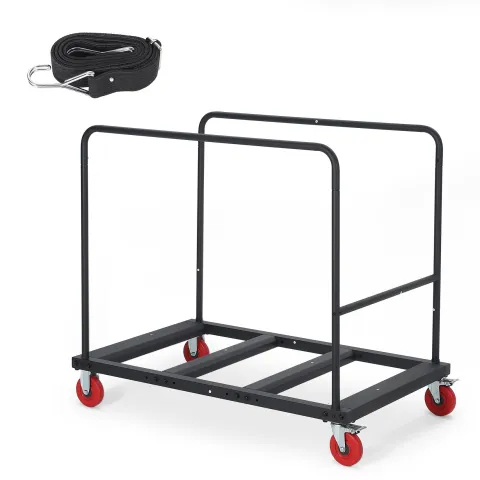 Garvee
Drywall panel cart
Moves a stack of sheets from the door to the room without carrying them one by one.
Check price
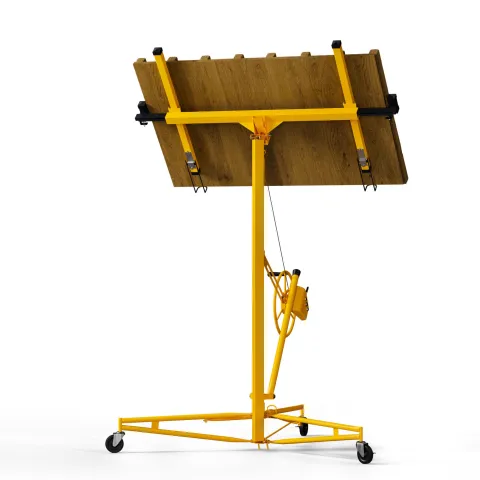 Garvee
Drywall lift, 11 ft
Holds a full sheet against the ceiling while you screw it off — one person can hang a ceiling.
Check price
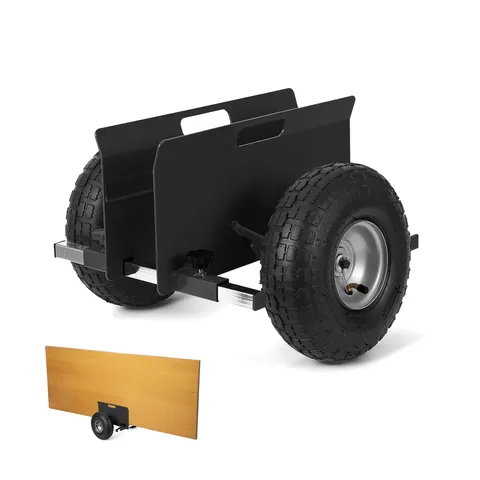 Garvee
Panel dolly, 600 lb
Wheels full sheets of drywall and plywood through the house on edge.
Check price
 Garvee
20V cordless hammer drill
Drills masonry and concrete for anchors, and drives screws everywhere else.
Check price
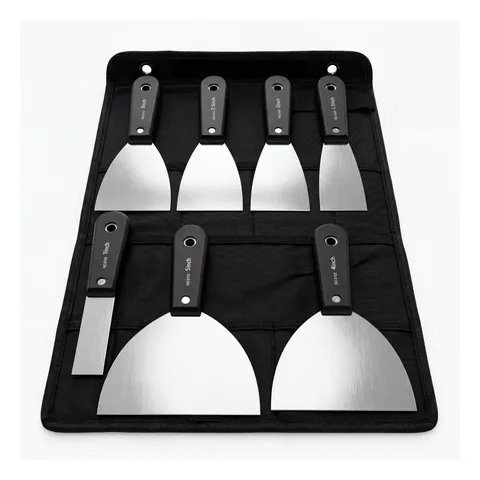 Garvee
Putty knife set, 1–5 in
Taping knives for mudding joints and filling holes before paint.
Check price
Not the tool you were after? Browse the whole range at Dovoh or Garvee — the stores these picks come from.