Reference
Deck mud mix ratio and coverage
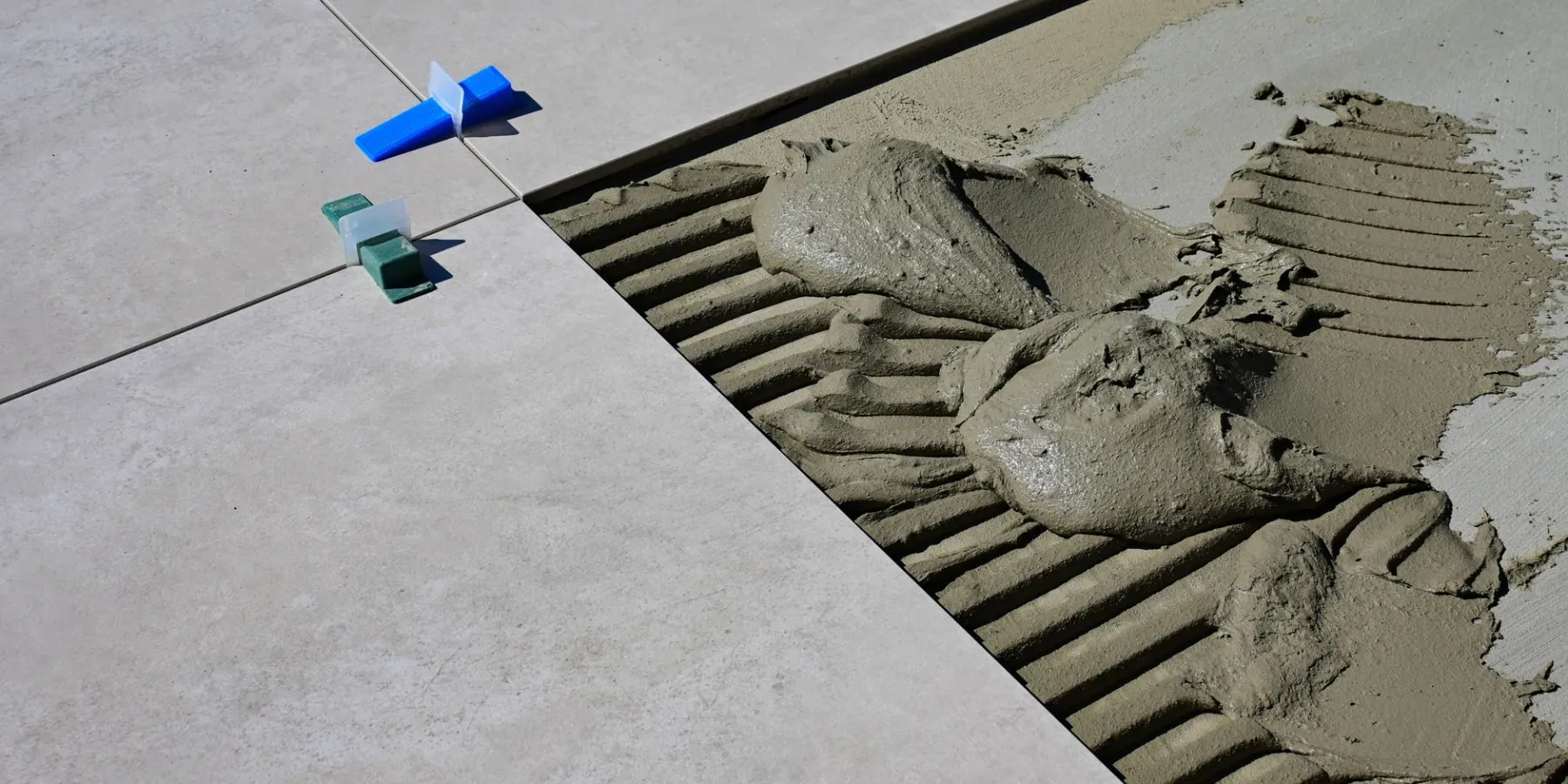
Deck mud — also called floor mud, dry pack or a mortar bed — is a stiff, barely damp mix of portland cement and sand that is packed and screeded flat (or sloped to a drain) before tile goes down. It is not thinset and not self-leveler: it holds whatever shape you float it to.
What is the deck mud ratio? 1 part portland cement to 5 parts damp sand by volume for a floor. A 80 lb bag of pre-mixed floor mud yields 0.66 cu ft — about 7.9 sq ft at 1 in thick and 5.3 sq ft at 1-1/2 in, the shower floor minimum at the drain.
Deck mud coverage chart: square feet per bag
Coverage is the bag's yield spread over the bed thickness, so halving the thickness doubles the area. Yields are from the QUIKRETE Floor Mud data sheet: 0.66 cu ft per 80 lb bag and 0.5 cu ft per 60 lb bag. For another brand, divide its stated yield the same way.
| Bed thickness | 80 lb bag covers | 60 lb bag covers | 80 lb bags per 100 sq ft |
|---|---|---|---|
| 3/4 in · 19 mm | 10.6 sq ft · 0.98 m² | 8 sq ft · 0.74 m² | 9.5 |
| 1 in · 25 mm | 7.9 sq ft · 0.74 m² | 6 sq ft · 0.56 m² | 12.6 |
| 1-1/4 in · 32 mm | 6.3 sq ft · 0.59 m² | 4.8 sq ft · 0.45 m² | 15.8 |
| 1-1/2 in · 38 mm | 5.3 sq ft · 0.49 m² | 4 sq ft · 0.37 m² | 18.9 |
| 2 in · 51 mm | 4 sq ft · 0.37 m² | 3 sq ft · 0.28 m² | 25.3 |
Round up to whole bags and keep one spare: a sloped bed is thicker at the walls than at the drain, and screeding always leaves some on the floor.
Deck mud mix ratio
Proportions are by volume — buckets or shovels, not weight. Mix it stiff: squeezed in a fist it should hold its shape without water running out, and it should not slump when packed.
| Mix | Portland cement | Sand | Notes |
|---|---|---|---|
| Floor mortar bed (deck mud) | 1 | 5 damp parts | The ANSI A108.1A floor mix; up to 1/10 part hydrated lime is allowed. |
| Shower receptor bed | 1 | 4 damp parts | The richer mix NTCA gives for shower floors under ANSI A108.1A. |
| IBC floor setting bed | 1 | 5 dry or 6 damp parts | IBC Table 2103.2.3. NTCA calls 1:6 damp sand a low-strength, unstable bed; most setters stay at 1:5. |
| Bagged floor mud | — | — | Pre-blended: add water only — about 8 pints per 80 lb bag. |
For a bagged mix, the data sheet asks for about 8 pints of water per 80 lb bag (6 per 60 lb) and never more than 11 pints. Swapping 4 pints of that water for an acrylic mortar admix improves bond and water resistance. Bagged floor mud reaches a typical 5,000 psi at 28 days.
How thick should a mortar bed be?
| Bed | Minimum | Maximum |
|---|---|---|
| Bonded to a concrete slab (TCNA F112) | 3/4 in · 19 mm | — |
| Unbonded, wire-reinforced over a cleavage membrane (TCNA F111) | 1-1/4 in · 32 mm | 2 in · 51 mm; thicker must be specified by a designer |
| Shower receptor, at the drain (ANSI A108.1A) | 1-1/2 in · 38 mm | — |
The unbonded bed is thicker because the wire mesh has to sit inside it with mortar on both sides. In a shower, the mud is sloped toward the drain at 1/4 in per foot, so the thickness at the walls is the drain minimum plus the slope. A bed packed in several lifts can split between them, which is why TCNA wants anything over 2 in designed rather than improvised; for thin flattening, a self-leveling underlayment is the better product.
How much deck mud for a shower pan?
This is a single bed that creates the slope — a pre-slope under a liner, or the one bed under a bonded waterproofing membrane. Over a liner that is already pre-sloped, the top bed is a uniform thickness and has no slope term. Take a 3 × 5 ft shower (15 sq ft) with a centre drain, 1-1/2 in of mud at the drain and a level perimeter. The farthest wall is 2.5 ft from the drain, so at 1/4 in per foot the bed rises 0.625 in, to 2.125 in at the walls.
- Flat part: 15 sq ft × 1-1/2 in ÷ 12 = 1.88 cu ft.
- Slope: 15 sq ft × 0.625 in ÷ 12 × 2/3 = 0.52 cu ft (the slope fills two thirds of a slab of that height).
- Total 2.4 cu ft ÷ 0.66 = 4 bags of 80 lb, or 5 bags of 60 lb.
A traditional pan over a liner has two beds — the pre-slope and the bed on top — so count both. The shower tile calculator works out the tile, thinset and grout for the walls and floor on top, and the tile calculator does the same for a room floor.
Count your tile →How long before you can tile over deck mud?
Tile can go onto deck mud the same day while it is still plastic (the wet-set method, ANSI A108.1A) or onto a cured bed with thinset (A108.1B). A cured bed should be kept damp for 5 days at 70 °F or warmer, or 7 days at 50–70 °F, and protected from freezing for the first 48 hours. Don't place it below 40 °F or above 100 °F without hot- or cold-weather precautions. Thinset and grout times are in the grout and thinset guide.
Figures: QUIKRETE Floor Mud (No. 1548-81, -82) data sheet, revised April 2024: bag sizes, yields, mixing water, 1/4 in per foot slope in shower receptors, 28-day strength and curing periods. Mix proportions: ANSI A108.1A as answered by NTCA in TileLetter (1 part portland cement to 5 parts damp sand for floors, up to 1/10 part lime; 1 to 4 for shower receptors; 1:6 damp sand gives a low-strength, unstable bed); IBC Table 2103.2.3 floor setting bed, 1 cement to 5 dry or 6 damp sand. Bed thickness: TCNA Handbook F112 (bonded, 3/4 in minimum) and F111 (unbonded, reinforced, 1-1/4 in minimum); TCNA F103B-21 as quoted in TileLetter, unbonded beds 1-1/4 in to 2 in, thicker beds to be specified by the designer; ANSI A108.1A-2.3.6 as cited by CTEF in TileLetter, shower receptor bed 1-1/2 in minimum at the drain. Your mix's data sheet and your local code have the final word.
Good to know
Deck mud questions
About 7.9 sq ft at 1 in thick, 5.3 sq ft at 1-1/2 in and 4 sq ft at 2 in — the bag yields 0.66 cu ft.
5 parts damp sand to 1 part portland cement by volume for a floor bed, with up to 1/10 part lime optional, and 4 to 1 for a shower floor. The building code also lists 6 parts damp sand, but that mix is weak and most tile setters stay at 1:5.
At least 3/4 in for a bed bonded to concrete and 1-1/4 in for an unbonded, reinforced bed, which runs up to 2 in; a shower floor needs 1-1/2 in at the drain.
1/4 in per foot toward the drain, so a wall 3 ft from the drain sits 3/4 in higher than the drain.
About 8 pints (1 gallon) per 80 lb bag, and no more than 11 pints. It should be damp enough to hold a ball when squeezed, not wet.
No. Thinset is a thin adhesive layer that sticks tile down; self-leveler is a pourable underlayment that finds its own level. Deck mud is a packed bed that can be sloped and built up thick.
Tools for the job
What makes this job easier
Tools and materials that suit this kind of job. These are affiliate links: if you buy through one, Renovimo may earn a commission at no extra cost to you. It never changes the figures on this page.
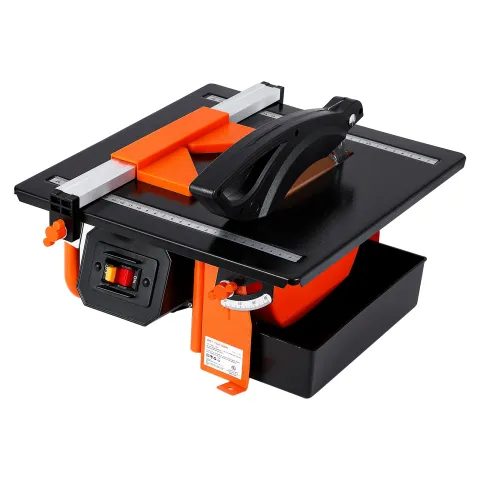 Garvee
7 in wet tile saw
Clean cuts in porcelain and ceramic, including notches around pipes.
Check price
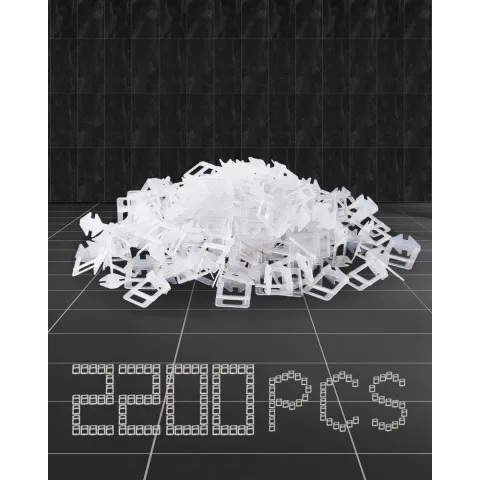 VEVOR
Tile leveling clips, 1/16 in, 2,200 pcs
Pulls neighbouring tile edges flush while the thinset cures, so large-format tile has no lippage.
Check price
 Dovoh
4 × 360° floor laser level
Lines on the floor and all four walls at once: square layout lines and a level reference around the room.
Check price
 GRABO
GRABO tile vibration add-on
Clips on to a GRABO lifter and vibrates big tiles into the thinset, pushing out air so they bed fully with no hollow spots.
Check price
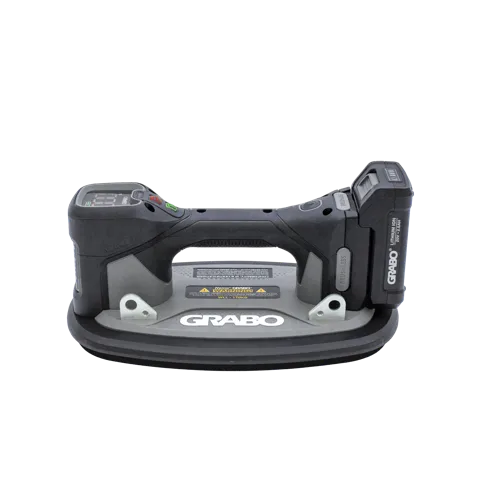 GRABO
GRABO Pro vacuum lifter
Picks up large-format tile, pavers and slabs by suction and sets them down flat, without fingers under the edge.
Check price
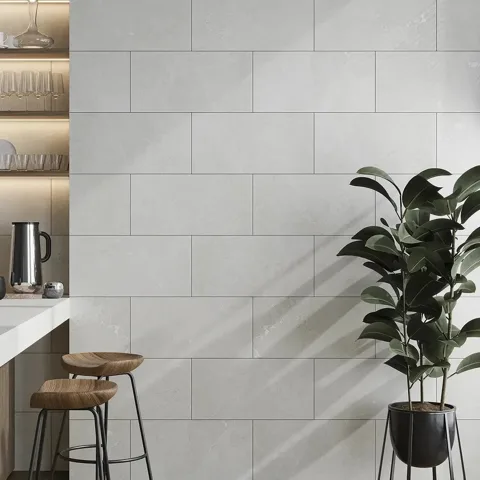 Tile Club
Hoover White Marble porcelain tile, 12 × 24 in
Marble look without the sealing: a porcelain 12 × 24 that works on floors and walls alike.
Check price
Not the tool you were after? Browse the whole range at Garvee, VEVOR, Dovoh, GRABO or Tile Club — the stores these picks come from.