Reference
How much does a gallon of paint cover?
A gallon covers 350 to 400 square feet on a smooth, primed wall — and less than half that on bare block or stucco. The surface decides the number, not the brand and not the sheen. Here is the figure for each surface, the gallon count for common rooms, and the arithmetic that connects them.
Paint coverage per gallon by surface
One US gallon, one coat, over a surface that has already been primed or previously painted. Porous and textured surfaces drink paint: the rougher the face, the more actual area hides behind the same measured square foot.
| Surface | Coverage per gallon | Per litre |
|---|---|---|
| Primed or previously painted drywall | 350–400 sq ft | 8.6–9.8 m² per L |
| New drywall, unprimed | 200–250 sq ft | 4.9–6.1 m² per L |
| Light texture (orange peel) | 300–350 sq ft | 7.4–8.6 m² per L |
| Heavy texture (knockdown, popcorn) | 200–250 sq ft | 4.9–6.1 m² per L |
| Smooth wood, trim and doors | 350–400 sq ft | 8.6–9.8 m² per L |
| Rough-sawn wood siding | 150–200 sq ft | 3.7–4.9 m² per L |
| Sealed concrete or smooth block | 250–300 sq ft | 6.1–7.4 m² per L |
| Bare concrete block (CMU) | 100–150 sq ft | 2.5–3.7 m² per L |
| Brick | 100–150 sq ft | 2.5–3.7 m² per L |
| Stucco | 100–150 sq ft | 2.5–3.7 m² per L |
Sheen moves the number far less than people expect — usually within 25 square feet per gallon. Flat and matte hide more in a single coat; gloss spreads a little farther and shows every defect it crosses. Choose the sheen for the room, then use the surface row above.
How many gallons of paint for a room
Walls only, two coats, 8 ft ceilings, at 350 sq ft per gallon (the figure the paint calculator uses), with one door and one average window deducted. Ceilings are counted separately because they are almost always a different paint.
| Room | Wall area | Two coats | Buy |
|---|---|---|---|
| 10 × 10 ft | 279 sq ft | 558 sq ft | 2 gallons |
| 12 × 12 ft | 343 sq ft | 686 sq ft | 2 gallons |
| 12 × 16 ft | 407 sq ft | 814 sq ft | 3 gallons |
| 14 × 20 ft | 503 sq ft | 1 006 sq ft | 3 gallons |
| 20 × 24 ft | 663 sq ft | 1 326 sq ft | 4 gallons |
How many gallons of paint for 1,500 square feet?
This question has two different answers, and the gap between them is a factor of two. It depends entirely on whether the 1,500 square feet is the wall surface being painted or the floor area of the house.
| What the 1,500 sq ft means | Surface to cover | Two coats |
|---|---|---|
| 1,500 sq ft of measured wall | 1 500 sq ft | 9 gallons |
| A 1,500 sq ft home, walls only | 3 000–3 750 sq ft | 18–22 gallons |
| A 1,500 sq ft home, ceilings too | plus 1 500 sq ft | plus 5 gallons at one coat |
Interior wall area typically runs two to two and a half times the floor area once partitions, hallways and closets are counted. That multiplier is the single biggest source of error in a whole-house estimate, which is why measuring room by room beats scaling from the listing square footage.
The formula for figuring paint
Four steps. Perimeter is measured along the floor, not around the outside of the house, and openings come off only when they are large enough to matter.
paintable = wall area − doors − windows
gallons = (paintable × coats) ÷ coverage
buy = ⌈ gallons ⌉ (one container, not a part of one)
Worked example. A 12 × 16 ft bedroom with 8 ft ceilings: the perimeter is 56 ft, so the walls are 448 sq ft. Take off a 21 sq ft door and a 20 sq ft window and 407 sq ft is left. Two coats is 814 sq ft, and at 350 sq ft per gallon that is 2.3 gallons — which means three, because the last third of a gallon still has to come from somewhere.
Gallons are only half of the shopping list: what a quart, a gallon and a 5 gallon bucket weigh, and how far each one goes, is in the paint can sizes and weights guide.
Run these numbers for your room →Where the gallon goes missing
Four things quietly eat coverage, and none of them appear on the can. New drywall takes a full coat of primer before the finish coat behaves like the table above — paint used as primer costs more and hides less. A strong colour change, especially over or into a deep red, blue or yellow, needs three coats rather than two, and a tinted primer is cheaper than the third coat.
A roller with a longer nap holds more paint and lays it thicker: a 3/4 in nap on texture will use noticeably more than a 3/8 in nap on smooth drywall, which is the same effect the surface rows already describe. And cutting in by brush around trim, corners and ceilings goes on heavier than rolled paint, so a room with a lot of trim runs closer to the low end of every range on this page.
Tools for the job
What makes this job easier
Tools and materials that suit this kind of job. These are affiliate links: if you buy through one, Renovimo may earn a commission at no extra cost to you. It never changes the figures on this page.
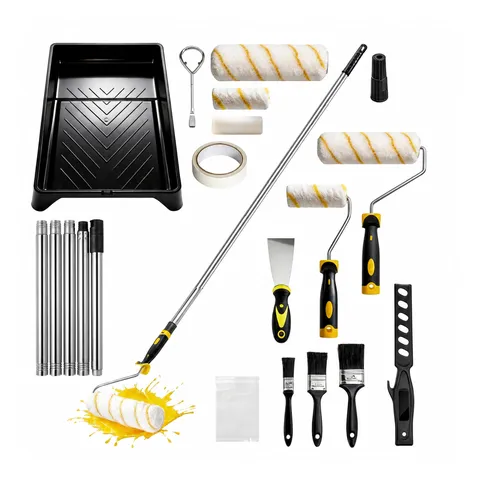 Garvee
House painting kit, 25 pieces
Rollers, tray, pole and drop cloth for one room — the kit the gallon count assumes you already own.
Check price
Garvee
House painting kit, 25 pieces
Rollers, tray, pole and drop cloth for one room — the kit the gallon count assumes you already own.
Check price
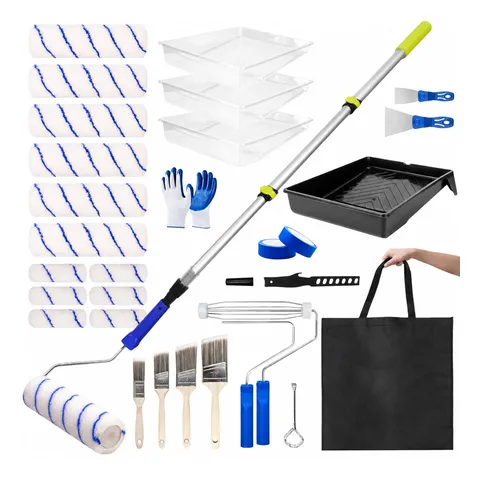 Garvee
Pro paint roller kit, 32 pieces
9 in and 4 in rollers on a telescoping pole, for walls and ceilings without a ladder.
Check price
Garvee
Pro paint roller kit, 32 pieces
9 in and 4 in rollers on a telescoping pole, for walls and ceilings without a ladder.
Check price
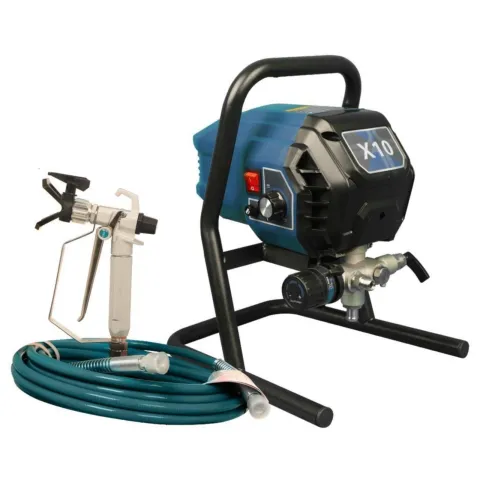 Garvee
Airless paint sprayer, 2900 PSI
Coats whole rooms, fences and siding far faster than a roller.
Check price
Garvee
Airless paint sprayer, 2900 PSI
Coats whole rooms, fences and siding far faster than a roller.
Check price
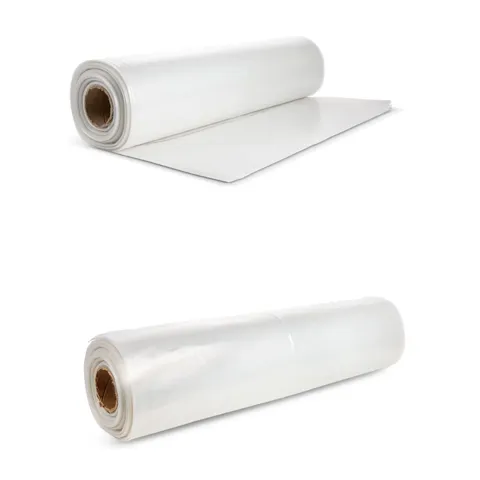 Plastic Place
Poly sheeting, 4 mil, 10 × 100 ft
Covers floors and furniture from spatter, and tapes up as a dust wall across a doorway.
Check price
Plastic Place
Poly sheeting, 4 mil, 10 × 100 ft
Covers floors and furniture from spatter, and tapes up as a dust wall across a doorway.
Check price
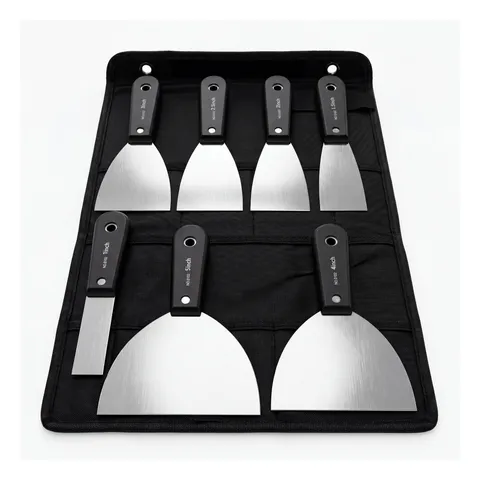 Garvee
Putty knife set, 1–5 in
Taping knives for mudding joints and filling holes before paint.
Check price
Garvee
Putty knife set, 1–5 in
Taping knives for mudding joints and filling holes before paint.
Check price
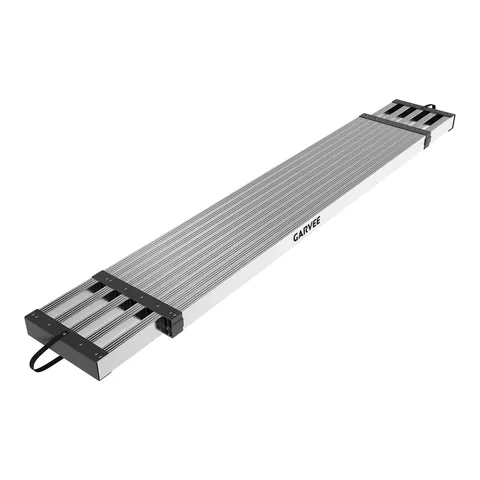 Garvee
Telescoping scaffold plank, 69–112 in
Spans two ladders for ceilings, crown and the top of the wall.
Check price
Garvee
Telescoping scaffold plank, 69–112 in
Spans two ladders for ceilings, crown and the top of the wall.
Check price
Not the tool you were after? Browse the whole range at Garvee or Plastic Place — the stores these picks come from.