
Trim paint calculator
Trim paint calculator:
quarts by the linear foot
Trim is long and thin, so it is measured in feet and bought in quarts. Enter the baseboard length, how many doors and windows you have, and any crown or chair rail, and get the enamel, the primer and the caulk. Leave the rest empty and it works as a baseboard paint calculator.
Enter the trimOptional
What will it cost?
Every material the calculator worked out gets its own price. Each field starts at a typical US figure so you have something to work from — change any of them to what your own supplier charges.
These prices are approximate. They are national US retail figures, and what you actually pay varies with your region, your supplier, the season and how much you buy at once. Treat them as a starting point, not a quote — always price the job from your own supplier's current figures before you order.
Your prices
More in this series
The rest of the paint job
Each surface is bought as a different product. Work out the ones you are doing before the trip to the store.
- Paint Calculator Wall and ceiling paint, primer, rollers and tape
- Ceiling Paint Calculator Ceiling paint, stain-blocking primer, roller covers and tape
- Exterior Paint Calculator Gallons of exterior paint and primer by siding type, trim paint, rollers, brushes and tape
- Siding Calculator Squares of siding, panels and boxes of vinyl or planks of fiber cement, J-channel, starter strip, corner posts and nails
- Cabinet Paint Calculator Quarts of cabinet enamel and primer for doors, drawers and frames, foam rollers, brushes and degreaser
- Fence Stain Calculator Gallons of stain or paint for both sides of a fence and its posts, by fence type and wood condition
- Primer Calculator Gallons of primer by surface and primer type, with the coats each surface needs, rollers and brushes
- Door Paint Calculator Quarts of enamel and primer for interior and front doors, one or both sides, with frames, brushes and foam rollers
- Paint Coverage per Gallon What a gallon covers on each surface, and gallons for common rooms
- Paint Sheen Chart Flat to gloss: durability, where each finish belongs, and the comparisons
- Paint Drying and Recoat Times Dry to the touch, recoat and cure times for latex, oil-based, primer, polyurethane and stain, and how weather changes them
- Spray Paint Drying Times Dry, handle, recoat and cure times for spray paint by type and surface, and how many cans a job takes
- How Many Coats of Paint and Primer Coats by color change and surface, how long to wait between coats, and coats of polyurethane and stain
- Primer Coats and Coverage How many coats of primer each surface needs, coverage per gallon by primer type, and how long each takes to dry
- Vinyl Siding Sizes and Squares What a square of siding is, vinyl panel lengths and pieces per box, Hardie and LP plank sizes, and trim per square
- Paint Can Sizes and Weights What a quart, gallon and 5 gallon bucket of paint weigh and how many square feet each one covers
Tools for the job
What makes this job easier
Tools and materials that suit this kind of job. These are affiliate links: if you buy through one, Renovimo may earn a commission at no extra cost to you. It never changes the figures on this page.
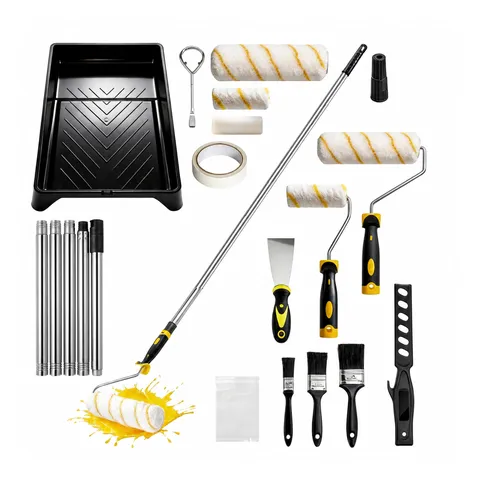 Garvee
House painting kit, 25 pieces
Rollers, tray, pole and drop cloth for one room — the kit the gallon count assumes you already own.
Check price
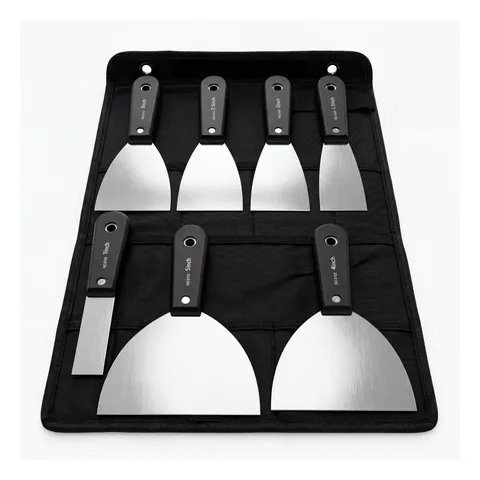 Garvee
Putty knife set, 1–5 in
Taping knives for mudding joints and filling holes before paint.
Check price
 Garvee
6 in random orbital sander
Smooths stair treads, rails and trim before finishing.
Check price
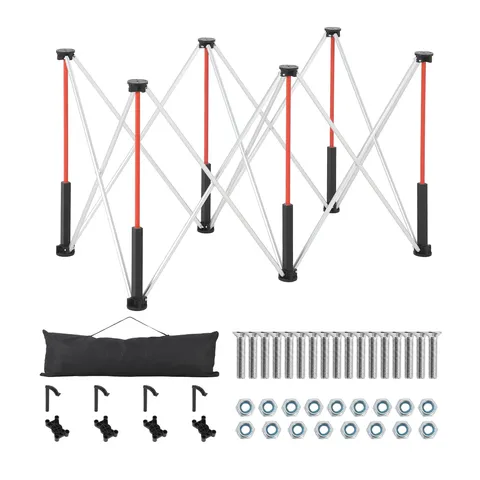 Garvee
Folding workbench, 4 × 2 ft
A cutting and mixing station that folds flat between jobs.
Check price
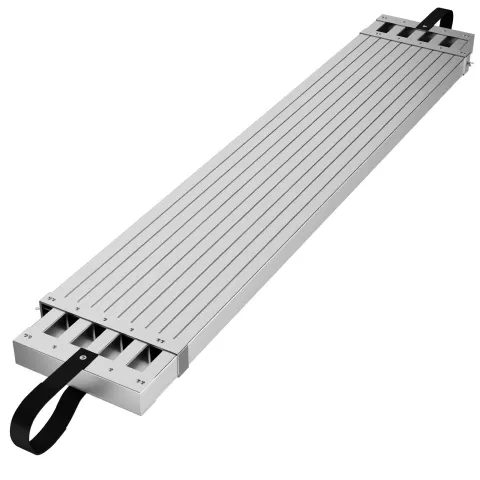 Garvee
Telescoping work platform
Spans two ladders or steps for ceilings, upper walls and stairwells.
Check price
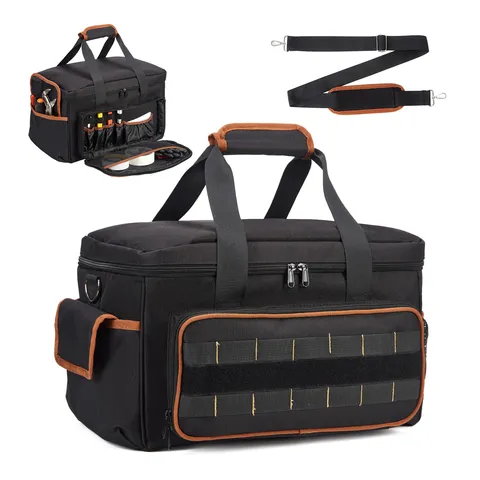 Garvee
Tool bag, 17 in
Keeps the tape, knife, screws and chalk line together on the job.
Check price
Not the tool you were after? Browse the whole range at Garvee — the store these picks come from.

Based on your result
What you'll need
Quantities update after every calculation. One good angled brush does the whole job; caulk the top edge of the trim before the second coat.
- Trim enamel
- Quarts for every coat, semi-gloss or satin
- Calculate above
- Primer
- Only for bare wood, MDF or a color change
- —
- Angled sash brush Amazon
- 2 in, for cutting in and the profile detail
- 1 brush
- Painter's tape Amazon
- Along the floor and the wall edge
- —
- Paintable caulk Amazon
- Top edge of the trim and the miter joints
- —
As an Amazon Associate I earn from qualifying purchases.
The maths
How much paint for trim and baseboards?
Each kind of trim is a long, narrow strip: its length times its width, in square feet. Doors and windows are counted, not measured: a 32 × 80 in door cased on both sides takes about 33 ft of 3½ in casing (2 sides × two 80 in legs, plus a head of 32 in and a casing on each end), and a 36 × 48 in window takes about 15 ft on the room side (two 48 in legs, a head and a stool/apron, each 36 in plus a casing on each end). Add the strips, apply the coats and divide by what a gallon of enamel covers. The profile's relief adds a little surface the paint sheets ignore, so the answer runs slightly generous.
square feet = Σ trim length × trim width ÷ 12
quarts = ⌈ square feet × coats ÷ 350 × 4 ⌉
caulk = ⌈ total feet ÷ 50 ⌉ tubes
Primer for bare wood or MDF is counted at 250 sq ft per gallon, since raw trim soaks it up; the primer calculator has the coverage of each primer type.
- 01
Measure the baseboard, count the openings
Measure the baseboard along the walls, or enter the room size and take the perimeter less the doors. Count the doors and windows, since the calculator works out their casing. Add any crown or chair rail by the foot.
- 02
Pick the stock width
Baseboard is usually 3¼, 5¼ or 7¼ in, casing 2¼ or 3½ in, crown 3⅝ or 5¼ in; chair rail is counted at 2½ in. Pick Custom width for anything else.
- 03
Trim is bought in quarts
Two coats on 100 ft of 5¼ in baseboard is one quart, so most rooms need a single quart and a whole house one to four gallons, depending on its size.
- 04
Caulk before the second coat
Fill the gap along the top edge and the miter joints once the first coat is dry, then paint over it. One tube covers about 50 ft of joint.
Coverage
Trim paint calculator by linear foot
Quarts of trim enamel for two coats, at 350 sq ft a gallon.
| Feet of trim | 3¼ in baseboard | 5¼ in baseboard | 3½ in casing |
|---|---|---|---|
| 50 ft | 1 quart | 1 quart | 1 quart |
| 100 ft | 1 quart | 1 quart | 1 quart |
| 200 ft | 2 quarts | 2 quarts | 2 quarts |
| 400 ft | 3 quarts | 4 quarts | 3 quarts |
The trim calculator counts the boards; this one paints them. Waiting between coats? See paint drying and recoat times.
Good to know
Trim paint questions, answered
A 12 × 12 room has about 48 ft of baseboard. At 5¼ in high that is 21 square feet, which takes under half a quart for two coats. Buy one quart.
A quart, unless the job is big. Two coats on 100 ft of 5¼ in baseboard take one quart, so a gallon only makes sense past roughly 300 ft of trim, which means a large house with casing and crown as well. When the extra over a gallon comes to three quarts, the calculator buys another gallon instead, because it costs less than the three quarts.
A waterborne alkyd or an acrylic enamel in semi-gloss or satin. Both level out to a hard, wipeable finish that stands up to scuffs, and satin hides dents and flaws a little better than semi-gloss.
Each 32 × 80 in door cased on both sides takes about 33 ft of 3½ in casing, which is 9.7 square feet. Ten doors come to 332 ft and 96.7 square feet, or one gallon for two coats. Each 36 × 48 in window adds about 15 ft, or 4.4 square feet. The door slab itself is not counted; use the door paint calculator for that.
Bare wood and MDF need primer, and so does a switch to a much lighter color. Painted trim in good condition does not: clean it, scuff it lightly and apply the enamel.
Waterborne alkyd enamel is ready to recoat after about 16 hours, which is why trim is usually a two-day job. Our paint drying and recoat times guide has the full chart for other paints.
Either order works. Trim first is easier if you tape: let it cure, tape it off and roll the walls. Many painters go ceiling, walls, then trim, cutting the enamel freehand onto the dry wall line. Pick the one that suits how steady your brush hand is.