Engineering calculator
Curved staircase calculator
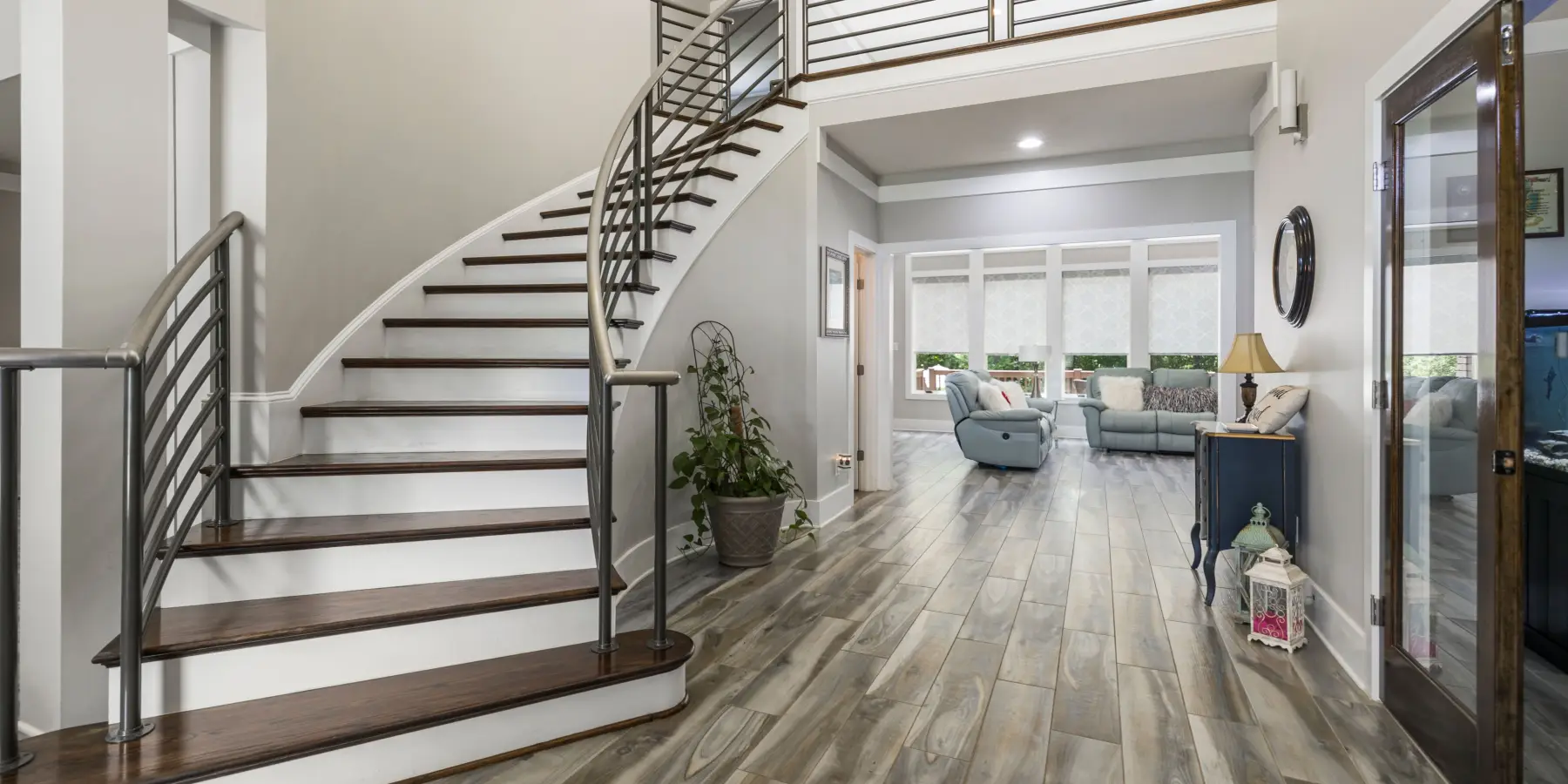
Every tread of a curved staircase is a winder: the IRC wants it at least 10 in deep on the walkline, 12 in in from the inside, and 6 in deep at its narrow end. A 9 ft rise turning a half circle on a 3 ft inside radius takes 14 risers of 7 11/16 in and 13 treads at 13.8° — 11 9/16 in deep at the walkline, 8 11/16 in at the narrow end — in a 13 ft 3 in by 6 ft 7½ in footprint. Enter yours for the treads, the stringers to laminate and the floor opening, drawn to scale and in 3D.
Enter your riseMore in this series
Other stair layouts
A straight flight is the simplest stair to lay out and the base the turning layouts build on.
- Stair Calculator Risers, treads, stringer layout, floor opening and code checks, drawn to scale and in 3D
- L-Shaped Stair Calculator Two flights and a landing: risers, treads, stringers, landing size and the L footprint, drawn in plan and 3D
- U-Shaped Stair Calculator Two parallel flights and a half-turn landing: risers, treads, stringers, landing size and the U footprint, drawn in plan and 3D
- Winder Stair Calculator Winder treads in a 90° or 180° turn: walkline and narrow-end depths, a cutting template for each winder, stringers and the footprint, drawn in plan and 3D
- Spiral Staircase Calculator Risers, tread angle and turn, walkline depth, clear width, headroom and the well opening for any diameter, with a tread template, drawn in plan and 3D
- Ship Ladder and Alternating Tread Stair Calculator Risers, tread spacing, angle, run, stringers and handrails for a ship's ladder or an alternating tread stair, with IRC checks, drawn and in 3D
- Steps on a Slope Calculator Railroad tie and timber steps for a garden slope: steps, risers, treads, embed, rebar, a timber cut list, gravel and soil to dig, drawn and in 3D
Tools for the job
What makes this job easier
Tools and materials that suit this kind of job. These are affiliate links: if you buy through one, Renovimo may earn a commission at no extra cost to you. It never changes the figures on this page.
 Garvee
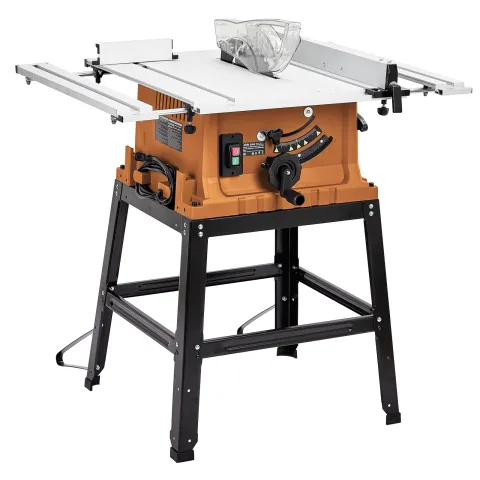
10 in table saw
Rips the lamination strips for both stringers to width, and the tread boards before they are glued into blanks.
Check price
 Garvee
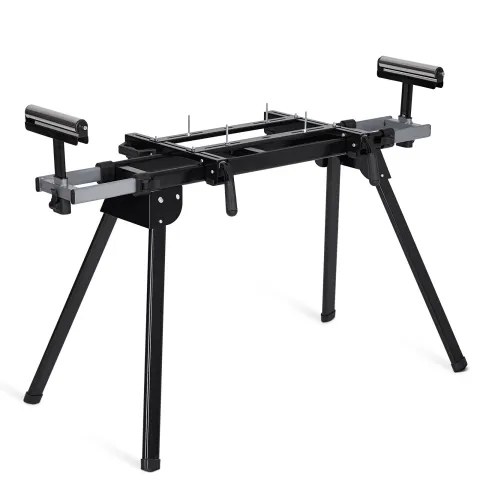
Miter saw stand
Holds long lamination strips and tread stock level at the saw while you cut them to length.
Check price
 Garvee
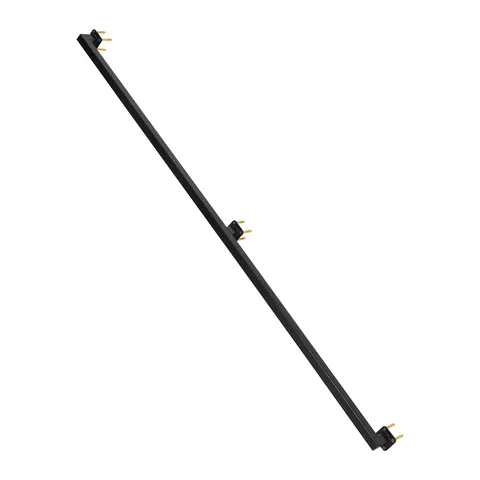
Stair handrail, 6 ft
A graspable rail for the wall side of the curve, 34 to 38 in above the nosings, on brackets into the framing.
Check price
 Dovoh
Cross-line laser level, green
Throws a level line round the bending form for every step and a plumb line for each riser, so both stringers are marked at the same heights.
Check price
 Garvee
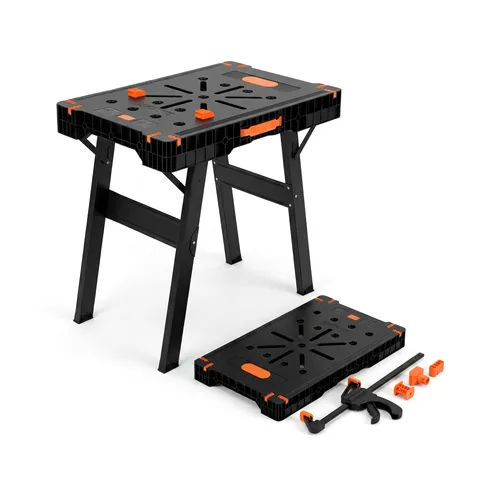
Folding work table and sawhorse
A flat bench for tracing the tread template onto each glued-up blank and cutting it out.
Check price
 Garvee
6 in random orbital sander
Cleans the glue squeeze-out off the laminated stringers and smooths the treads before finishing.
Check price
Not the tool you were after? Browse the whole range at Garvee or Dovoh — the stores these picks come from.
Based on your result
What you'll need
A curved stair is two curved stringers with a flat stair between them. Build the bending form first, laminate both stringers on it, then house the flat treads and radial risers into them like any closed stringer.
- Laminated stringers
- Inside and outside, glued up ply by ply to their radius
- Calculate above
- Lamination stock
- Baltic birch plywood or hardwood strips, ripped to depth
- Calculate above
- Laminating glue Amazon
- Plastic resin or epoxy — not PVA, which creeps
- Calculate above
- Bending form
- 2 × 4 studs on plywood plates cut to each radius
- Calculate above
- Treads
- Flat wedges, glued up and cut to the template
- Calculate above
- Risers
- Flat boards on the radii
- Calculate above
- Balusters Amazon
- Under the 4⅜ in sphere rule on every open side
- Calculate above
- Handrail Amazon
- A helix 36 in above the nosings
- Calculate above
As an Amazon Associate I earn from qualifying purchases.
The maths
How this curved staircase calculator works
A curved stair has no section of its own in the IRC. Its risers are radii of the curve, so every tread is a winder and meets the winder rules — the same ones as the turn of a winder stair, only all the way up.
treads = risers − 1 (the upper floor is the top step)
tread angle θ = turn ÷ treads
walkline radius = inside radius + 12 in
depth at radius R = 2 × R × sin(θ ÷ 2), nosing to nosing
stringer run a tread = R × θ (in radians), so the inside one is steepest
floor opening starts where the nosing line is 6 ft 8 in + floor depth under the floor's top
- 01
Divide the rise
The total rise over the riser you would like, rounded to whole steps, with one more step while a riser is over 7¾ in. A 9 ft rise at 7½ in takes 14 risers of 7 11/16 in and 13 treads.
- 02
Share out the turn
Thirteen treads in a half circle are 13.8° apart. Or start from the depth you want on the walkline and the calculator finds the turn.
- 03
Check both depths
The depth between nosings is the chord at that radius. On a 3 ft inside radius the walkline is at 4 ft: 2 × 48 × sin 6.9° = 11 9/16 in, over the 10 in minimum. The narrow end, at 3 ft, gets 8 11/16 in, over the 6 in.
- 04
Laminate the stringers on a form
Each stringer is unrolled to a straight board that rises the full height over its own arc: the inside one runs 8 11/16 in a tread, so it climbs at 41.6°, the outside one 18 7/8 in at 22.3°. Glue the plies up on studs set to the radius, with the step lines marked on them.
- 05
Open the floor above
The upper floor can only reach over the stair where the nosing line is 6 ft 8 in plus the floor's depth below its top — 18 in up in the example — so the opening runs over the top 163° of the turn.
Good to know
Curved staircase dimensions, framing and code
The IRC sets no radius; the tread depths do. On a 9 ft rise turning a half circle, 13 treads are 13.8° apart, and the walkline needs 10 in between nosings: that puts it at least 41½ in from the center, so the inside radius must be at least 29½ in. A tighter curve needs a smaller turn or more of it. The commercial code's rule that the smallest radius be at least twice the stair's required width, IBC 1011.9, does not apply in a one- or two-family house or inside a dwelling unit.
A spiral staircase winds round a center column, its treads wedges that meet at the post, and it has its own looser rules in R311.7.10.1: 26 in wide, 9½ in risers, 6¾ in at the walkline. A curved or helical staircase climbs an arc round an open well between two curved stringers, and every tread has to meet the full winder rules: 7¾ in risers, 10 in at the walkline, 6 in at the narrow end, 36 in wide.
Every tread is the same wedge, deeper the farther out you measure. In the 9 ft example on a 3 ft inside radius and a 42 in width it is 8 11/16 in at the narrow end, 11 9/16 in on the walkline and 18 13/16 in at the outside, plus the 1 in nosing. The code checks the walkline and the narrow end; the outer depth only decides the blank you cut each tread from.
The stringers are laminated: thin plies of Baltic birch plywood or hardwood strips, glued and clamped round a bending form of 2 × 4 studs set plumb on a plywood plate cut to the radius, until the stringer is 1½ in thick. Mark the step lines on the form first, so you can lay out each stringer flat before you glue it up and line it up on the form. In the example the inside stringer laminates to 13 ft 4 7/16 in long and the outside one to 22 ft 7 3/8 in.
No. The risers lie on radii of the curve, so each one is a flat board as long as the stair is wide, and each tread is a flat wedge with a straight front edge and a straight back. Only the two stringers and the handrails curve, and the treads' two ends, which follow the stringers into their housings.
Enough for 6 ft 8 in of headroom, measured up from the line of the nosings. With a 10 in floor the floor can only run over the stair where the nosing line is 6 ft 8 in plus 10 in below the upper floor's top: 18 in up on a 9 ft rise. So in the example only the first 17° of the turn can have floor over it, and the opening follows the curve over the top 163°.
It is a helix, longer than the arc it covers because it climbs. In the 9 ft example the rail on the open inside, 2 in out from the stringer and 36 in above the nosings, runs 12 ft 11 15/16 in. Curved staircase railings are laminated on the same form as the stringers or bought as bendable rail, with two balusters on each tread to keep the gaps under the 4⅜ in sphere.
The example — a 9 ft rise, half a turn, a 3 ft inside radius and a 42 in width — fits in 13 ft 3 in by 6 ft 7½ in, stringers included. A straight stair with the same 13 treads at 10 in runs about 10 ft 10 in by 3 ft 6 in, plus a landing at the foot; the curve trades floor area for a stair you can see up as you climb it.