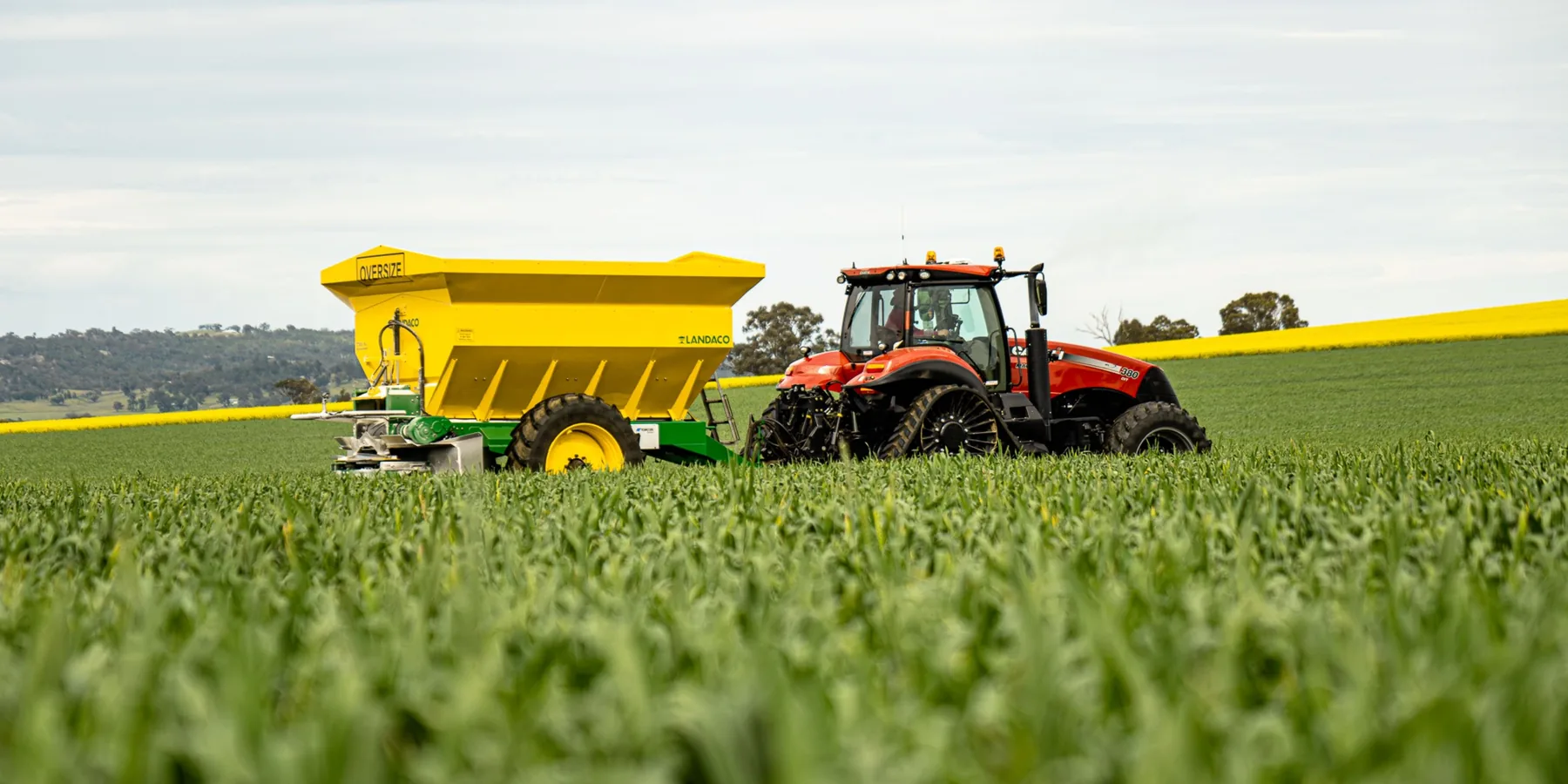
Reference
How often to fertilize your lawn, and how much seed and fertilizer per 1,000 square feet
Every lawn product is rated per 1,000 square feet, and every lawn question comes down to the same two numbers: pounds of seed, and pounds of nitrogen. The rest is arithmetic on the bag.
How often to fertilize a lawn? 2–3 times a year for cool-season grass, up to 1 lb of nitrogen per 1,000 sq ft each time. Warm-season grasses differ widely: Bermuda 3–4 feedings, zoysia 2–3, centipede only 1–2. That is 4.2 lb of a 24-0-6 bag, or 10.0 lb of 10-10-10.
How often to fertilize lawn
Cool-season lawns (fescue, bluegrass, ryegrass)
| September | 1 lb N, once daytime highs are out of the 90s — the most important feeding of the year |
| Mid-October | 1 lb N, optional, for a lawn left thin by summer |
| Early November | 1 lb N, near the last mowing while the lawn is still green |
Bermuda
| Mid-May | 1 lb N, once the lawn has fully greened up |
| Mid-June | 1 lb N |
| Mid-July | 1 lb N |
| Mid-August | 1 lb N, the last feeding of the year |
Zoysia — lighter than Bermuda
| About 3 weeks after green-up | 0.5 lb N, if there is no soil test to say otherwise |
| Late June or early July | 0.5–1 lb N |
| Mid-August | 0.5–1 lb N, the last feeding; none in fall — never more than 4 lb N a year |
Centipede — fed the least of all
| Mid-May | 1 lb N — never earlier; this is the basic program |
| Mid-August | 1 lb N, only if the lawn needs more than the basic program; use a fertilizer without phosphorus |
Never more than 1 lb of nitrogen per 1,000 sq ft in one go — more burns the grass and washes into the drain. Feed each warm-season grass on its own schedule: centipede fed like Bermuda thins out and declines.
Grass seed per 1000 square feet and per acre
Overseeding an existing lawn takes a half to a third of the new-lawn rate. An acre is 43,560 sq ft.
| Grass | New lawn, per 1,000 sq ft | Overseed, per 1,000 sq ft | New lawn, per acre | 50 lb bags per acre |
|---|---|---|---|---|
| Kentucky bluegrass | 2 lb · 0.98 kg/100 m² | 1 lb | 87 lb | 2 |
| Tall fescue | 8 lb · 3.91 kg/100 m² | 4 lb | 348 lb | 7 |
| Perennial ryegrass | 6 lb · 2.93 kg/100 m² | 3 lb | 261 lb | 6 |
| Fine fescue (creeping red, chewings) | 5 lb · 2.44 kg/100 m² | 2.5 lb | 218 lb | 5 |
| Sun and shade mix | 6.7 lb · 3.27 kg/100 m² | 2 lb | 292 lb | 6 |
| Bermuda (hulled) | 1 lb · 0.49 kg/100 m² | 0.5 lb | 44 lb | 1 |
| Zoysia | 2 lb · 0.98 kg/100 m² | 1 lb | 87 lb | 2 |
| Centipede | 0.5 lb · 0.24 kg/100 m² | 0.25 lb | 22 lb | 1 |
How long each grass takes to come up, and when to plant it, is on the germination guide.
Fertilizer per 1000 square feet by NPK
The first number on the bag is the percentage of nitrogen. Pounds of product for 1 lb of nitrogen = 100 ÷ that number.
| Fertilizer | For 1 lb N per 1,000 sq ft | Per acre | Also puts down |
|---|---|---|---|
| 10-10-10 | 10.0 lb | 436 lb | 1.00 lb P₂O₅, 1.00 lb K₂O |
| 24-0-6 | 4.2 lb | 182 lb | 0.00 lb P₂O₅, 0.25 lb K₂O |
| 29-0-4 | 3.4 lb | 150 lb | 0.00 lb P₂O₅, 0.14 lb K₂O |
| 32-0-4 | 3.1 lb | 136 lb | 0.00 lb P₂O₅, 0.13 lb K₂O |
| 5-10-5 starter | 20.0 lb | 871 lb | 2.00 lb P₂O₅, 1.00 lb K₂O |
| 16-4-8 | 6.3 lb | 272 lb | 0.25 lb P₂O₅, 0.50 lb K₂O |
How much lime per 1000 square feet
Best after a soil test. Lime on soil that does not need it locks up nutrients, and the right amount depends on the soil as much as on its pH — a clay soil needs far more than a sandy one to move the same distance. The test report gives the figure for your lawn. Never lime blind on alkaline soil — much of the arid West is already above pH 7, and lime only pushes it higher.
| Situation | Lime per 1,000 sq ft | 40 lb bags per 1,000 sq ft |
|---|---|---|
| No soil test, no lime for several years | 40–50 lb · 19.5–24.4 kg/100 m² | 1–1.25 |
| Soil test asks for more than 50 lb | Split it: no more than 50 lb at a time, spring and fall | 1.25 per application |
When to overseed
The same windows as a new lawn: late August to mid-September, when soil is 50–65 °F and nights are cooling for cool-season grass, late spring to early summer, after soil reaches 65 °F for warm-season. Mow short, rake or core-aerate so the seed reaches soil, spread the overseeding rate from the table, and keep it damp for two weeks. The grass seed calculator and the fertilizer calculator turn these rates into bags for your lawn.
Work out your fertilizer →Seeding rates and days to germinate: University of Tennessee Extension W160-B, Turfgrass Establishment: Seeding (Samples and Sorochan); new-lawn rates are the top of its range for bluegrass, the fescues, ryegrass and Bermuda, and overseeding rates half of that (University of Nebraska–Lincoln Extension, Spring Lawn Overseeding: overseeding cuts the rate by up to 50%). Zoysia seeding rate: University of Arkansas MP476, Establishing Seeded Zoysiagrass (1–2 lb per 1,000 sq ft). Centipede seeding rate: NC State Extension, Centipedegrass Lawn Maintenance Calendar (¼–½ lb). Sun and shade mix: Scotts Turf Builder Rapid Grass Sun & Shade Mix label coverage. Soil temperatures, planting windows and first mowing: Penn State Extension, Lawn Establishment. Nitrogen rate and cool-season schedule: Purdue Extension turfgrass program, Fall Fertilization and AY-13. Warm-season schedules: NC State Extension Bermudagrass, Zoysiagrass and Centipedegrass Lawn Maintenance Calendars. Lime: UNH Extension, Lime; University of Maryland Extension, Lime and Lawns. Sod watering and rooting: sod-grower care guides (Sod Solutions, Super-Sod). Accessed 2026-10-16. Rates are for a typical established lawn; a soil test from your extension office replaces the lime figures here.
Seed and fertilizer questions
How many pounds of grass seed per acre?
348 lb of tall fescue for a new lawn, 87 lb of Kentucky bluegrass, 44 lb of hulled Bermuda.
How much fertilizer per 1000 square feet?
Enough product to deliver about 1 lb of nitrogen: 4.2 lb of 24-0-6, 3.4 lb of 29-0-4, 10.0 lb of 10-10-10.
How much does a bag of fertilizer cover?
Read the label — at 1 lb of nitrogen per 1,000 sq ft a 15 lb bag of 29-0-4 covers about 4,350 sq ft, a 30 lb bag of 24-0-6 about 7,200.
Can I fertilize and seed at the same time?
Yes, with a starter fertilizer (something like 5-10-5) spread at the label rate the day you seed; regular high-nitrogen fertilizer waits until the new grass is established and has been mowed a few times.
More in this series
The rest of the yard
These are the weights, coverages and rates every yard calculator on the site runs on. Each tool applies them to one material.
- Gravel Calculator Gravel, crushed stone, sand and road base by volume, tons and bags
- Mulch Calculator Cubic yards, bags or bales of mulch for every bed, topped up over the old layer
- Topsoil Calculator Cubic yards, tons and bags of topsoil, fill dirt or compost, with settling
- Sod Calculator Rolls or slabs of sod, pallets, pallet weight and what a trailer carries, with waste for cuts
- Grass Seed Calculator Pounds and bags of grass seed by grass type for a new lawn or overseeding, with starter fertilizer and straw
- Fertilizer Calculator Pounds and bags of lawn fertilizer from the nitrogen rate or the bag label, with the N, P and K actually applied
- Crushed Stone Sizes and Coverage What each stone grade is for, and what a ton and a yard cover
- Topsoil Weight and Coverage What a yard of soil weighs dry, moist and wet, and how far it spreads
- Mulch Coverage, Bags and Weight How far a yard and a bag of mulch spread, and what they weigh
- Gravel and Sand Weight per Yard What a cubic yard and a ton of gravel, sand and crushed stone weigh, how far a ton goes, and what a truck carries
- Grass Seed Germination and Planting Times How many days each grass takes to come up, when to plant it, how deep, and how to water a new seeding
- Sod Pallet Sizes and Weights Square feet and pieces on a pallet of sod, what a pallet, roll and slab weigh, what a truck can carry, and how long sod keeps
- New Sod Watering and Rooting A week-by-week watering schedule for new sod, how long it takes to root, and when you can walk on, mow and feed it
Tools for the job
What makes this job easier
Tools and materials that suit this kind of job. These are affiliate links: if you buy through one, Renovimo may earn a commission at no extra cost to you. It never changes the figures on this page.
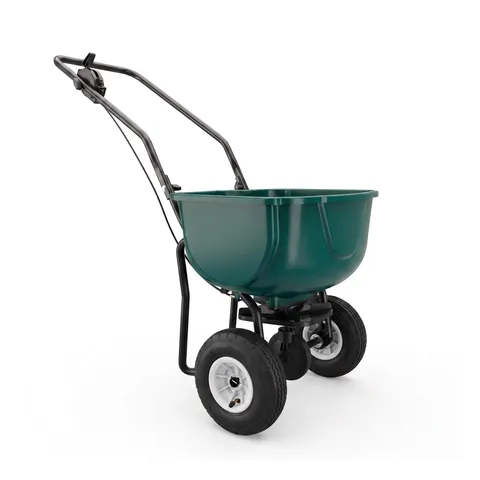 Garvee
Broadcast spreader, 70 lb
Spreads seed, fertilizer and lime evenly over new topsoil.
Check price
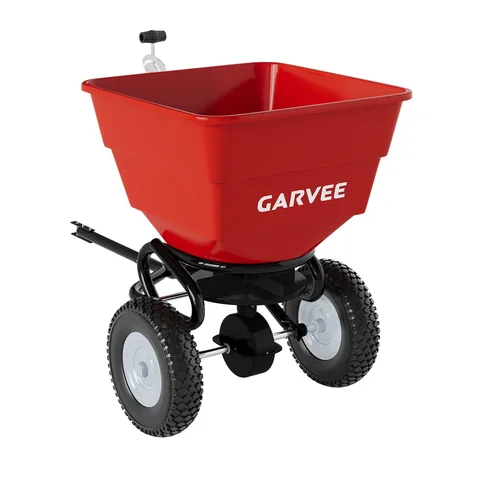 Garvee
Tow-behind broadcast spreader, 130 lb
Hooks to a riding mower and feeds or seeds an acre in one fill.
Check price
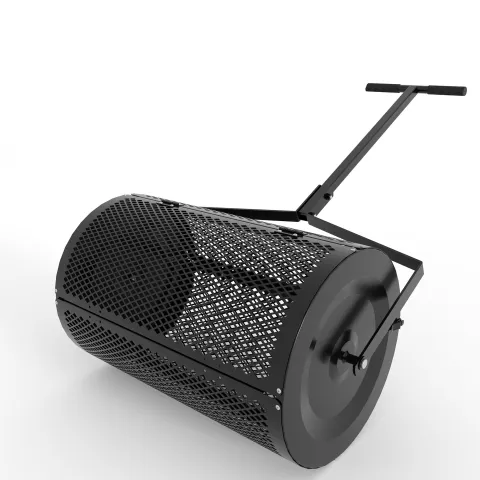 Garvee
Lawn spreader, 24 in
Spreads fine gravel, sand, compost and seed evenly.
Check price
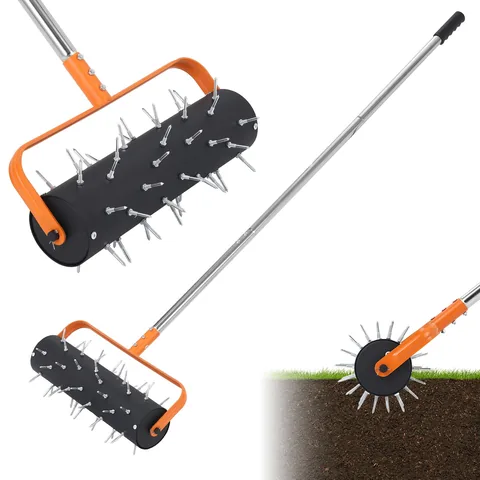 Garvee
Rolling spike aerator, 18 in
Opens the soil before overseeding or feeding, so seed and fertilizer reach the roots.
Check price
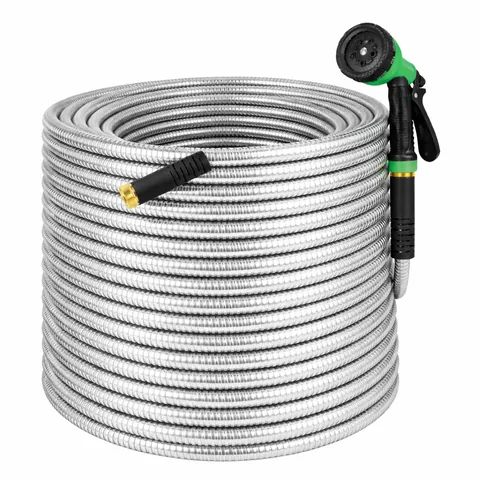 Garvee
Stainless steel garden hose, 100 ft
Reaches the far corner of the lawn for the twice-a-day watering new sod and seed need.
Check price
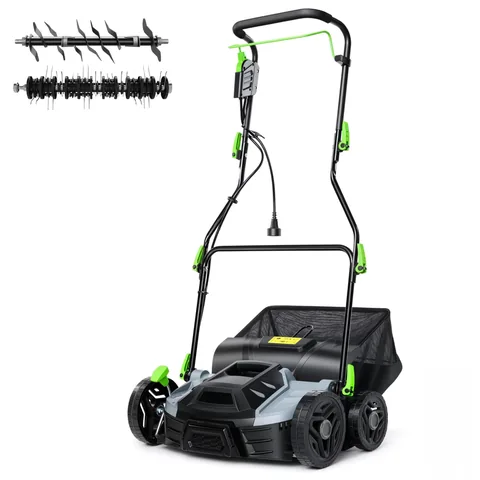 Garvee
Electric dethatcher and scarifier
Clears the thatch from a tired lawn so overseed lands on soil, not on dead grass.
Check price
Not the tool you were after? Browse the whole range at Garvee — the store these picks come from.