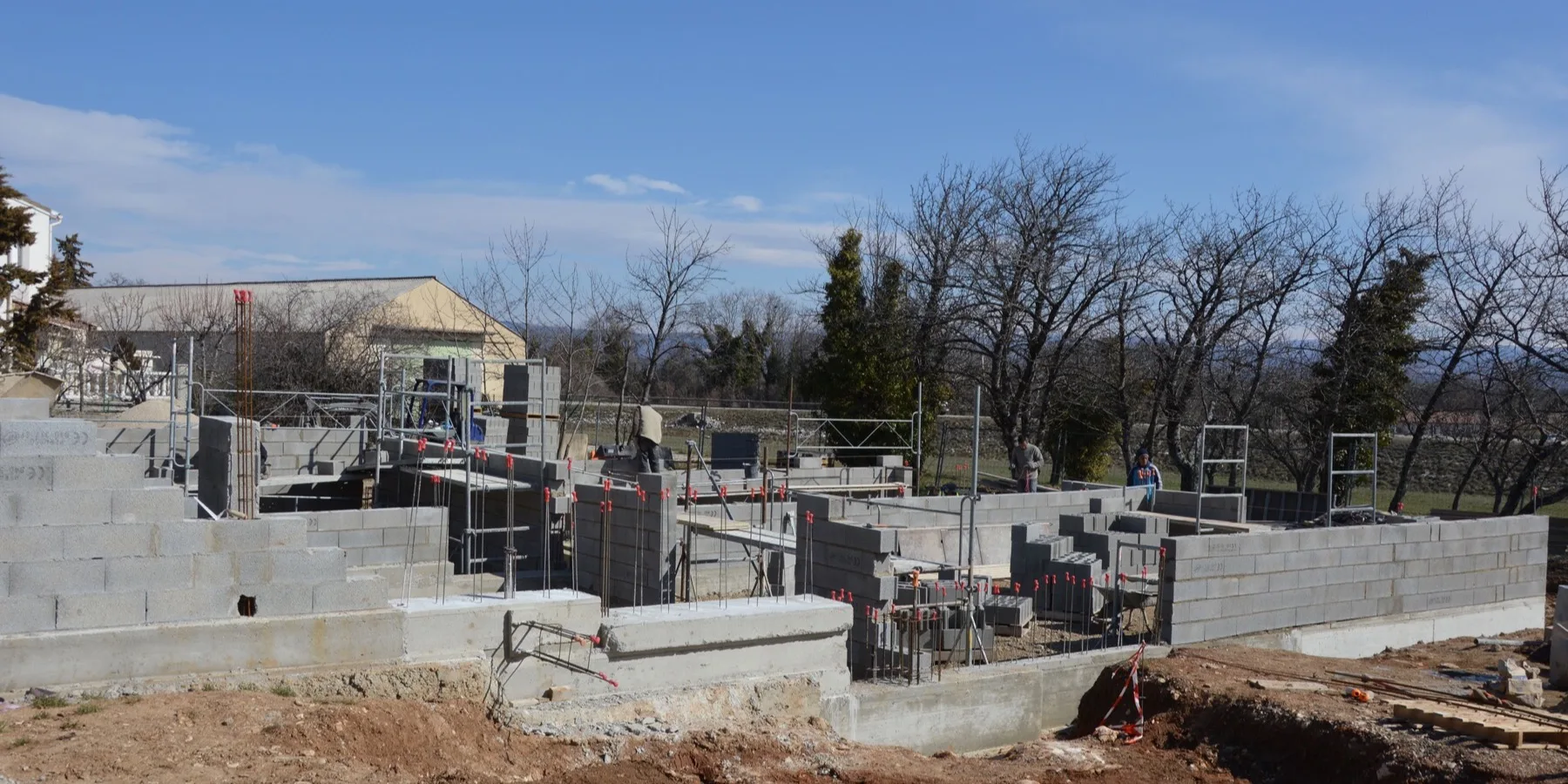
Concrete block calculator
Concrete block
calculator
Enter a wall length and height and get the block count laid out in courses — plus pallets, mortar bags, grout for the cells and vertical rebar. Cinder block, cement block, CMU: same unit, same maths.
Enter measurements ↓Optional
What will it cost?
Every material the calculator worked out gets its own price. Each field starts at a typical US figure so you have something to work from — change any of them to what your own supplier charges.
These prices are approximate. They are national US retail figures, and what you actually pay varies with your region, your supplier, the season and how much you buy at once. Treat them as a starting point, not a quote — always price the job from your own supplier's current figures before you order.
Your prices
More in this series
Put these figures to work
Every wall here is counted the same way underneath. Start wherever your job starts; the figures carry across.
- Brick Calculator Bricks, concrete blocks, mortar bags and wall ties
- Paver Calculator Pavers, gravel base, bedding sand, joint sand and edging
- Retaining Wall Calculator Wall blocks, caps, base stone, drainage backfill and geogrid
- Concrete Block Sizes and Weights Nominal and actual CMU dimensions, weights and course heights
- Brick Dimensions and Course Heights US brick sizes, bricks per square foot, course heights and wall ties
- Paver Sizes and Weights Paver sizes and thicknesses, weight each and what a pallet weighs
Based on your result
What you'll need
Quantities update after every calculation. Order blocks by the pallet where you can — broken units and the odd cut are why the waste allowance is there.
- Concrete blocks
- Standard CMU, laid in running bond
- Calculate above
- Mortar
- Bedded on the face shells, full bed on the first course
- —
- Sand
- Only when the mortar is mixed on site
- —
- Grout
- Pea-gravel mix poured into the filled cells
- —
- Rebar
- Vertical steel through the grouted cells
- —
The maths
How this concrete block calculator works
A block is named for its nominal size, which already includes the mortar joint. Lay the wall out on that module — 8 inches up, 16 inches along — and the block count falls out of the course count. For a block wall calculator the coursing matters more than the area: you cannot buy three quarters of a course.
per course = wall length in ÷ 16 in (round up)
blocks = courses × per course × waste
mortar = blocks ÷ 33 bags
grout = filled cells × 0.0972 ft³ (8 in)
- 7.625 in
- an 8 in block actually measures
- 3/8 in
- the mortar joint in the module
- 1.125
- blocks per sq ft of face
- 90
- blocks to a pallet
- 2
- cells in every block
- 0.81 yd³
- solid grout per 100 sq ft
-
01
Count the courses, not the area
The trade rule of 1.125 blocks per square foot gives 112.5 for a 10 by 10 wall. Counting by course gives 120, because the half block at the end of every other course is still bought whole.
-
02
Nominal size already has the joint in it
An 8×8×16 block measures 7.625 inches every way it is named for. The missing three eighths is the mortar. Lay out on 8 and 16 or the wall finishes short.
-
03
Mortar runs about three bags a hundred
One 70 lb bag of masonry cement lays roughly 33 blocks. Mix a little over — mortar that has gone off cannot be retempered twice.
-
04
Grout only the cells you fill
Every block has two cells, one every 8 inches along the wall. Grouting one cell every 32 inches fills a quarter of them, not half.
What holds it together
What concrete block is laid on
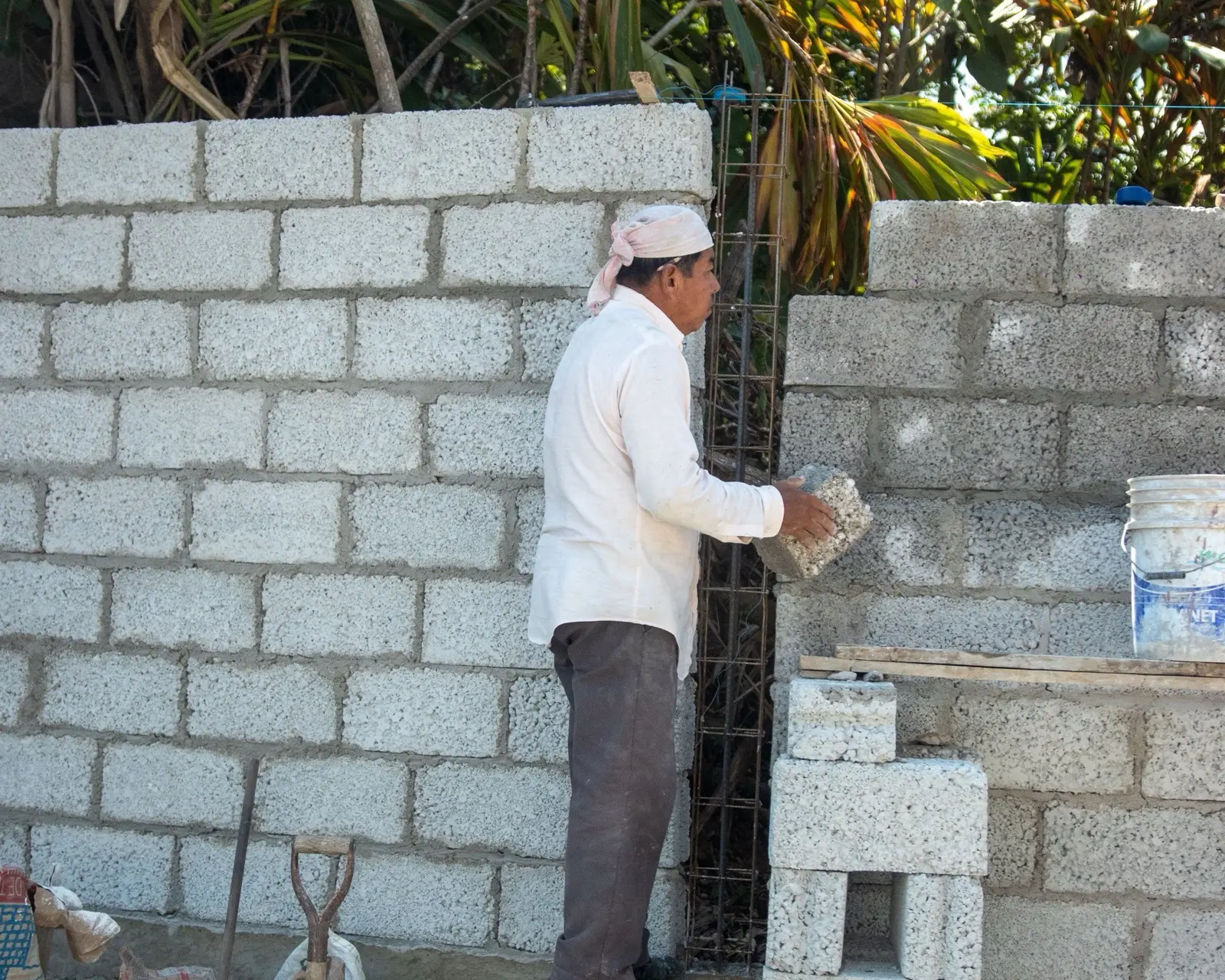
Block is bedded in masonry mortar — not glue and not concrete. Mortar is portland cement, hydrated lime and masonry sand; the lime is what makes it stick to the block and hold water long enough to work with. Thin-bed adhesive exists, but it belongs to autoclaved aerated block, which is a different product with ground-flat faces.
Two ways to buy the same thing, and they are not interchangeable on a materials list. A pre-mixed bag already contains the sand — add water and mix. Masonry cement is cement and lime only, and you add about three parts sand to one part cement on site. The calculator asks which, because one 80 lb pre-mixed bag makes 0.67 cubic feet of mortar while one 70 lb bag of masonry cement plus its sand makes nearer three.
Which type, and where
ASTM C270 sets four types by proportion. Three of them matter for block:
| Type | Cement : lime : sand | Strength | Where it goes |
|---|---|---|---|
| Type N | 1 : 1 : 6 | 750 psi | General above-grade walls — the default |
| Type S | 1 : ½ : 4½ | 1 800 psi | Below grade, retaining walls, anything taking lateral load |
| Type M | 1 : ¼ : 3 | 2 500 psi | Foundations and walls in contact with earth |
Stronger is not better. Mortar is meant to be weaker than the block so that movement cracks the joint, which can be raked out and repointed, rather than the unit, which cannot. Type N is the right answer for most walls above ground.
How much of it the wall actually takes
The first course goes down in a full bed on the footing. Every course above it is face-shell bedded — mortar on the two outer shells only, nothing across the webs. That is standard practice, not a shortcut: it uses around 60 per cent less mortar for roughly three quarters of the bond strength, and the calculator above splits the two.
head joint = 2 shells × shell thickness × block height × joint
per block = 21.8 in³ = 0.0126 ft³ (8 in block, 3/8 in joint)
first course = × 1.6 for the full bed
ordered = volume × 1.2 for mixing waste
A hundred blocks works out at 1.26 cubic feet of mortar, which after the mixing allowance is three 80 lb bags — the same figure the trade quotes as a rule of thumb. The geometry and the rule only agree once the waste is in, which is worth knowing before you order exactly three.
Good to know
Concrete block questions, answered
Sizes, weights and the dimensions behind every figure above are set out in concrete block sizes and weights.
Divide the wall height in inches by 8 and the length by 16, rounding each up, then multiply. A 20 by 8 foot wall is 12 courses of 15 blocks, so 180 before waste. The trade shorthand of 1.125 blocks per square foot gets close but ignores part courses.
Ninety, for standard 8×8×16 units at most yards and big-box stores. Lighter 4 and 6 inch blocks often ship 108 or 120 to a pallet, and 12 inch units drop to 60. Check the yard before ordering by the pallet.
In a store today, yes. True cinder block used coal cinders as the aggregate and is long out of production; cinder block, cement block, CMU and concrete masonry unit all now name the same thing. Search for any of them and you get the same product.
Masonry mortar — portland cement, hydrated lime and sand. Not glue, and not concrete. The lime is what makes it bond to the block and stay workable on the board. Thin-bed adhesive is for autoclaved aerated block, which is a different product.
Either. A pre-mixed bag already has the sand in it and needs only water — an 80 lb bag makes about 0.67 cubic feet. Masonry cement is cement and lime alone, mixed roughly one to three with sand on site, and one 70 lb bag plus its sand makes nearer three cubic feet. Pick the one you are buying in the calculator above, because the bag counts are not comparable.
About 1.26 cubic feet per hundred blocks face-shell bedded at a 3/8 in joint, which after a mixing allowance is three 80 lb bags of pre-mixed mortar. The first course takes about 60 per cent more because it is laid in a full bed on the footing.
Type N for general walls above grade, type S below grade or for anything taking sideways load, type M for foundations. Do not reach for the strongest: mortar should be weaker than the block, so that movement cracks a joint you can repoint rather than a unit you cannot.
Block fill is a fine grout poured into the hollow cells to solidify them, usually where rebar runs. Filling every cell of an 8 inch wall takes about 0.81 cubic yards per 100 square feet. Filling one cell every 32 inches takes a quarter of that.
Anything structural does, and most codes want vertical steel at 32 to 48 inches with the cells grouted around it. A free-standing garden wall under three feet is usually exempt, but check locally — this calculator sizes the steel, it does not design the wall.
A standard 8×8×16 normal-weight block runs 36 to 38 pounds; the lightweight version is 26 to 28. That difference decides how many you can lay in a day, and whether the pallet can go where you want it.