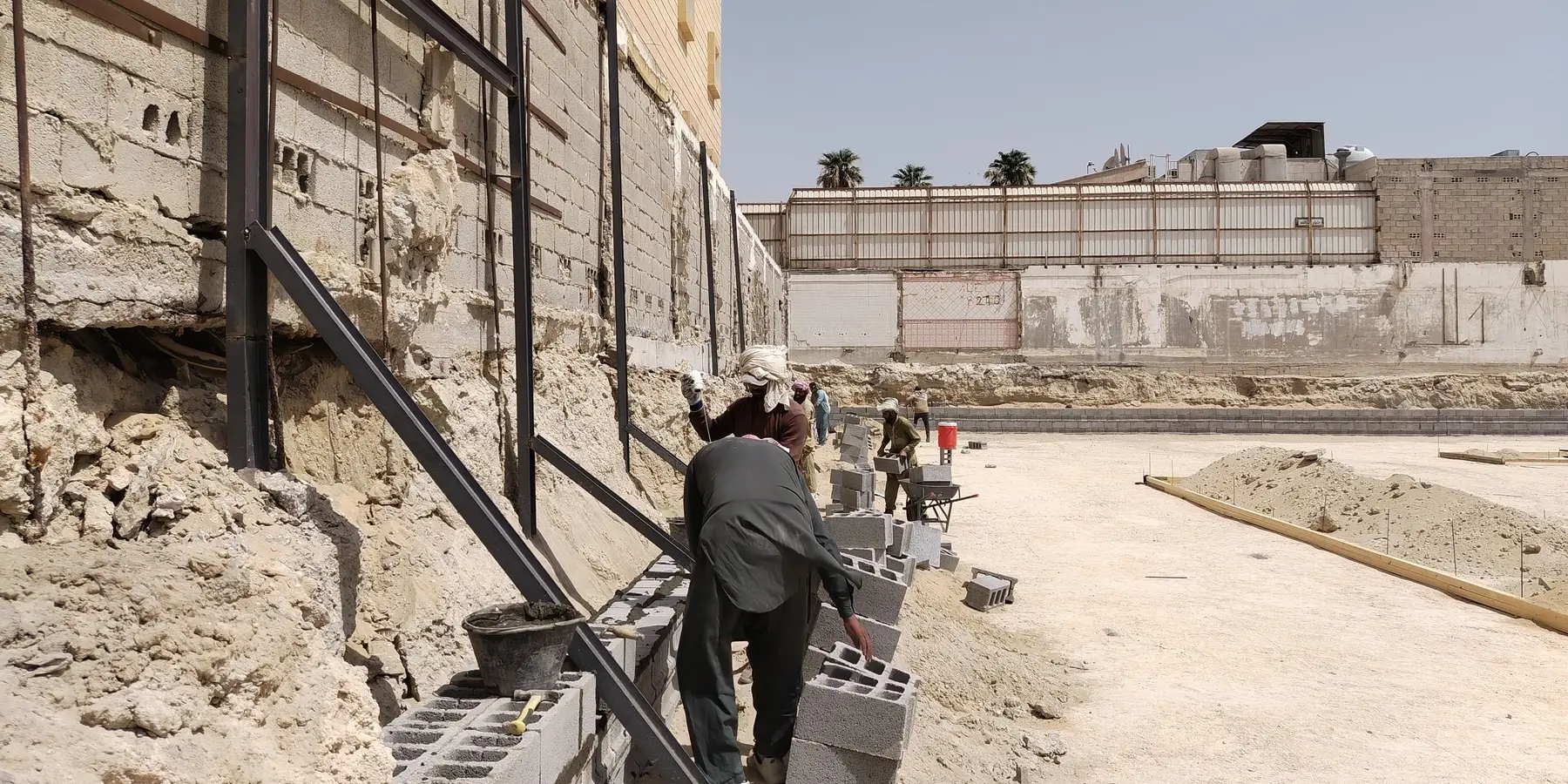
Reference
Retaining wall block sizes
Retaining wall blocks come in three families, and the family matters more than the brand: small garden blocks you can lift with one hand, segmental blocks of roughly 35 to 85 pounds that build most backyard walls, and large blocks of a ton or more that are set with a machine.
What size is a retaining wall block? The common segmental block is 8 in high, 18 in long and about 12 in deep — one square foot of wall face — and weighs around 75 lb. Garden blocks are 4 in high and about 12 in long. Large blocks run 18 to 30 in high and 2 to 6 ft long, and weigh from about 1,200 lb to well over two tons.
Retaining wall block sizes chart
Sizes are height × length × depth, the way the yards list them. The face is what you see; the depth is what holds the soil back, and it is the number that sets how tall a wall the block can build on its own.
| Block | H × L × D | Face | Per ft² of wall | Weight | Pallet |
|---|---|---|---|---|---|
| Garden wall block | 4 × 11¾ × 6¾ in | 0.33 ft² | 3.1 | ≈ 22 lb | 144 blocks · 46.5 ft² |
| Pavestone RockWall Large | 6 × 17½ × 7 in | 0.73 ft² | 1.4 | — | 48 blocks · 35 ft² |
| Versa-Lok Standard | 6 × 16 × 12 in | 0.67 ft² | 1.5 | 82 lb | 40 blocks · 26.7 ft² |
| Standard 12 in segmental | 8 × 12 × 12 in | 0.67 ft² | 1.5 | — | — |
| Allan Block AB Classic | 8 × 18 × 11¾ in | 1.0 ft² | 1.0 | 75 lb | 32–48 blocks |
| Pavestone Regal Stone Pro | 8 × 18 × 12 in | 1.0 ft² | 1.0 | ≈ 80 lb | 36 blocks · 36 ft² |
So the Allan Block size most yards stock is the AB Classic at 8 × 18 × 12 in, and the Versa-Lok block size is 6 × 16 × 12 in. A dash means the figure varies too much between makers and plants to quote; the pallet tag carries it. Depths in particular drift by a quarter inch between plants — Allan Block's AB Classic is listed anywhere from 11¼ to 12 inches deep — so the table is for planning and the tag is for ordering.
Retaining wall block dimensions in metric
A 4 in garden block is about 100 × 300 × 180 mm. The 6 in segmental blocks are 150 mm high and 400 to 445 mm long. The 8 × 18 in block is 200 × 455 × 300 mm, and one of them covers very nearly a tenth of a square metre of wall face.
Large retaining wall blocks
Past four feet, walls stop being built from blocks you carry and start being built from blocks you lift with an excavator. There are two kinds. Engineered systems such as Redi-Rock are cast with a textured face and a knob that locks each course to the one below. Precast "lego" blocks — sometimes called ecology or waste blocks — are plain rectangles poured from ready-mix left over at the plant, which is why they are cheap and why they weigh close to what their volume says. Both are sold as large landscape blocks.
Redi-Rock block sizes and large concrete blocks
| Block | H × L × D | Face | Weight |
|---|---|---|---|
| Redi-Rock 28 in (middle) | 18 in × 46⅛ in × 28 in | 5.75 ft² | 1,610 lb |
| Redi-Rock 28 in (top) | 18 in × 46⅛ in × 28 in | 5.75 ft² | 1,230 lb |
| Redi-Rock 41 in | 18 in × 46⅛ in × 41 in | 5.75 ft² | 2,310 lb |
| Redi-Rock 60 in | 18 in × 46⅛ in × 60 in | 5.75 ft² | 3,290 lb |
| Precast block 2 × 2 × 2 ft | 24 in × 24 in × 24 in | 4 ft² | ≈ 1,200 lb |
| Precast block 2 × 4 × 2 ft | 24 in × 48 in × 24 in | 8 ft² | ≈ 2,400 lb |
| Precast block 2 × 6 × 2 ft | 24 in × 72 in × 24 in | 12 ft² | ≈ 3,600 lb |
| Precast block 2.5 × 5 × 2.5 ft | 30 in × 60 in × 30 in | 12.5 ft² | ≈ 4,700 lb |
Redi-Rock weights are the maker's figures for its cobblestone and limestone faces, which it calculates at about 143 lb per cubic foot; the ledgestone faces run about 70 lb lighter. The precast rows are volume × 150 lb per cubic foot, the weight of ordinary concrete — a 2 ft high, 6 ft long, 2 ft deep block is 24 cubic feet, so 3,600 lb. Every course of these is 18 to 30 inches, so a 6 ft wall is only three or four blocks high.
The depth column is the one to read. A deeper block is a heavier block, and on a gravity wall weight is the whole design: a Redi-Rock wall goes from 28 in blocks at the top to 41 or 60 in at the base as it gets taller, the same way a stone wall is built thicker at the bottom.
What is the heaviest retaining wall block?
The heaviest block in the table above is the Precast block 2.5 × 5 × 2.5 ft, at ≈ 4,700 lb. Of the engineered systems, the Redi-Rock 60 in block is the heaviest at 3,290 lb. Both are set with an excavator, not by hand.
Which block size for which wall height
The block's depth limits how tall it can stand without help. These are the ranges the makers design for on firm soil with a level surface behind the wall; a slope, a driveway or a house above the wall all bring them down.
| Block | Wall it builds | Beyond that |
|---|---|---|
| 4 in garden block, 7 in deep | Bed edging and walls to about 2 ft | Not a retaining block — move up a size |
| 6 to 8 in segmental, 12 in deep | Up to 3 ft as a gravity wall | Geogrid between courses from 3 ft; engineered design past 4 ft |
| Large block, 28 in deep and more | 4 to 10 ft and beyond as a gravity wall | Engineered design, with deeper blocks at the base |
Four feet is the line in most US codes. The International Residential Code requires an engineered design once a wall holds back more than 48 inches of soil — measured as the difference in grade from one side to the other — or more than 24 inches with a driveway, a slope or a structure above it. Many towns' permit rules measure from the bottom of the footing instead, which counts the buried course, so a wall that shows 3½ ft can still need a permit.
That buried course is part of the order. Plan to bury 6 inches plus an inch for every foot of wall — a 4 ft wall has 10 inches below grade, which with 8 in blocks is two full courses that nobody will ever see.
How many retaining wall blocks do I need?
Wall face in square feet times blocks per square foot, then add the buried course and 5 % for cuts. For an 8 × 18 in block that is one block per square foot, which makes the arithmetic easy:
| Wall | Courses incl. buried | 8 × 18 in blocks | 8 × 12 in blocks |
|---|---|---|---|
| 20 ft long, 2 ft high | 4 of 8 in | 59 | 84 |
| 30 ft long, 2 ft high | 4 of 8 in | 84 | 126 |
| 30 ft long, 3 ft high | 7 of 8 in | 147 | 221 |
| 50 ft long, 3 ft high | 7 of 8 in | 250 | 368 |
Caps are counted separately — one per block length along the top course — and so are the base stone and the drainage gravel behind the wall, which on a 3 ft wall weigh more than the blocks do. The retaining wall block calculator does all of it from your wall length and height, caps and geogrid included, for 8 in high blocks with an 18 or 12 in face and 4 in garden blocks.
Count blocks, caps and base →Building a freestanding wall from hollow block instead? Concrete block sizes and weights covers CMU. The stone behind and under the wall is sized in crushed stone sizes and coverage.
Figures: dimensions, weights and pallet counts from the manufacturers' and their dealers' published product data (Pavestone, Allan Block, Versa-Lok, Redi-Rock); precast block weights calculated at 150 lb/ft³. Products vary by plant, so confirm on the pallet tag before ordering or hiring a truck.
More in this series
Put these figures to work
These are the dimensions every masonry calculator on the site runs on. Each tool applies them to one kind of wall.
- Brick Calculator Bricks, concrete blocks, mortar bags and wall ties
- Concrete Block Calculator Concrete blocks, pallets, mortar bags, grout fill and rebar
- Paver Calculator Pavers, gravel base, bedding sand, joint sand and edging
- Retaining Wall Calculator Wall blocks, caps, base stone, drainage backfill and geogrid
- Concrete Block Sizes and Weights Nominal and actual CMU dimensions, weights and course heights
- Brick Dimensions and Course Heights US brick sizes, bricks per square foot, course heights and wall ties
- Paver Sizes and Weights Paver sizes and thicknesses, weight each and what a pallet weighs
- Brick Weight and Bricks per Pallet What a brick weighs by size, how many bricks are on a pallet, what a pallet weighs and bricks per square foot
Tools for the job
What makes this job easier
Tools and materials that suit this kind of job. These are affiliate links: if you buy through one, Renovimo may earn a commission at no extra cost to you. It never changes the figures on this page.
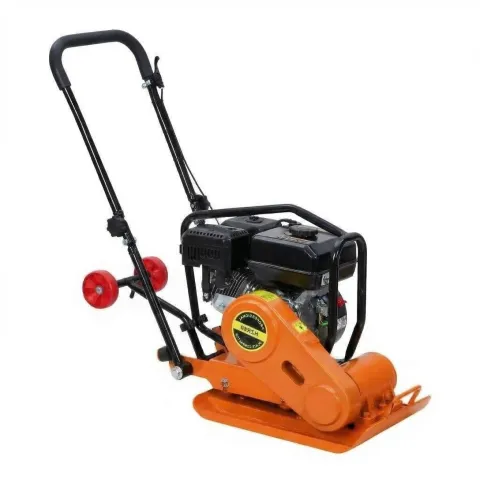 Garvee
Plate compactor, 7 HP
Compacts gravel base in lifts so pavers and walls do not settle.
Check price
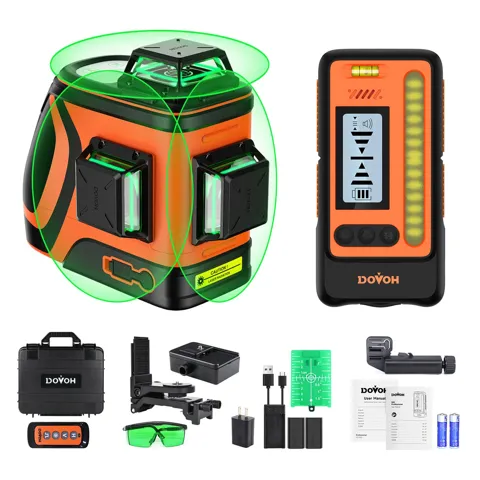 Dovoh
Outdoor laser level with receiver
The receiver finds the beam in full sun, so you can set forms, footings and base to grade alone.
Check price
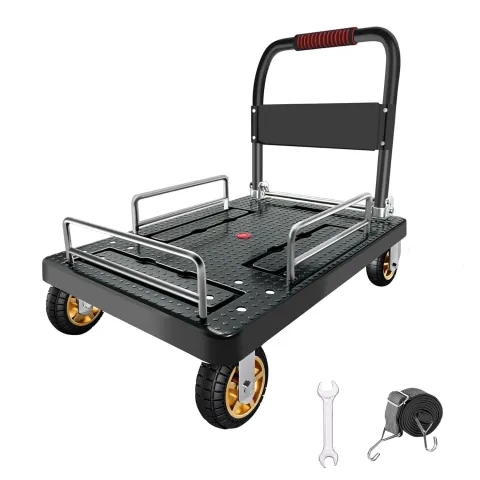 Garvee
Folding platform truck, 1300 lb
Moves stacks of bags, block and brick without a wheelbarrow tipping.
Check price
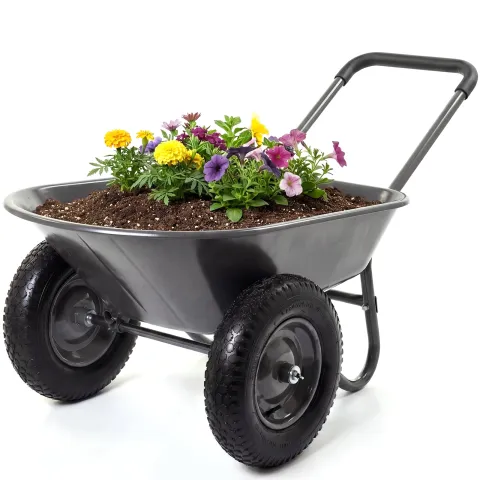 Garvee
Two-wheel wheelbarrow
Stable on two wheels for bagged concrete, block and soil.
Check price
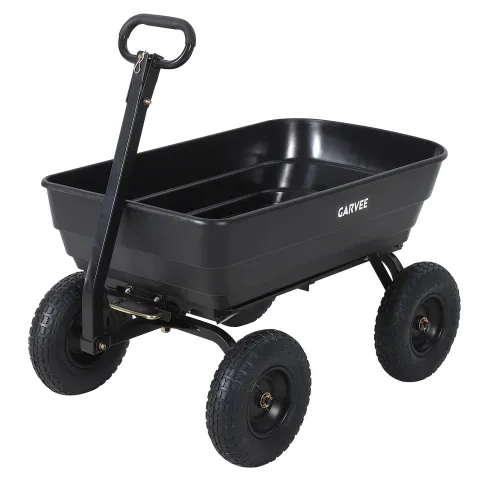 Garvee
Dump cart, 1200 lb
Tips a whole load of gravel, mulch or debris where you want it.
Check price
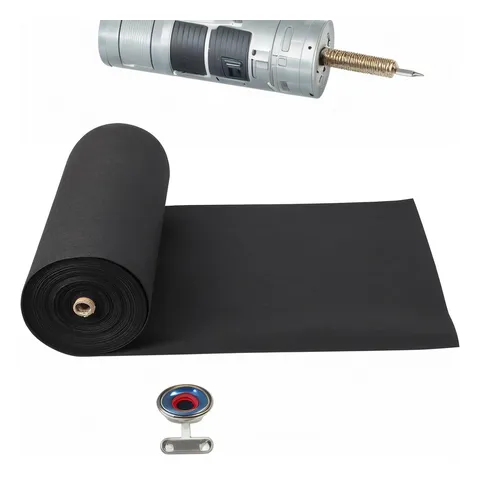 Garvee
Geotextile landscape fabric, 4 × 50 ft
Keeps gravel base from sinking into the soil under paths and pads.
Check price
Not the tool you were after? Browse the whole range at Garvee or Dovoh — the stores these picks come from.