Reference
Self-leveling concrete thickness
Self-leveling underlayment is a cement that flows flat on its own, and every bag has two limits printed on it: how thin it can go before it cracks or will not bond, and how thick before it shrinks, curls or takes days to dry. The pour has to fit between them everywhere on the floor — at the high spots and in the deepest dip.
How thick can you pour self leveling concrete? Most products go from ⅛ in up to 1 to 2 in in a single pour, mixed with water only. Mixed with washed pea gravel, many can go to 3 to 5 in. Below ⅛ in you need a product sold to feather out to nothing; above the bag's maximum, pour in two lifts or extend it with aggregate.
How thick can you pour self leveling concrete?
Self leveling concrete thickness depends on the product, so here are the published limits for some widely sold underlayments. "Neat" means mixed with water only; "extended" means with ⅜ in pea gravel added. Read them as what the category can do, then check the bag you actually buy.
| Product | Neat | Extended |
|---|---|---|
| Sika Level-225 | 1/16 to 1¼ in | Up to 3 in |
| Sika Level-325 | ⅛ to 1½ in | Up to 4 in |
| Bostik SL-175 | ⅛ to 2 in | Up to 5 in |
| ARDEX TL 2000 | Up to 1¼ in | Up to 2 in |
So the self leveling compound max thickness, neat, is 1¼ to 2 in, and the bag's figure is the one that counts: a floor with a 1½ in dip is one neat pour with one product and a gravel fill with another.
How thin can you pour self leveling concrete?
The self leveling concrete minimum thickness for most underlayments is ⅛ in at the highest point. Thinner than that, the layer dries before it bonds and can powder or crack under flooring. A few products are sold to feather to zero at the edges; if the high spots of your floor need nothing at all, that is the kind to buy, or the high spots get ground down first.
That is also why depth is planned from the high point. Find it with a long straightedge or a laser, decide the leveler has to be ⅛ in there, and every other spot on the floor is ⅛ in plus however far it sits below. A floor that is ¾ in out across the room is not a ¾ in pour — it is ⅛ in at one side and ⅞ in at the other.
How thick should self leveling concrete be?
As thin as the floor allows: ⅛ in at the high point over concrete, ⅜ to ½ in over wood, and no deeper anywhere than the dip needs. A thicker pour is not stronger in any way that matters under flooring — it only costs more bags and more drying time.
How deep can you pour self leveling concrete with gravel?
Past the neat maximum the mix is extended with clean, washed ⅜ in pea gravel. Sika's rule is typical: gravel no more than a third of the total depth, spread on the primed floor and flooded with leveler, then a final ⅛ to ¼ in of neat mix on top so the surface is smooth. Extended, the products in the table reach 2 to 5 in.
The other route is two lifts: pour to the bag's maximum, let it cure, prime again and pour the rest. It costs a day, and is usually the better choice for a deep dip in a small area, where shoveling gravel is more trouble than it saves.
Bags of self leveler by thickness
A 50 lb bag mixes to about 0.45 cubic feet, and covers that volume spread at your depth. Halve the depth and it covers twice the floor.
| Thickness | Metric | One bag covers | Bags per 100 ft² |
|---|---|---|---|
| ⅛ in | 3 mm | 43.2 ft² | 3 |
| ¼ in | 6 mm | 21.6 ft² | 5 |
| ⅜ in | 10 mm | 14.4 ft² | 7 |
| ½ in | 13 mm | 10.8 ft² | 10 |
| ¾ in | 19 mm | 7.2 ft² | 14 |
| 1 in | 25 mm | 5.4 ft² | 19 |
| 1½ in | 38 mm | 3.6 ft² | 28 |
| 2 in | 51 mm | 2.7 ft² | 38 |
Bags are rounded up to whole bags, as the store sells them, for a flat pour at that depth. A real floor is a slope from the high point to the dip, so the average depth is what sets the count — and you will want 10 % on top for what stays in the bucket and the pump. The self leveler calculator works that out from your own high point and dip.
Thickness over plywood and wood subfloors
Wood moves and concrete over it cracks, so pours over plywood come with more rules: a stiff subfloor, the maker's primer, and a reinforcement fastened down so the leveler has something to grip — usually expanded metal lath, though some makers specify their own mesh or mat. The minimum depth over wood is then set by burying that reinforcement: typically ⅜ to ½ in, and more where the joists are spaced wider than 16 in. It is never the ⅛ in that works over concrete. Some products are approved over wood only under flexible floors such as vinyl and carpet, not tile.
Whatever goes on top decides how flat you need to be. Laminate and click vinyl usually ask for 3/16 in over 10 ft; large-format tile asks for ⅛ in over 10 ft. The laminate flooring thickness guide covers what the floor itself adds on top.
The self leveler calculator takes the room and the depth at the high point and in the dip, and gives the bags, the primer and the water.
Work out your bags →Figures: thickness ranges from the manufacturers' published data for the products named; bag yield 0.45 ft³ per 50 lb bag, the middle of the 0.42–0.50 ft³ range printed on common bags. Limits differ between products and between substrates — the technical data sheet for your bag is the one that applies.
More in this series
Put these figures to work
These numbers are the inputs every concrete calculator on the site runs on — slabs, footings, steps and the posts set in them. Each tool applies them to one part of the job.
- Concrete Calculator Concrete volume, ready-mix bags, gravel base and rebar
- Rebar Calculator Grid bars, lap splices, tie wire and steel weight
- Post Hole Concrete Calculator Concrete per hole, bags, gravel base and total yards
- Fence Calculator Posts, rails, pickets or rolls, gates, and concrete per post with bags, by fence style and height
- Concrete Footing Calculator Piers, bell footings, strip footings, form tubes and yards
- Concrete Steps Calculator Stepped volume, landing slab, bags and cubic yards
- Self-Leveling Compound Calculator Underlayment bags, average depth, primer and coverage
- Concrete Removal Cost Calculator Debris weight, dumpsters and demolition cost
- Concrete Bag Yields and Mix Ratios Bag yields, mix proportions and strength classes in one table
- Concrete Curing and Drying Times When you can walk, load and drive on new concrete, how temperature changes it, and how long mortar takes
- Concrete Weight per Cubic Foot and Yard What a cubic foot, a cubic yard and a slab of concrete weigh, by type and thickness, and what a truck carries
- Fence Post Depth, Spacing and Sizes How deep to set a fence post by fence height, how far apart posts go by style, 4×4 or 6×6, bags of concrete per post, and how long each wood lasts
Tools for the job
What makes this job easier
Tools and materials that suit this kind of job. These are affiliate links: if you buy through one, Renovimo may earn a commission at no extra cost to you. It never changes the figures on this page.
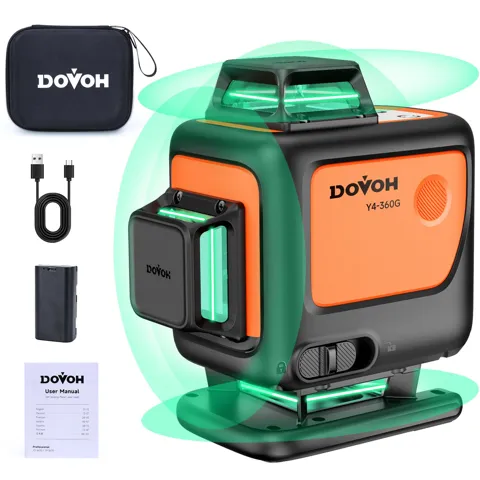 Dovoh
4 × 360° floor laser level
Lines on the floor and all four walls at once: square layout lines and a level reference around the room.
Check price
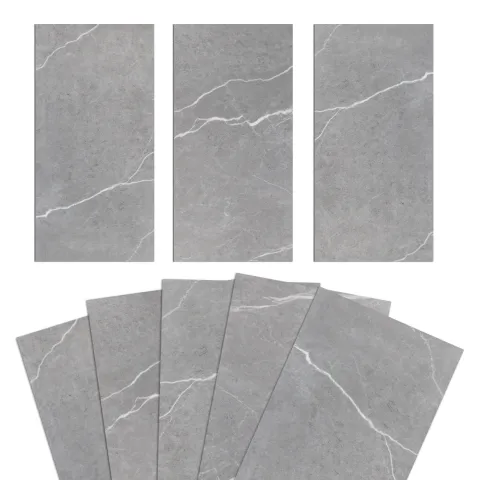 Jeedeson
Peel-and-stick vinyl tile, 12 × 24 in
Goes straight onto a flat, primed floor — 60 sq ft per case.
Check price
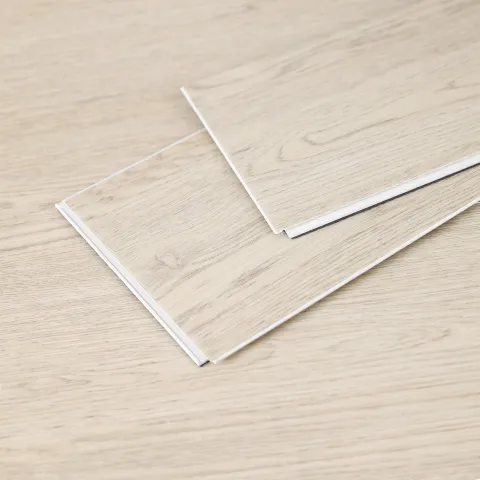 Jeedeson
SPC click-lock plank
Rigid-core, waterproof vinyl plank for kitchens and basements.
Check price
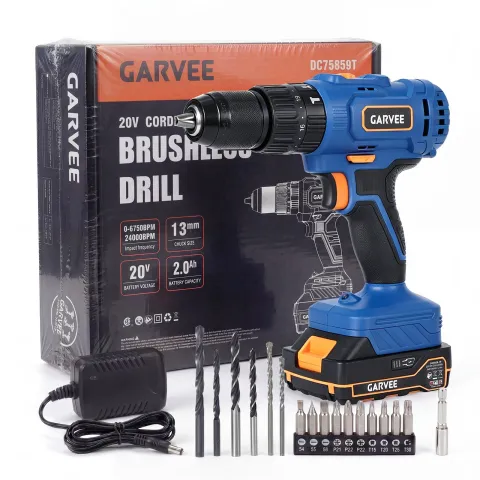 Garvee
20V cordless hammer drill
Drills masonry and concrete for anchors, and drives screws everywhere else.
Check price
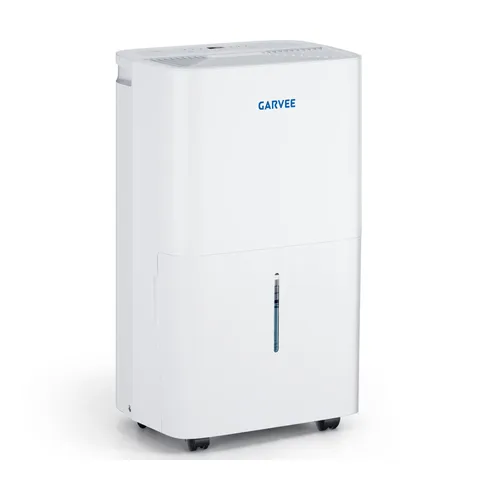 Garvee
Dehumidifier, 50 pint
Pulls the water out of a room so slabs, mud and new floors dry on schedule.
Check price
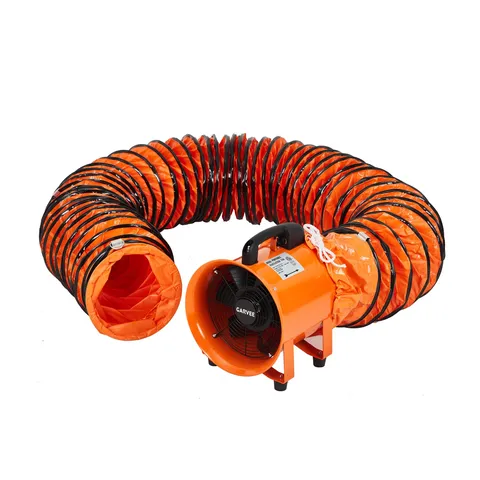 Garvee
Utility blower fan, 10 in
Moves air across a wet slab, fresh mud or new finish so it dries evenly.
Check price
Not the tool you were after? Browse the whole range at Dovoh, Jeedeson or Garvee — the stores these picks come from.