Concrete calculator
Concrete driveway & slab
cost calculator
Calculate concrete for a rectangular slab or circular pad in cubic yards or cubic metres. Compare ready-mix bag quantities and estimate gravel base, reinforcement and waste. Then enter your price per cubic yard to see what the pour will cost.
Enter measurements ↓Optional
What will it cost?
Every material the calculator worked out gets its own price. Each field starts at a typical US figure so you have something to work from — change any of them to what your own supplier charges.
These prices are approximate. They are national US retail figures, and what you actually pay varies with your region, your supplier, the season and how much you buy at once. Treat them as a starting point, not a quote — always price the job from your own supplier's current figures before you order.
Your prices
More in this series
Break the pour down further
This page sizes the pour as a whole. These tools take one part of it — the steel, the post holes, the footings, the fence — and work it out on its own terms.
- Rebar Calculator Grid bars, lap splices, tie wire and steel weight
- Post Hole Concrete Calculator Concrete per hole, bags, gravel base and total yards
- Fence Calculator Posts, rails, pickets or rolls, gates, and concrete per post with bags, by fence style and height
- Concrete Footing Calculator Piers, bell footings, strip footings, form tubes and yards
- Concrete Steps Calculator Stepped volume, landing slab, bags and cubic yards
- Self-Leveling Compound Calculator Underlayment bags, average depth, primer and coverage
- Concrete Removal Cost Calculator Debris weight, dumpsters and demolition cost
- Concrete Bag Yields and Mix Ratios Bag yields, mix proportions and strength classes in one table
- Self-Leveling Concrete Thickness Minimum and maximum pour depth, gravel fills, and bags per 100 sq ft by thickness
- Concrete Curing and Drying Times When you can walk, load and drive on new concrete, how temperature changes it, and how long mortar takes
- Concrete Weight per Cubic Foot and Yard What a cubic foot, a cubic yard and a slab of concrete weigh, by type and thickness, and what a truck carries
- Fence Post Depth, Spacing and Sizes How deep to set a fence post by fence height, how far apart posts go by style, 4×4 or 6×6, bags of concrete per post, and how long each wood lasts
Finishes
What a concrete patio costs once you add a finish
The calculator above prices plain grey concrete. A patio is usually finished, and the finish moves the installed cost far more than the concrete does. These are typical US installed ranges per square foot, on top of a properly prepared base.
| Finish | Installed, per sq ft | What you get |
|---|---|---|
| Broom finish | $6 – $12 | Plain grey with a swept texture. The default, and the cheapest. |
| Coloured concrete | $8 – $15 | Pigment mixed through or cast on. One colour, no pattern. |
| Exposed aggregate | $10 – $18 | Surface washed back to reveal the stone. Grippy and hard-wearing. |
| Stamped concrete | $12 – $25 | Textured to imitate stone or brick, usually coloured as well. |
| Polished or acid-stained | $15 – $30 | Ground and sealed. Mostly used where the slab is under cover. |
Regional labor rates move these more than any material choice, so treat them as a shape rather than a quote.
Tools for the job
What makes this job easier
Tools and materials that suit this kind of job. These are affiliate links: if you buy through one, Renovimo may earn a commission at no extra cost to you. It never changes the figures on this page.
 Garvee
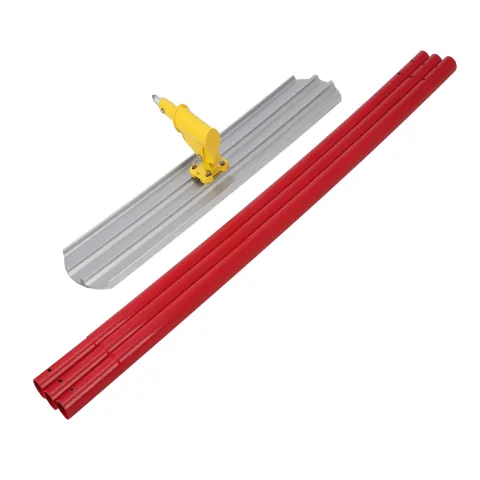
Bull float, 48 × 8 in
Levels a fresh slab and brings up the cream for finishing.
Check price
Garvee
Bull float, 48 × 8 in
Levels a fresh slab and brings up the cream for finishing.
Check price
 Garvee
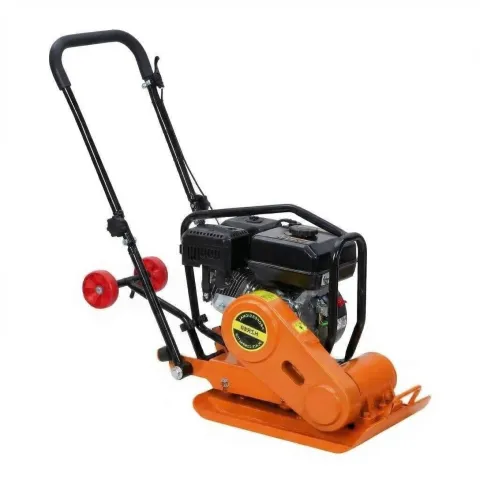
Plate compactor, 7 HP
Compacts gravel base in lifts so pavers and walls do not settle.
Check price
Garvee
Plate compactor, 7 HP
Compacts gravel base in lifts so pavers and walls do not settle.
Check price
 Plastic Place
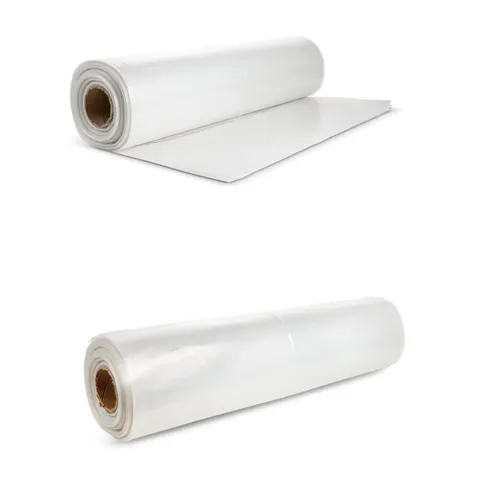
Poly sheeting, 6 mil, 10 × 100 ft
The vapor barrier under a slab on grade; lap the seams 6 in and tape them.
Check price
Plastic Place
Poly sheeting, 6 mil, 10 × 100 ft
The vapor barrier under a slab on grade; lap the seams 6 in and tape them.
Check price
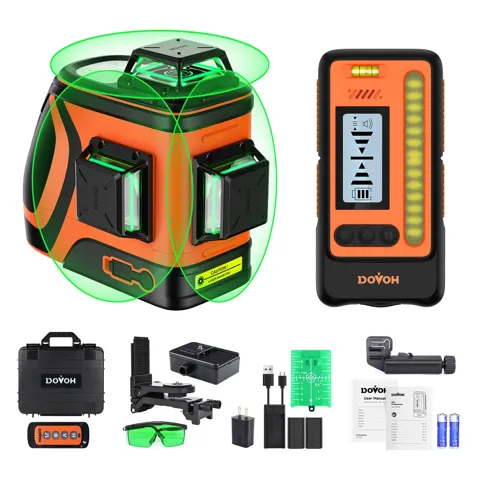 Dovoh
Outdoor laser level with receiver
The receiver finds the beam in full sun, so you can set forms, footings and base to grade alone.
Check price
Dovoh
Outdoor laser level with receiver
The receiver finds the beam in full sun, so you can set forms, footings and base to grade alone.
Check price
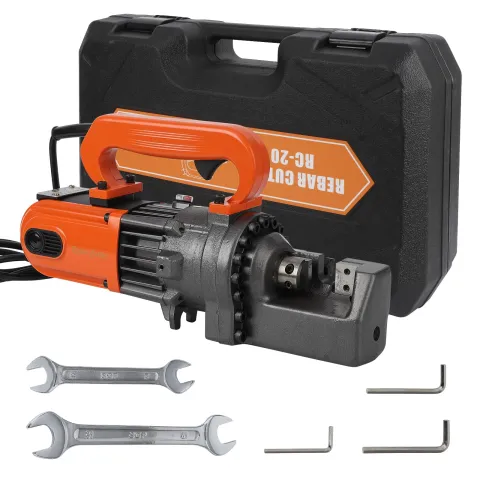 Garvee
Electric rebar cutter, up to #6
Cuts slab and footing bar to length in seconds, with no sparks.
Check price
Garvee
Electric rebar cutter, up to #6
Cuts slab and footing bar to length in seconds, with no sparks.
Check price
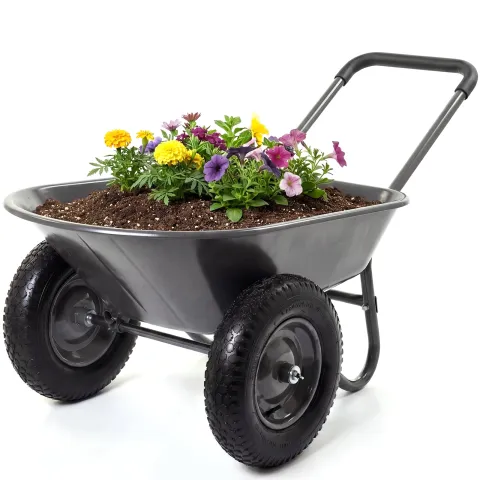 Garvee
Two-wheel wheelbarrow
Stable on two wheels for bagged concrete, block and soil.
Check price
Garvee
Two-wheel wheelbarrow
Stable on two wheels for bagged concrete, block and soil.
Check price
Not the tool you were after? Browse the whole range at Garvee, Plastic Place or Dovoh — the stores these picks come from.
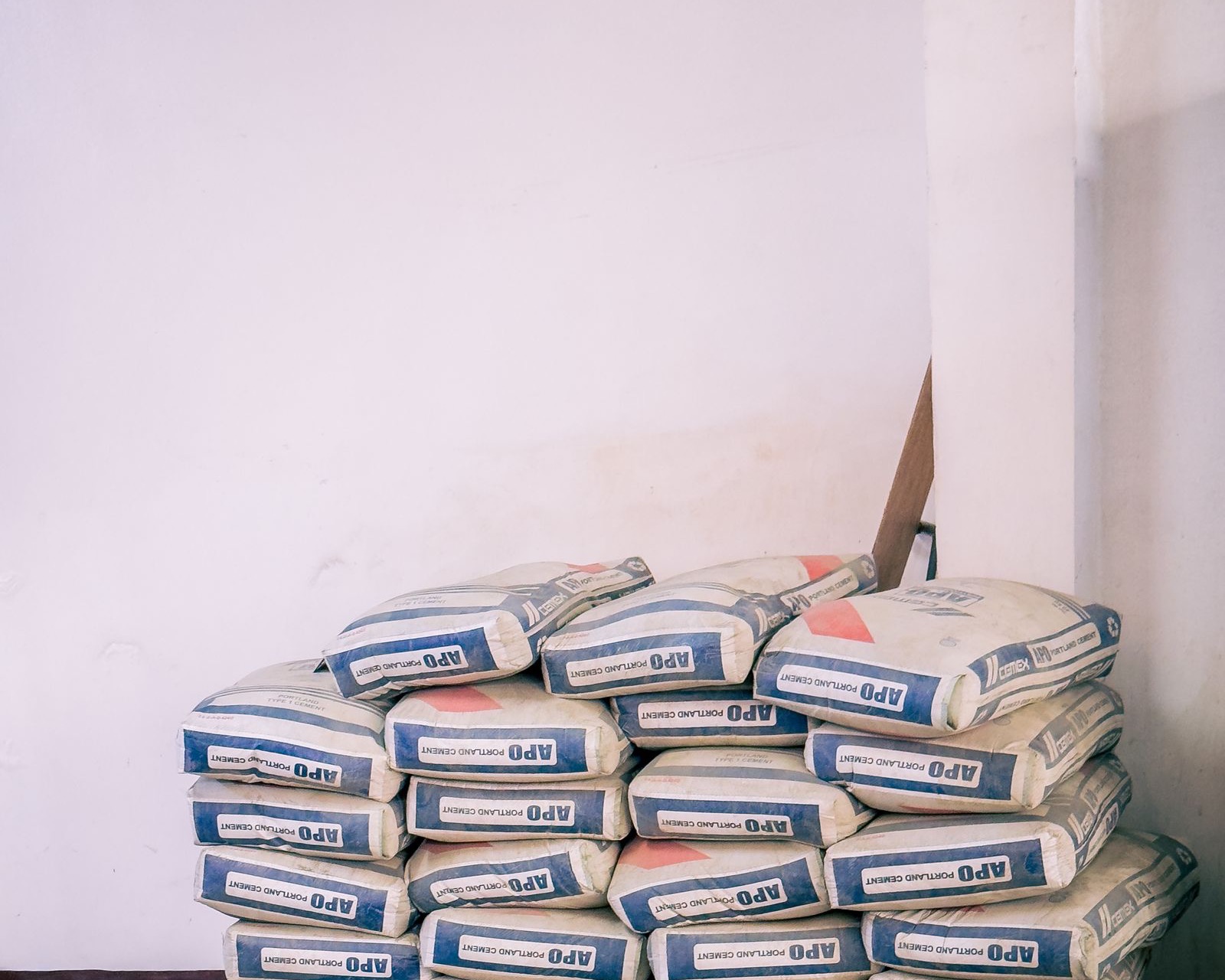
Based on your result
What you'll need
Quantities update after every calculation. For larger pours, compare bags against a ready-mix truck delivery.
- Ready-mix concrete
- Bags to reach the ordered volume
- Calculate above
- Gravel sub-base
- 4-inch compacted base under the slab
- —
- Steel rebar
- Reinforcing grid at 24-inch centres
- —
- Formwork & tools
- Edge boards, a float and a screed
- As needed
The maths
How we work out your concrete
We turn your slab into a volume — footprint multiplied by thickness and the number of pads — then pad it for spillage and uneven ground. That ordered volume is shown in yards and metres and divided by the yield of your chosen bag. A gravel sub-base and a rebar grid are sized from the same footprint.
volume = footprint × thickness × quantity
ordered = volume × waste
bags = ⌈ ordered ÷ bag yield ⌉
- 5–15%
- waste (you choose)
- 0.60 ft³
- per 80 lb bag
- 4 in
- gravel sub-base
- 24 in
- rebar grid centres
- 27 ft³
- = 1 cubic yard
- ft ↔ m
- converted automatically
-
01
Pick a shape
A rectangular slab uses length × width; a circular pad uses π × radius², so patios and footings both work.
-
02
Set thickness and count
Depth is entered in inches (or centimetres) and multiplied by how many identical pads you are pouring.
-
03
Add a waste margin
Choose 5–15% — uneven subgrade, spillage and over-dig all eat into a pour, so it is padded before ordering.
-
04
Split into bags or yards
The ordered volume is shown in cubic yards and metres, and divided by your bag yield for a bag count.
-
05
Base and reinforcement
A 4-inch gravel sub-base and a 24-inch rebar grid are added to the list whenever you tick them.
Good to know
Concrete questions, answered
Bags suit small jobs — a few post footings, a shed base or a small pad. Once you are past roughly a cubic yard (about 45 to 60 bags) it is usually cheaper, faster and stronger to order a ready-mix truck. The calculator gives you both the volume and the bag count so you can compare.
Five percent covers a tidy pour onto solid formwork. Go to 10–15% for uneven or soft ground, hand-dug footings, or where the sub-base is rough — the extra means you are not left short with concrete already going off.
Four inches (100 mm) is typical for a patio, shed base or footpath. Driveways, garages and anything taking vehicles usually want five to six inches over a good sub-base, often with reinforcement. Enter the depth your project calls for.
For most ground-bearing slabs, yes. A compacted 4-inch layer of gravel spreads the load, improves drainage and reduces frost movement, which helps the slab resist cracking. The calculator adds it when the box is ticked.
Light-duty slabs often use steel mesh, while thicker or load-bearing slabs use a rebar grid. Either controls cracking rather than stopping it entirely. This tool estimates a rebar grid at 24-inch centres; scale it to your engineer’s spec for structural work.
An 80 lb bag yields about 0.6 cubic feet, and a cubic yard is 27 cubic feet — so roughly 45 bags per yard. 60 lb bags need about 60, and 40 lb bags about 90, which is why big pours favour ready-mix.
Yes. Switch to metres and thickness is entered in centimetres, with the result shown in cubic metres alongside the cubic-yard equivalent. Every input converts automatically.
A plain broom-finished patio runs about $6 to $12 per square foot installed, so a 12 by 16 foot patio lands between roughly $1,150 and $2,300. Stamped or coloured finishes push the top of that range past $25 per square foot. The concrete itself is a small part of it — most of the money is labor and finishing.
A 4-inch patio on a compacted base usually gets steel mesh or a light #3 or #4 grid at 16 to 18 inch centres. It does not stop cracking, it holds the crack tight when it happens. The rebar calculator sizes the grid and tells you what the steel weighs.