Fertilizer calculator
Fertilizer calculator:
lawn fertilizer by nitrogen rate and NPK
Lawns are fed by the pound of nitrogen, and the bag tells you its percentage. Enter the lawn and the three numbers on the bag, and get the pounds and bags for one feeding and for the season.
Enter your lawnOptional
What will it cost?
Every material the calculator worked out gets its own price. Each field starts at a typical US figure so you have something to work from — change any of them to what your own supplier charges.
These prices are approximate. They are national US retail figures, and what you actually pay varies with your region, your supplier, the season and how much you buy at once. Treat them as a starting point, not a quote — always price the job from your own supplier's current figures before you order.
Your prices
More in this series
The rest of the yard
A yard is rarely one material: stone under the path, soil to fill, sod or seed on top, fertilizer after. Each has its own calculator, built for how that material is sold.
- Gravel Calculator Gravel, crushed stone, sand and road base by volume, tons and bags
- Mulch Calculator Cubic yards, bags or bales of mulch for every bed, topped up over the old layer
- Topsoil Calculator Cubic yards, tons and bags of topsoil, fill dirt or compost, with settling
- Sod Calculator Rolls or slabs of sod, pallets, pallet weight and what a trailer carries, with waste for cuts
- Grass Seed Calculator Pounds and bags of grass seed by grass type for a new lawn or overseeding, with starter fertilizer and straw
- Crushed Stone Sizes and Coverage What each stone grade is for, and what a ton and a yard cover
- Topsoil Weight and Coverage What a yard of soil weighs dry, moist and wet, and how far it spreads
- Mulch Coverage, Bags and Weight How far a yard and a bag of mulch spread, and what they weigh
- Gravel and Sand Weight per Yard What a cubic yard and a ton of gravel, sand and crushed stone weigh, how far a ton goes, and what a truck carries
- Grass Seed Germination and Planting Times How many days each grass takes to come up, when to plant it, how deep, and how to water a new seeding
- Sod Pallet Sizes and Weights Square feet and pieces on a pallet of sod, what a pallet, roll and slab weigh, what a truck can carry, and how long sod keeps
- Lawn Seed and Fertilizer Rates How often to fertilize, pounds of seed per 1,000 sq ft and per acre, fertilizer by NPK, how much lime, and when to overseed
- New Sod Watering and Rooting A week-by-week watering schedule for new sod, how long it takes to root, and when you can walk on, mow and feed it
Tools for the job
What makes this job easier
Tools and materials that suit this kind of job. These are affiliate links: if you buy through one, Renovimo may earn a commission at no extra cost to you. It never changes the figures on this page.
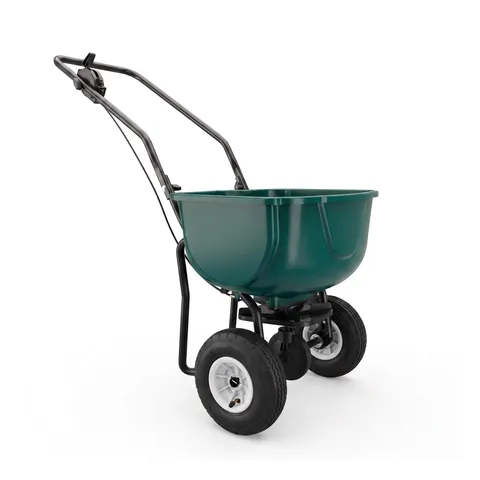 Garvee
Broadcast spreader, 70 lb
Spreads seed, fertilizer and lime evenly over new topsoil.
Check price
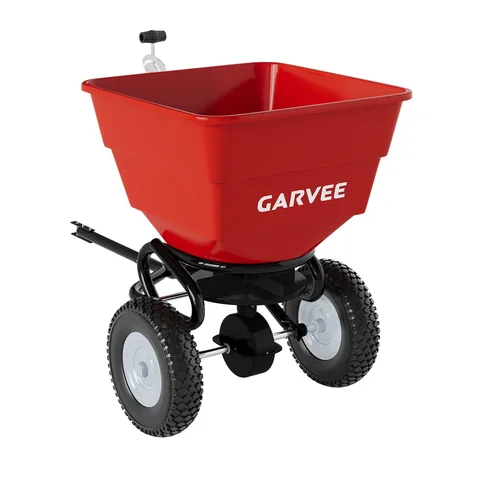 Garvee
Tow-behind broadcast spreader, 130 lb
Hooks to a riding mower and feeds or seeds an acre in one fill.
Check price
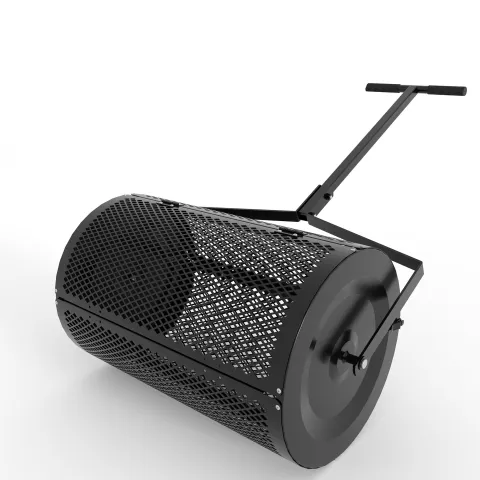 Garvee
Lawn spreader, 24 in
Spreads fine gravel, sand, compost and seed evenly.
Check price
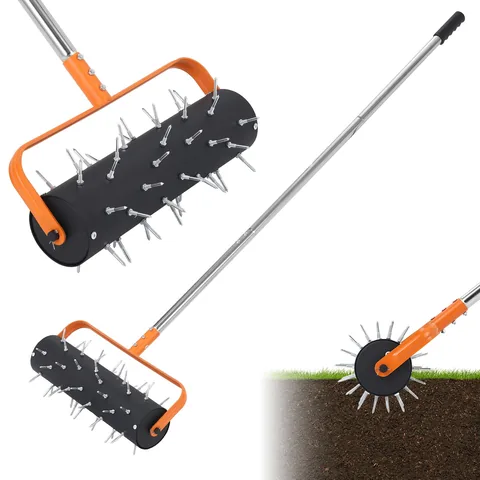 Garvee
Rolling spike aerator, 18 in
Opens the soil before overseeding or feeding, so seed and fertilizer reach the roots.
Check price
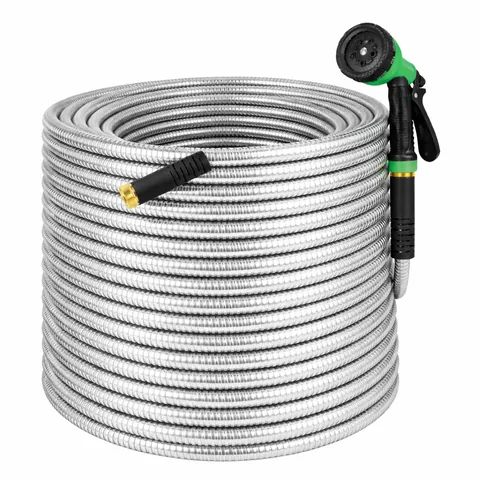 Garvee
Stainless steel garden hose, 100 ft
Reaches the far corner of the lawn for the twice-a-day watering new sod and seed need.
Check price
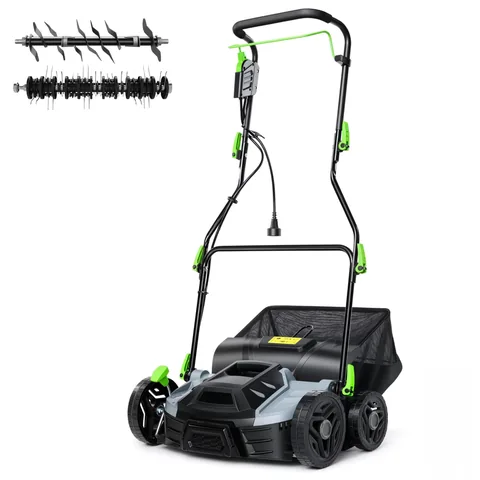 Garvee
Electric dethatcher and scarifier
Clears the thatch from a tired lawn so overseed lands on soil, not on dead grass.
Check price
Not the tool you were after? Browse the whole range at Garvee — the store these picks come from.
Based on your result
What you'll need
Spread on dry grass, then water it in — granules left on wet blades can scorch them, and fertilizer on the sidewalk goes straight to the storm drain, so sweep it back.
- Lawn fertilizer
- Bags for the season at the rate you picked
- Calculate above
- Broadcast spreader
- Set it from the bag; go over the lawn twice at half the rate, crosswise
- 1
- Gloves
- Keep the granules off your skin
- 1 pair
Product rates
Lawn fertilizer calculator by nitrogen rate and NPK
How much of each common product puts down 1 lb of nitrogen — the standard feeding — per 1,000 sq ft, per acre and on a 5,000 sq ft lawn.
| Product | Per 1,000 sq ft | Per acre | 5,000 sq ft lawn |
|---|---|---|---|
| 10-10-10 | 10.0 lb | 436 lb | 50.0 lb |
| 24-0-6 | 4.2 lb | 182 lb | 20.8 lb |
| 29-0-4 | 3.4 lb | 150 lb | 17.2 lb |
| 32-0-4 | 3.1 lb | 136 lb | 15.6 lb |
| 5-10-5 starter | 20.0 lb | 871 lb | 100.0 lb |
| 16-4-8 | 6.3 lb | 272 lb | 31.3 lb |
When in the year to feed, and how often, is on lawn seed and fertilizer rates.
The maths
How much fertilizer do I need?
The lawn the calculator opens with is 1,000 square feet, fed 1 lb of nitrogen from a 24-0-6 bag. The bag is 24 percent nitrogen, so 1 lb of nitrogen takes 100 ÷ 24 = 4.17 lb of product — 4.2 lb, rounded up to the tenth of a pound.
bags = ⌈ product ÷ bag size ⌉
season = product × feedings
- 01
Measure the lawn
Length and width, diameter, or base and height — or type the square feet or acres.
- 02
Read N-P-K off the bag
The first number is the one that matters: it is the percentage of nitrogen, and nitrogen is what lawns are fed by.
- 03
Pick the nitrogen rate
1 lb per 1,000 sq ft is the standard feeding; lighter rates suit late spring and shade. Or use the label rate if you would rather follow the bag.
- 04
Multiply by the feedings
2–3 a year for cool-season grass; 3–4 for Bermuda, 2–3 for zoysia and only 1–2 for centipede.
Good to know
How this fertilizer calculator works, and other questions
Enough to put down about 1 lb of nitrogen: 4.2 lb of 24-0-6, 3.4 lb of 29-0-4, 3.1 lb of 32-0-4 or 10.0 lb of 10-10-10.
182 lb of 24-0-6 for one feeding at 1 lb of nitrogen per 1,000 sq ft — an acre is 43,560 sq ft, 43.56 times the per-1,000 figure.
2–3 times a year for cool-season grass, with September the feeding that matters most. Warm-season grasses each have their own schedule: Bermuda 3–4 times, monthly through the summer; zoysia 2–3, lighter; centipede only 1–2 — fed like Bermuda, it declines. The feeding schedule →
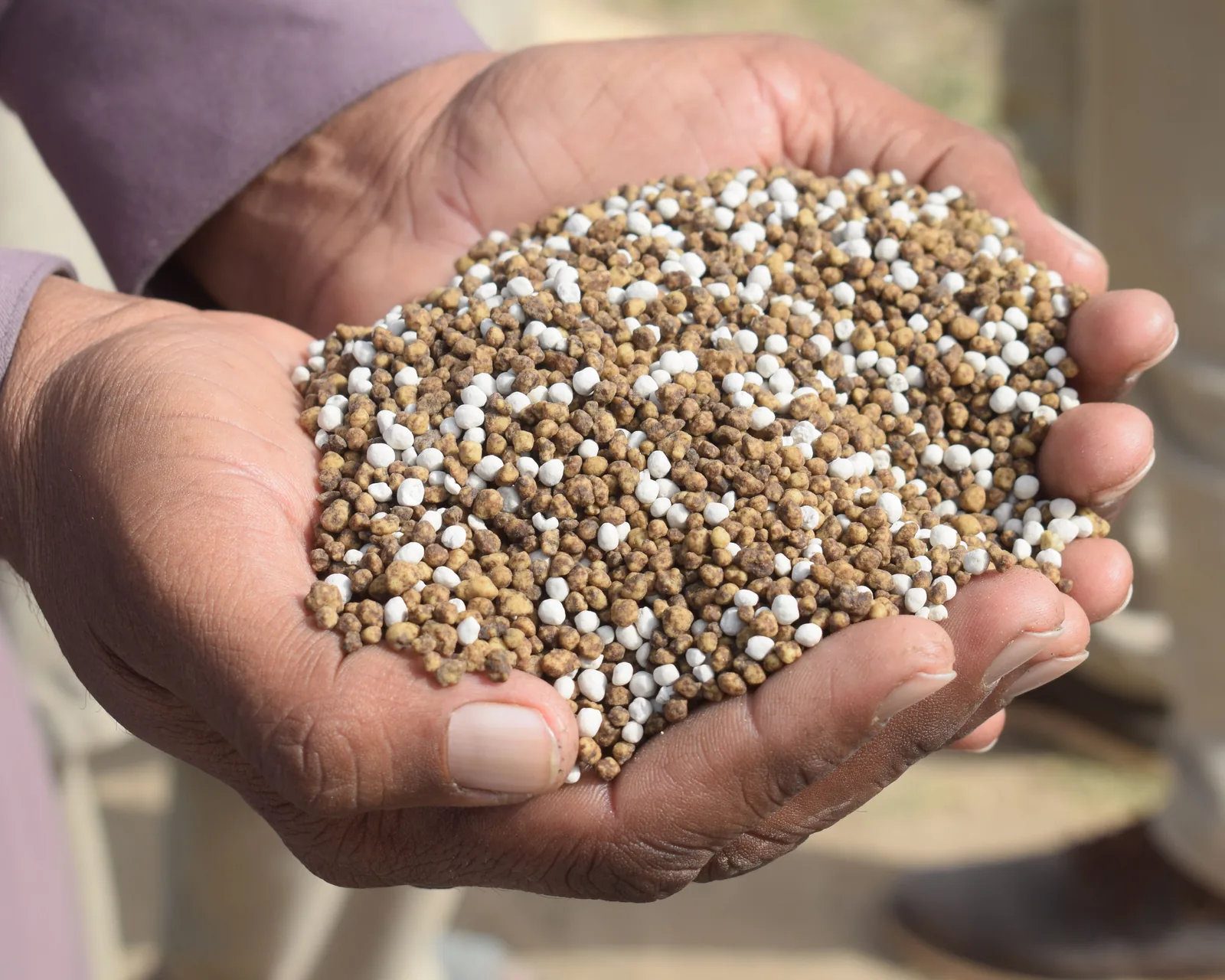
The percentages of nitrogen, phosphate and potash, in that order. A 24-0-6 bag is 24 percent nitrogen, no phosphate and 6 percent potash; the rest is carrier.
Yes — 10 lb per 1,000 sq ft gives 1 lb of nitrogen. It also puts down as much phosphate, which most established lawns do not need and some states restrict, so a lawn formula is the better buy unless a soil test asks for it.
The grass burns in yellow-brown streaks and the extra washes into the storm drain. Keep each feeding to 1 lb of nitrogen per 1,000 sq ft, and water it in.