Engineering calculator
Winder stair calculator
Winder stairs turn a corner on wedge-shaped treads instead of a landing. The IRC wants every winder at least 10 in deep on the walkline, 12 in in from the inside of the turn, and at least 6 in deep at the narrow end, both measured nosing to nosing. A 9 ft rise with 10 in treads takes 15 risers of about 7 3/16 in: 5 straight treads, three winders 12 3/16 in deep on the walkline, then 6 more, in 7 ft 11 3/16 in by 8 ft 9 3/16 in. Enter yours for the layout, a cutting template for every winder, and the stair in 3D.
Enter your riseMore in this series
Other stair layouts
A straight flight is the simplest stair to lay out and the base the turning layouts build on.
- Stair Calculator Risers, treads, stringer layout, floor opening and code checks, drawn to scale and in 3D
- L-Shaped Stair Calculator Two flights and a landing: risers, treads, stringers, landing size and the L footprint, drawn in plan and 3D
- U-Shaped Stair Calculator Two parallel flights and a half-turn landing: risers, treads, stringers, landing size and the U footprint, drawn in plan and 3D
- Spiral Staircase Calculator Risers, tread angle and turn, walkline depth, clear width, headroom and the well opening for any diameter, with a tread template, drawn in plan and 3D
- Ship Ladder and Alternating Tread Stair Calculator Risers, tread spacing, angle, run, stringers and handrails for a ship's ladder or an alternating tread stair, with IRC checks, drawn and in 3D
Tools for the job
What makes this job easier
Tools and materials that suit this kind of job. These are affiliate links: if you buy through one, Renovimo may earn a commission at no extra cost to you. It never changes the figures on this page.
 Garvee
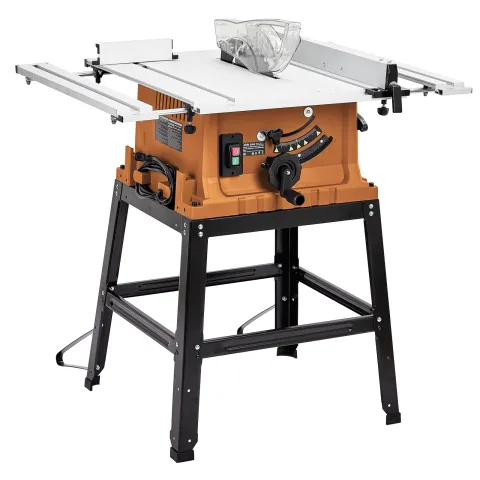
10 in table saw
Rips the boards that are edge-glued into each winder blank, and the riser boards to height.
Check price
 Garvee
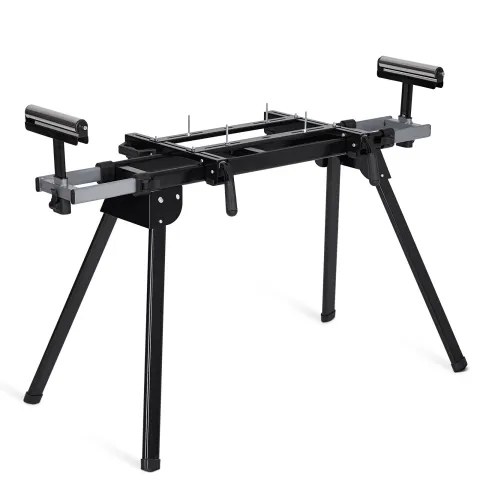
Miter saw stand
Holds the long winder blanks and 2 × 12 stringer stock level at the saw.
Check price
 Garvee
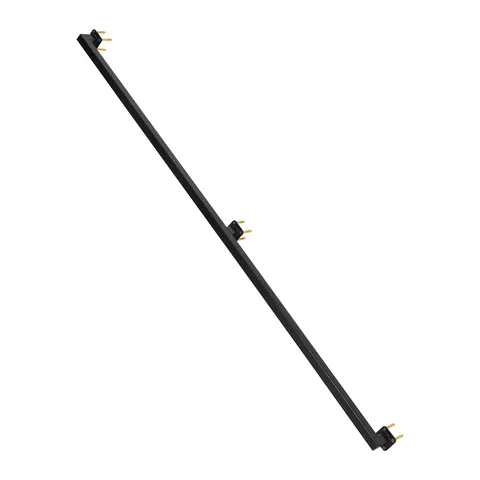
Stair handrail, 6 ft
A graspable rail along the whole flight, winders included, mounted 34 to 38 in above the nosings.
Check price
 Dovoh
Cross-line laser level, green
Throws the winder lines onto the subfloor from the plan, and a level line for every winder frame on the walls.
Check price
 Garvee
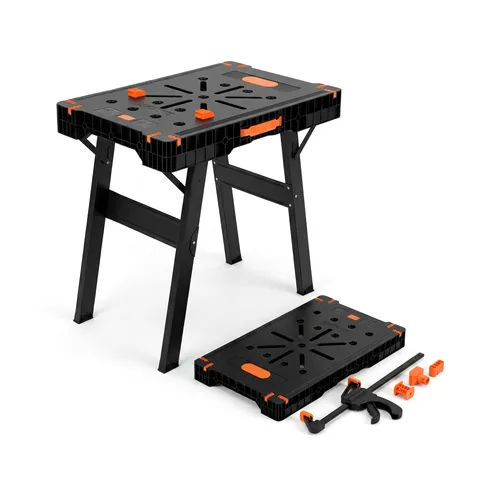
Folding work table and sawhorse
A flat bench for tracing each winder template onto its blank and cutting it out.
Check price
 Garvee
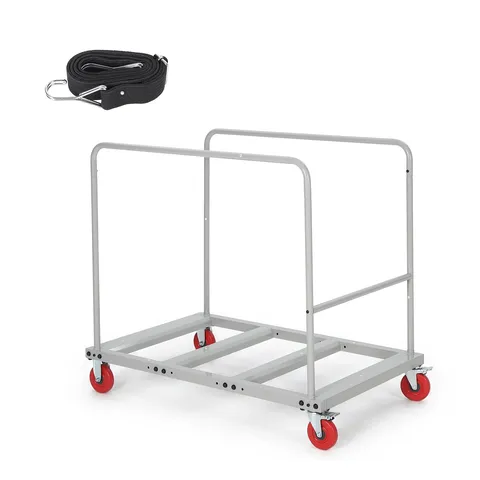
Collapsible material cart, 1800 lb
Moves stringer stock, tread boards and plywood from the truck to the stairwell in one trip.
Check price
Not the tool you were after? Browse the whole range at Garvee or Dovoh — the stores these picks come from.
Based on your result
What you'll need
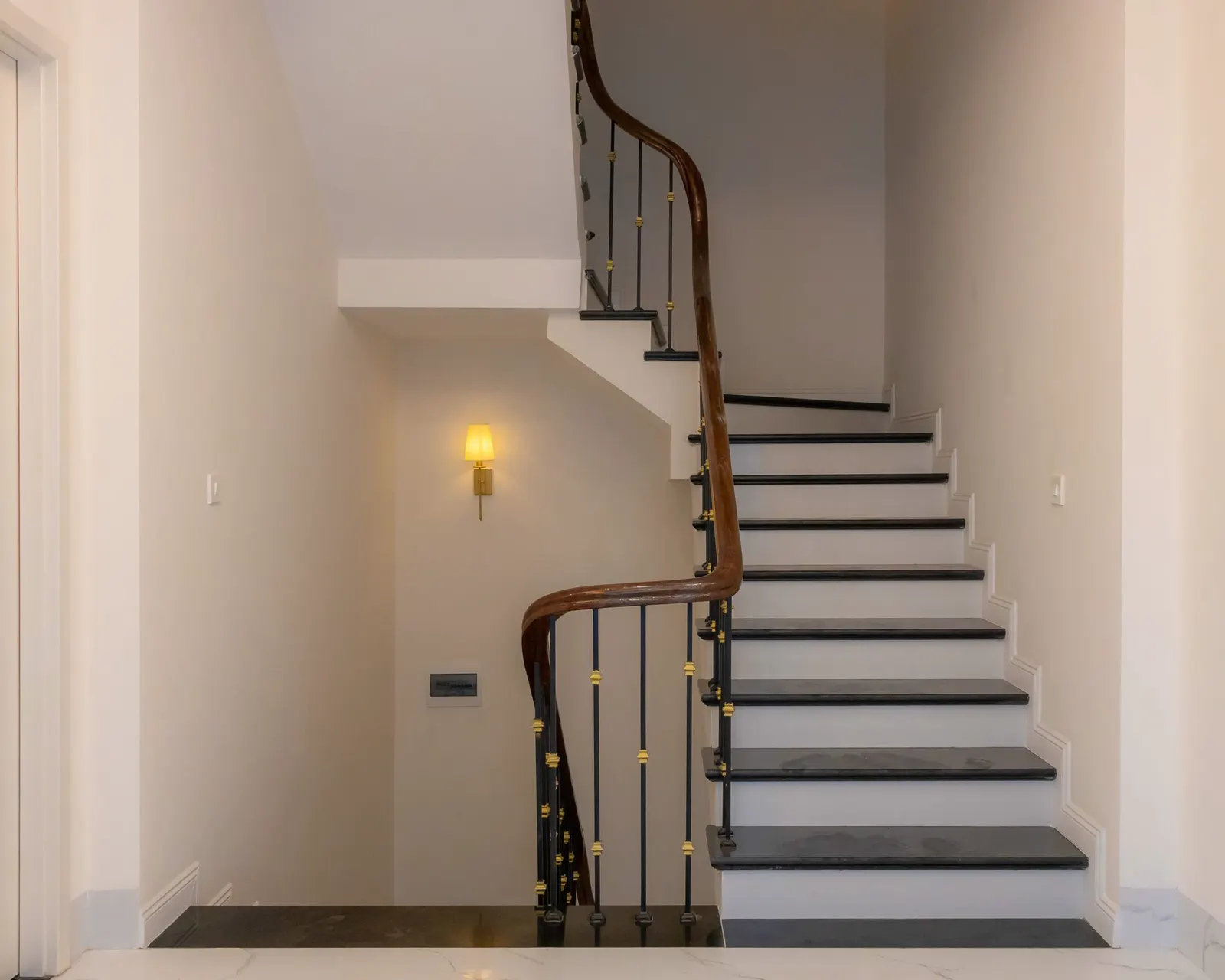
Snap the winder lines on the subfloor from the plan and build the winders first, from the bottom one up: the straight flights take their heights from them. Then cut one stringer for each flight and use it as the pattern for the rest.
- 2 × 12 stringers
- One set for each straight flight
- Calculate above
- Straight treads Amazon
- Oak stair treads or 2 × 12 lumber, cut to the stair width
- Calculate above
- Winder treads
- Edge-glued blanks, cut to the templates
- Calculate above
- Riser boards
- Primed 1 × 8; the ones between winders run corner to wall
- Calculate above
- Winder framing
- 2 × 4 frames under each winder, ledgers on the walls
- Calculate above
- Newel post
- 4 × 4 at the inner corner, carrying the narrow ends
- Calculate above
- Stringer connectors Amazon
- One per stringer where it meets the winders or the header
- Calculate above
- Tread screws, 2½ in Amazon
- Into every stringer and winder frame
- Calculate above
- Construction adhesive Amazon
- A bead on every cut and frame before the tread goes down
- Calculate above
- Stair gauges Amazon
- Clamped on the framing square at the riser and the run
- Calculate above
As an Amazon Associate I earn from qualifying purchases.
The maths
How this winder stair calculator works
Winders change the plan, not the risers: the rise is divided exactly as for a straight stair, and some of the treads become wedges that carry the turn. Two code limits fix their shape. On the walkline every winder must be at least 10 in deep, and the same depth as the others to within ⅜ in; at the narrow end, at least 6 in.
treads = risers − 1 = straight treads + winders
walkline = 12 in in from the inside of the turn, round the corner
winder depth = equal chords on the walkline, nosing to nosing
narrow end = nosing to nosing at the narrow side, ≥ 6 in
footprint, 90° = (straight below × run + set-back + width) × (width + set-back + straight above × run)
- 01
Divide the rise
The total rise over the riser you would like, rounded to whole steps, with one more step if a riser comes out over 7¾ in. The winders are counted among the treads; a turn of winders is not a landing, so the whole stair is one flight and may rise no more than 151 in.
- 02
Find the set-back
With narrow ends at least 6 in deep, the turn cannot pivot on the inner corner: it starts and ends with a square riser line set back from the corner, about 9 3/16 in for three winders in a 90° turn with a 1 in nosing. The narrow side between those two lines is shared out evenly, and the calculator moves the set-back until every narrow end is 6 in deep from nosing to nosing.
- 03
Split the walkline
Each winder line runs from its mark on the narrow side through a mark on the walkline to the wall. The marks are placed so the chords between the nosings on the walkline are equal, and every winder is the same depth where you walk: 12 3/16 in for three winders in the 9 ft example.
- 04
Frame the winders first
Each winder sits on its own 2 × 4 box: a riser-height frame under its front edge, ledgers on the wall studs, blocking between, and the newel post at the inner corner (or a ledger where a wall runs along the narrow side), with a ¾ in plywood subtread on top. Build them from the bottom up, each one riser above the last, with the tread thickness taken off the top so every riser stays equal.
- 05
Cut the templates and stringers
Trace each winder from its template onto an edge-glued blank, nosing on the front edge. The straight flights below and above the turn get ordinary cut stringers, laid out with the same riser and run on the framing square.
Good to know
Winder stairs questions: treads, walkline and layout
Under IRC 2021 R311.7.5.2.1, at least 10 in deep where the walkline crosses them and at least 6 in deep at any point within the clear width of the stair, both measured between the nosings. Within one flight, the deepest winder on the walkline may be no more than ⅜ in deeper than the shallowest. They do not have to match the straight treads.
R311.7.4 puts it 12 in in from the inside of the turn, concentric with the turn and parallel to the direction of travel into and out of it. The calculator draws it dashed on the plan and measures every winder's depth between the points where its nosing and the next one cross the walkline. A winder that wraps the inner corner is measured along the narrow side, round the corner.
Usually three, often called a 3-step winder, but two to five are all used. With 6 in narrow ends, a 1 in nosing and the IRC walkline, two winders come out about 15 5/16 in deep on the walkline, three about 12 3/16 in and five about 10 11/16 in. More winders make each one shallower and the turn longer.
The middle winder of a three-winder turn: it wraps the inner corner, so in plan it is shaped like a kite, with its wide end in the outer corner of the walls. The two winders either side of it are tapered wedges.
No. Winders are treads, so a stair with winders is one flight from floor to floor and its total rise may not exceed 151 in (R311.7.3). A stair taller than that needs a real landing at least 36 in deep.
Less than you might expect under the IRC. The 6 in narrow end pushes the turn out of the corner, so the 9 ft example takes 7 ft 11 3/16 in by 8 ft 9 3/16 in with three winders against 8 ft by 8 ft 10 in for the same stair with a square landing. What winders do save is a few treads in the straight runs, because the turn itself climbs.
A 180° turn made of winders: two winder corners back to back, the flights side by side with a wall or an open well between them. For a 9 ft rise with three winders in each corner and a 4½ in wall between, it fits in 8 ft 3 13/16 in by 6 ft 4 1/2 in.
Each winder is cut from an edge-glued blank to a full-size template, the nosing added on its front edge. Underneath, each winder sits on a 2 × 4 box frame fastened to the wall studs and to a newel post at the inner corner, or to a ledger where a wall runs along the narrow side, with a ¾ in plywood subtread, built from the bottom winder up.