
Post hole calculator
Post hole concrete
calculator
Enter your hole size and post size and get the concrete for one hole and for the whole run — in bags and in cubic yards, with the post itself taken out of the volume and a gravel base allowed for at the bottom.
Enter measurements ↓Optional
What will it cost?
Every material the calculator worked out gets its own price. Each field starts at a typical US figure so you have something to work from — change any of them to what your own supplier charges.
These prices are approximate. They are national US retail figures, and what you actually pay varies with your region, your supplier, the season and how much you buy at once. Treat them as a starting point, not a quote — always price the job from your own supplier's current figures before you order.
Your prices
More in this series
Put these figures to work
Sizing one part of a pour is easier when the slab itself is settled. Start with the main estimate, then come back for the detail.
- Concrete Calculator Concrete volume, ready-mix bags, gravel base and rebar
- Rebar Calculator Grid bars, lap splices, tie wire and steel weight
- Fence Calculator Posts, rails, pickets or rolls, gates, and concrete per post with bags, by fence style and height
- Concrete Footing Calculator Piers, bell footings, strip footings, form tubes and yards
- Concrete Steps Calculator Stepped volume, landing slab, bags and cubic yards
- Self-Leveling Compound Calculator Underlayment bags, average depth, primer and coverage
- Concrete Removal Cost Calculator Debris weight, dumpsters and demolition cost
- Concrete Bag Yields and Mix Ratios Bag yields, mix proportions and strength classes in one table
- Self-Leveling Concrete Thickness Minimum and maximum pour depth, gravel fills, and bags per 100 sq ft by thickness
- Concrete Curing and Drying Times When you can walk, load and drive on new concrete, how temperature changes it, and how long mortar takes
- Concrete Weight per Cubic Foot and Yard What a cubic foot, a cubic yard and a slab of concrete weigh, by type and thickness, and what a truck carries
- Fence Post Depth, Spacing and Sizes How deep to set a fence post by fence height, how far apart posts go by style, 4×4 or 6×6, bags of concrete per post, and how long each wood lasts
Tools for the job
What makes this job easier
Tools and materials that suit this kind of job. These are affiliate links: if you buy through one, Renovimo may earn a commission at no extra cost to you. It never changes the figures on this page.
 Garvee
Two-wheel wheelbarrow
Stable on two wheels for bagged concrete, block and soil.
Check price
Garvee
Two-wheel wheelbarrow
Stable on two wheels for bagged concrete, block and soil.
Check price
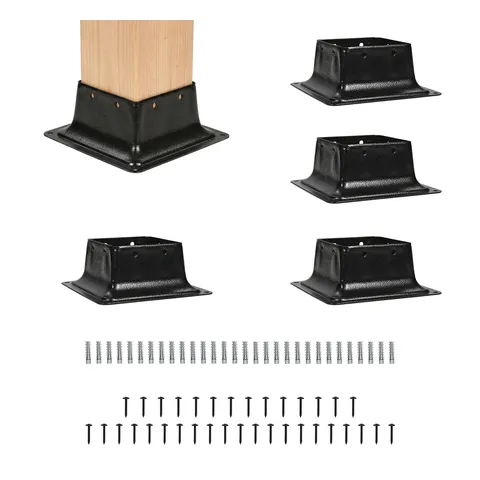 Garvee
Stainless post base, 4-pack
Lifts a 4×4 off the concrete so the end grain stays dry.
Check price
Garvee
Stainless post base, 4-pack
Lifts a 4×4 off the concrete so the end grain stays dry.
Check price
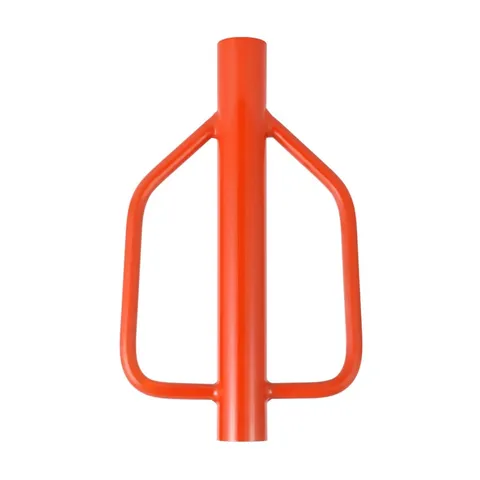 Garvee
Fence post driver, 18 lb
Drives T-posts and stakes without a sledge; sets the line before the holes.
Check price
Garvee
Fence post driver, 18 lb
Drives T-posts and stakes without a sledge; sets the line before the holes.
Check price
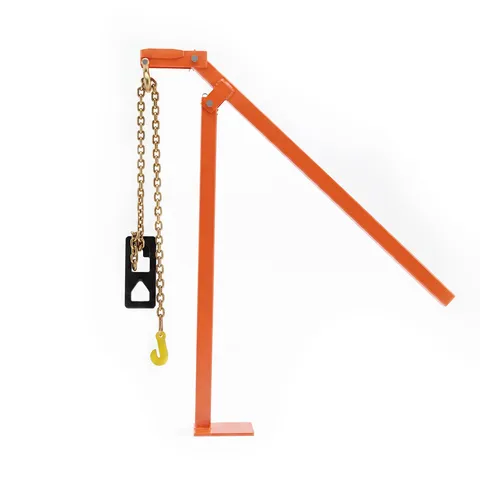 Garvee
Fence post puller, 36 in
Pulls the old T-post or stump post out in one go, so the new hole starts clean.
Check price
Garvee
Fence post puller, 36 in
Pulls the old T-post or stump post out in one go, so the new hole starts clean.
Check price
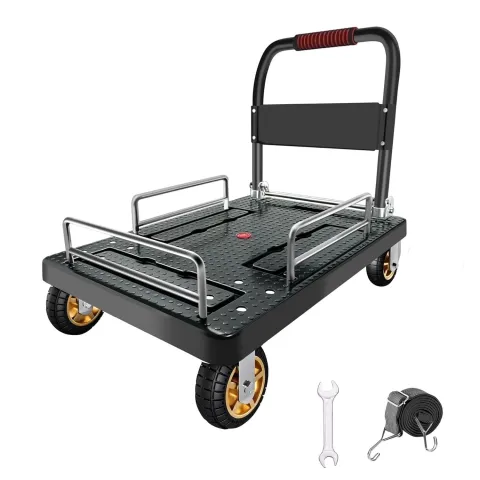 Garvee
Folding platform truck, 1300 lb
Moves stacks of bags, block and brick without a wheelbarrow tipping.
Check price
Garvee
Folding platform truck, 1300 lb
Moves stacks of bags, block and brick without a wheelbarrow tipping.
Check price
 Garvee
Cedar pergola, 10 × 10 ft
A wood pergola kit that stains to match the deck.
Check price
Garvee
Cedar pergola, 10 × 10 ft
A wood pergola kit that stains to match the deck.
Check price
Not the tool you were after? Browse the whole range at Garvee — the store these picks come from.
Based on your result
What you'll need
Quantities update after every calculation. Buy a bag or two over — a hole that came out wide is discovered with the mixer already running.
- Ready-mix concrete
- Bags to fill the holes around each post
- Calculate above
- Gravel
- Drainage base under each post
- —
- Posts
- Pressure-treated timber or round stock
- —
- Digger and a level Amazon
- Auger or clamshell digger, post level, tamper
- As needed
As an Amazon Associate I earn from qualifying purchases.
The maths
How this post hole concrete calculator works
A hole is a cylinder. The gravel base comes off the bottom, the post takes up the middle, and what is left is concrete. Multiply by the number of posts, pad it for spillage, and convert to bags or yards.
gravel = same cylinder × gravel depth
post = width² × pour depth (square)
concrete = pour cylinder − post
ordered = concrete × posts × waste
- 3×
- post width, hole diameter
- ⅓
- of post height, buried
- 3.5 in
- a 4×4 actually measures
- 0.60 ft³
- per 80 lb bag
- 3–6 in
- gravel under the post
- 27 ft³
- = 1 cubic yard
-
01
Dig three times the post width
A 4×4 wants a 10 to 12 inch hole. Narrower and there is not enough concrete around the post to hold it against wind.
-
02
Take the gravel off the bottom
A few inches of gravel lets water drain away from the end grain, and that depth is not concrete.
-
03
Subtract the post
The post occupies the middle of the hole. On a 4×4 in a 10-inch hole that is about 16% of the volume.
-
04
Multiply by the run and pad it
Spilled concrete and holes that came out wider than planned are exactly why the waste allowance exists.
Per post
How much concrete per fence post?
For the most common fence — a 4×4 post in a 10-inch hole, 24 to 30 inches deep — it is about one cubic foot of concrete, or two 80 lb bags per post. The hole diameter moves it most: the volume grows with the square of the width, so going from 10 to 12 inches adds nearly half again.
| Post | Hole | Concrete | 80 lb bags | 60 lb bags | 40 lb bags |
|---|---|---|---|---|---|
| 4×4 | 10 in wide, 24 in deep | 0.92 ft³ | 2 | 3 | 4 |
| 4×4 | 10 in wide, 30 in deep | 1.15 ft³ | 2 | 3 | 4 |
| 4×4 | 12 in wide, 36 in deep | 2.10 ft³ | 4 | 5 | 8 |
| 6×6 | 16 in wide, 36 in deep | 3.56 ft³ | 6 | 8 | 12 |
| 6×6 | 18 in wide, 42 in deep | 5.45 ft³ | 10 | 13 | 19 |
Bags are rounded up per hole, because a part bag left over from one post is rarely mixed into the next. A gravel base takes its depth off the concrete, and the calculator above does that — enter your post size, hole and gravel and it gives the bags for the whole fence line, waste included.
Good to know
Post hole questions, answered
For a 4×4 in a 10-inch hole 30 inches deep, about two 80 lb bags, or three 60 lb bags. Wider or deeper holes climb quickly: the same post in a 12-inch hole needs three 80 lb bags.
A third of the post’s above-ground height is the usual rule, so 24 inches for a 6-foot fence, and never shallower than the local frost line. In cold regions the frost line governs and can push holes past 42 inches.
Three times the post width. A 4×4 wants 10 to 12 inches, a 6×6 wants 16 to 18. The concrete collar, not the post, is what resists the wind load.
Yes for wood posts. Three to six inches of gravel under the post lets water drain instead of sitting against the end grain. The calculator removes that depth from the concrete.
Setting a post with dry mix and adding water on top works for light fences and is much faster. It is weaker and less predictable than a wet mix, so gates, corner posts and anything tall should be poured properly.
On one hole, barely. Over a 40-post fence a 4×4 in a 10-inch hole displaces about 8.5 cubic feet, which is roughly 14 eighty-pound bags you would otherwise have bought for nothing.
Crown the concrete an inch above grade and slope it away from the post so water runs off. That last inch is included in the depth you enter.