Reference
How long does asphalt take to dry and cure
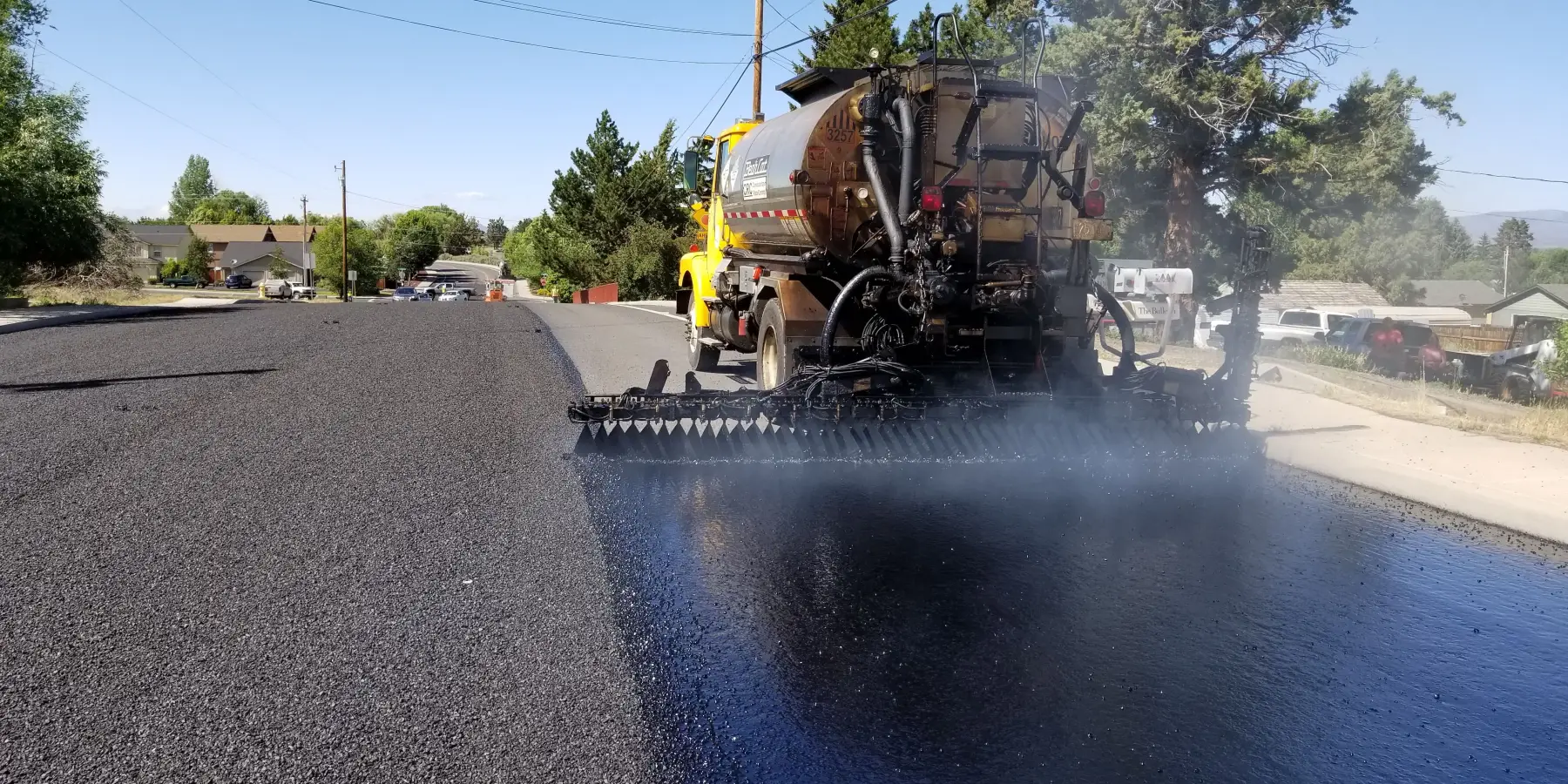
Asphalt is laid at 300 °F, is cool to the touch in a day and takes a car in 2–3 days, but it stays soft for a year while the oils in the binder oxidize. The first few days are about heat; the first year is about not leaving marks.
How long before you can drive on new asphalt? 2–3 days. Walk on it after 24 hours, park in one spot after 7 days, keep heavy vehicles off for 30 days; it is fully cured in 6–12 months; seal it for the first time after 3–12 months.
How long does asphalt take to dry vs cure
There is no water to dry out of hot-mix asphalt. "Dry" means cooled — a few hours — and "cured" means the light oils in the binder have evaporated and oxidized until the mat is hard, which takes a season. In between, the driveway carries a car fine but scars under anything that presses on one spot or twists against it.
When can you drive on new asphalt
| Milestone | Wait | Note |
|---|---|---|
| Walk on it | 24 hours | In heat, wait until it is cool to the touch |
| Drive a car on it | 2–3 days | Longer above 80 °F; no turning the wheel while stopped |
| Park in one spot | 7 days | Move the car daily for the first month in summer |
| Heavy vehicles, RVs, dumpsters | 30 days | Put plywood under jacks and outriggers for the first year |
| Fully cured | 6–12 months | The oils oxidize and the surface hardens; the color goes from black to gray |
| First sealcoat | 3–12 months | After 90–180 days of warm weather or a full year of normal weather; sealing earlier traps the oils and keeps it soft |
Asphalt softens above about 80 °F for its whole first season. In summer the drive-on wait stretches to 3–5 days, and kickstands, lawn-chair legs and sharp turns leave marks until fall.
How long after sealcoating can you drive
24–48 hours, the longer end in cool or humid weather; walk on it after a few hours once it no longer tracks. Seal a new driveway for the first time after 3–12 months, never sooner, and recoat every 2–3 years.
What damages new asphalt
- Turning the steering wheel while the car is stopped — it twists the surface
- Parking in the same spot every day in the first month
- Motorcycle kickstands, trailer tongue jacks and ladder feet — point loads
- Gasoline, oil and diesel drips — they dissolve the binder
- Driving over the unsupported edge — the base is what holds it up
When can asphalt be laid
At 50 °F and rising, on ground of at least 40 °F — the minimum most state transportation departments write into their paving specifications. A thin lift, 1½ in or less, loses heat faster and wants 60 °F. Below that the mix cools before the roller can close it, and the driveway that looked fine in November ravels by spring.
How thick should an asphalt driveway be
| Job | Compacted thickness | Note |
|---|---|---|
| Overlay | 2 in · 51 mm | 1½–2 in of hot mix over sound existing asphalt |
| Driveway | 3 in · 76 mm | 3 in of hot mix over 6–8 in of compacted base; 2 in carries cars on firm, well-drained ground |
| Commercial | 4 in · 102 mm | 4 in or more over a thicker base; two lifts |
From 3 in up a driveway goes down in two lifts: a binder course of coarser mix, then about 1.5 in of finer surface mix that seals and wears. The base under both is graded to fall about 2% — a quarter inch per foot — away from the house, never less than 1%, because standing water is what breaks new asphalt up first.
Compacted hot mix weighs about 145 lb per cubic foot, so a 3 in driveway is about 0.16 tons per square yard. The asphalt calculator turns the driveway into tons.
Work out the tonnage →Density and thickness: National Asphalt Pavement Association (NAPA) and the Asphalt Institute — compacted hot-mix asphalt about 145 lb/ft³ (2,320 kg/m³), or about 110 lb per square yard per inch; residential driveways 2–3 in of hot mix over 6–8 in of compacted aggregate base; overlays 1½–2 in; commercial lots 4 in or more. Curing and traffic: NAPA homeowner guidance and paving-contractor practice — walk after 24 hours, light vehicles after 2–3 days (longer above 80 °F), park in one spot after 7 days, cured in 6–12 months. Sealcoating: Pavement Coatings Technology Council (PCTC) — first seal after 90–180 days of 70 °F weather or one year of normal weather; SealMaster technical data sheets — 24 hours dry before vehicle traffic, not below 50 °F; recoat every 2–3 years by contractor practice. Base past the edges: residential driveway practice runs the compacted base 12 in beyond each edge of the mat. Trucks and orders: a tri-axle carries about 18–22 tons and a tandem 12–16; plants commonly set a 15–18 ton minimum or add a short-load fee (county bid tabulations, supplier guides). Temperature: most state DOT specifications set 50 °F and rising as the minimum air temperature for hot mix, 60 °F for lifts of 1½ in or less, and a base of at least 40 °F. Lifts: from 3 in up a driveway is laid as a binder course of coarser mix with a surface (wearing) course of about 1½ in on top (paving-contractor specifications). Drainage: about 2% (¼ in per foot) away from the house, never under 1% (⅛ in per foot) — residential driveway practice. Digging out: the mat plus the base, over the base footprint; 12 cu yd per tandem dump truck as on the gravel page. Tack coat: Minnesota DOT tack coat specification — undiluted emulsion at 0.08–0.10 gal per sq yd on old asphalt, 0.05–0.07 between new lifts; lifts of no more than 3 in. Sealer: SealMaster MasterSeal Ultra, 70–82 sq ft per gallon per coat, two coats minimum. Digging: common earth swells about 25% from bank to loose (earthwork estimating references). Accessed 2026-10-17.
New asphalt questions
How long does it take asphalt to harden?
Hard enough to drive on in 2–3 days; hard enough not to mark under a kickstand only after it cures, 6–12 months.
Can you drive on asphalt the same day?
No. It is still over 140 °F inside for hours and tires will rut it. Wait 2–3 days for a car, and longer above 80 °F, as the note under the table says.
How long before you can park on a new driveway?
7 days before leaving a car in one spot, and move it daily for the first month in warm weather.
How long after sealing a driveway can you drive on it?
24–48 hours; the sealer must be dry all the way through, not just skinned over.
Tools for the job
What makes this job easier
Tools and materials that suit this kind of job. These are affiliate links: if you buy through one, Renovimo may earn a commission at no extra cost to you. It never changes the figures on this page.
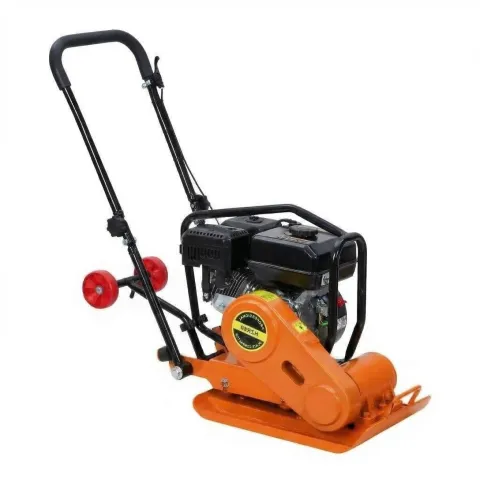 Garvee
Plate compactor, 7 HP
Compacts the crushed-stone base in 3 in lifts — the base, not the asphalt, is what holds a driveway up.
Check price
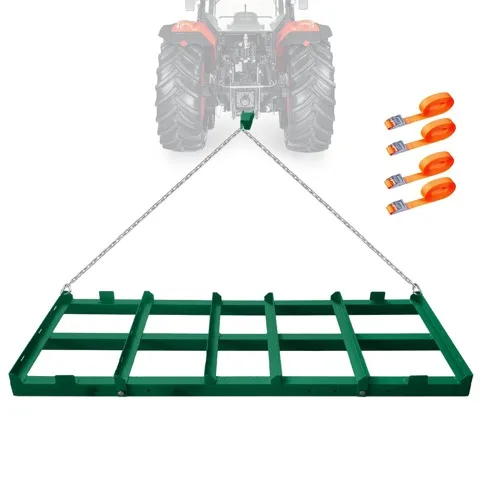 Garvee
Drag harrow, 4 ft
Towed behind a tractor or ATV, it levels the crushed-stone base of a long driveway before it is compacted.
Check price
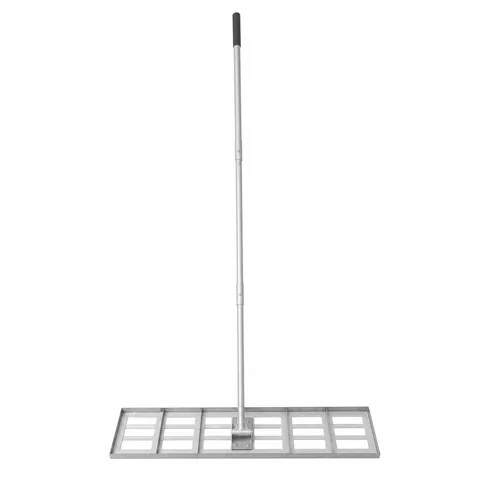 Garvee
Lawn leveling rake, 30 in
Spreads and levels the crushed stone to grade before it is compacted.
Check price
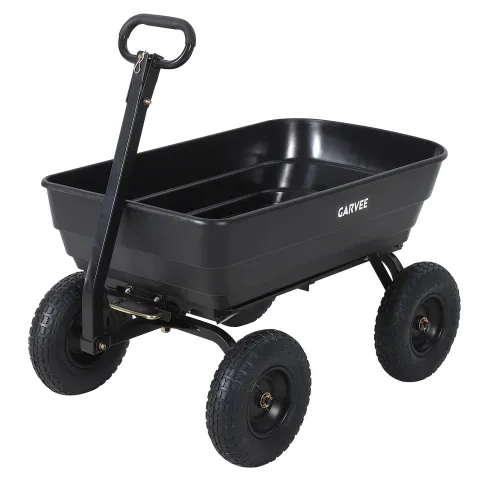 Garvee
Dump cart, 1200 lb
Tips a whole load of gravel, mulch or debris where you want it.
Check price
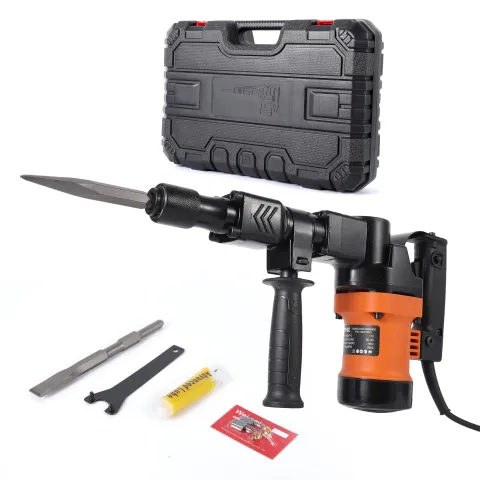 Garvee
Electric demolition hammer, 1400 W
Breaks out an old slab or broken asphalt before the new driveway goes in.
Check price
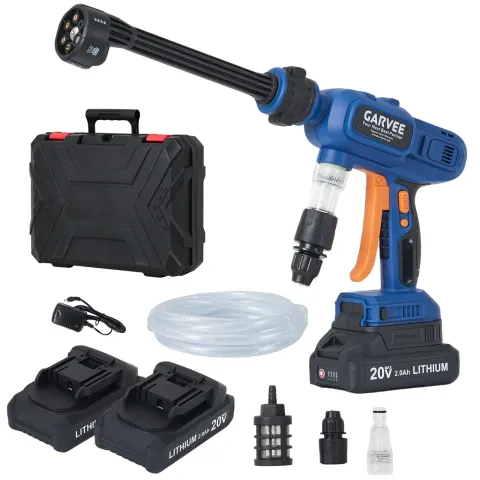 Garvee
Cordless pressure washer
Cleans the drive before it is sealed; sealer will not bond over dust and oil.
Check price
Not the tool you were after? Browse the whole range at Garvee — the store these picks come from.