Removal calculator
Concrete removal
cost calculator
Breaking a slab out is priced by what it weighs, not by what it looks like. Enter the area and thickness for the tonnage, the number of containers it fills, and what demolition and haul-away should cost.
Enter measurements ↓More in this series
Put these figures to work
Sizing one part of a pour is easier when the slab itself is settled. Start with the main estimate, then come back for the detail.
- Concrete Calculator Concrete volume, ready-mix bags, gravel base and rebar
- Rebar Calculator Grid bars, lap splices, tie wire and steel weight
- Post Hole Concrete Calculator Concrete per hole, bags, gravel base and total yards
- Fence Calculator Posts, rails, pickets or rolls, gates, and concrete per post with bags, by fence style and height
- Concrete Footing Calculator Piers, bell footings, strip footings, form tubes and yards
- Concrete Steps Calculator Stepped volume, landing slab, bags and cubic yards
- Self-Leveling Compound Calculator Underlayment bags, average depth, primer and coverage
- Concrete Bag Yields and Mix Ratios Bag yields, mix proportions and strength classes in one table
- Self-Leveling Concrete Thickness Minimum and maximum pour depth, gravel fills, and bags per 100 sq ft by thickness
- Concrete Curing and Drying Times When you can walk, load and drive on new concrete, how temperature changes it, and how long mortar takes
- Concrete Weight per Cubic Foot and Yard What a cubic foot, a cubic yard and a slab of concrete weigh, by type and thickness, and what a truck carries
- Fence Post Depth, Spacing and Sizes How deep to set a fence post by fence height, how far apart posts go by style, 4×4 or 6×6, bags of concrete per post, and how long each wood lasts
Tools for the job
What makes this job easier
Tools and materials that suit this kind of job. These are affiliate links: if you buy through one, Renovimo may earn a commission at no extra cost to you. It never changes the figures on this page.
 Garvee
Electric demolition hammer, 1400 W
Breaks up a slab, steps or footings without renting a breaker.
Check price
Garvee
Electric demolition hammer, 1400 W
Breaks up a slab, steps or footings without renting a breaker.
Check price
 Garvee
Heavy demolition hammer, 3600 W
For thick or reinforced slabs the lighter hammer struggles with.
Check price
Garvee
Heavy demolition hammer, 3600 W
For thick or reinforced slabs the lighter hammer struggles with.
Check price
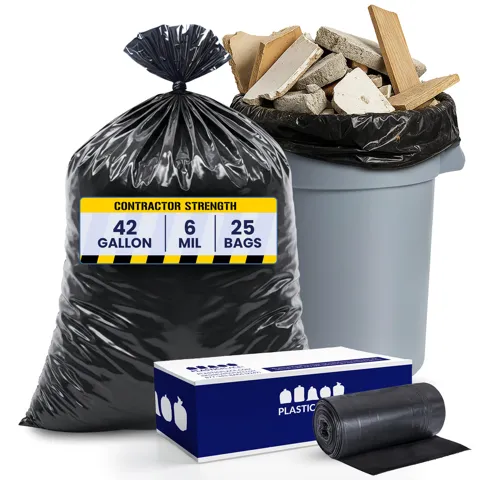 Plastic Place
Contractor bags, 42 gal, 6 mil
Thick enough for broken concrete and rebar ends; fill a third full or you cannot lift it.
Check price
Plastic Place
Contractor bags, 42 gal, 6 mil
Thick enough for broken concrete and rebar ends; fill a third full or you cannot lift it.
Check price
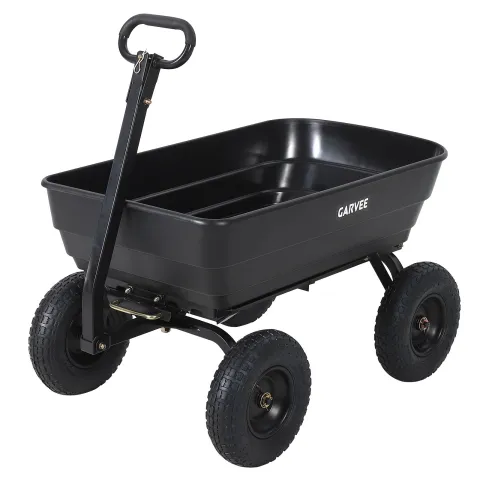 Garvee
Dump cart, 1200 lb
Tips a whole load of gravel, mulch or debris where you want it.
Check price
Garvee
Dump cart, 1200 lb
Tips a whole load of gravel, mulch or debris where you want it.
Check price
 Garvee
Two-wheel wheelbarrow
Stable on two wheels for bagged concrete, block and soil.
Check price
Garvee
Two-wheel wheelbarrow
Stable on two wheels for bagged concrete, block and soil.
Check price
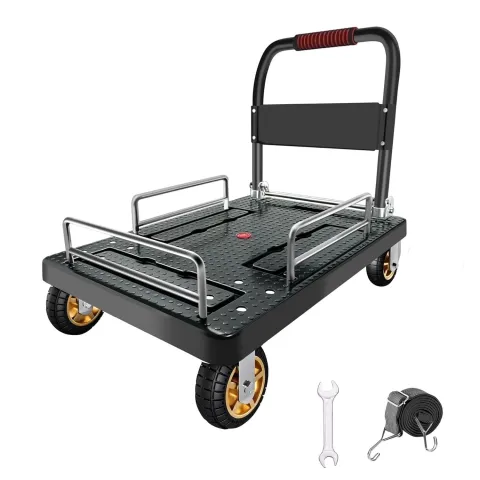 Garvee
Folding platform truck, 1300 lb
Moves stacks of bags, block and brick without a wheelbarrow tipping.
Check price
Garvee
Folding platform truck, 1300 lb
Moves stacks of bags, block and brick without a wheelbarrow tipping.
Check price
Not the tool you were after? Browse the whole range at Garvee or Plastic Place — the stores these picks come from.
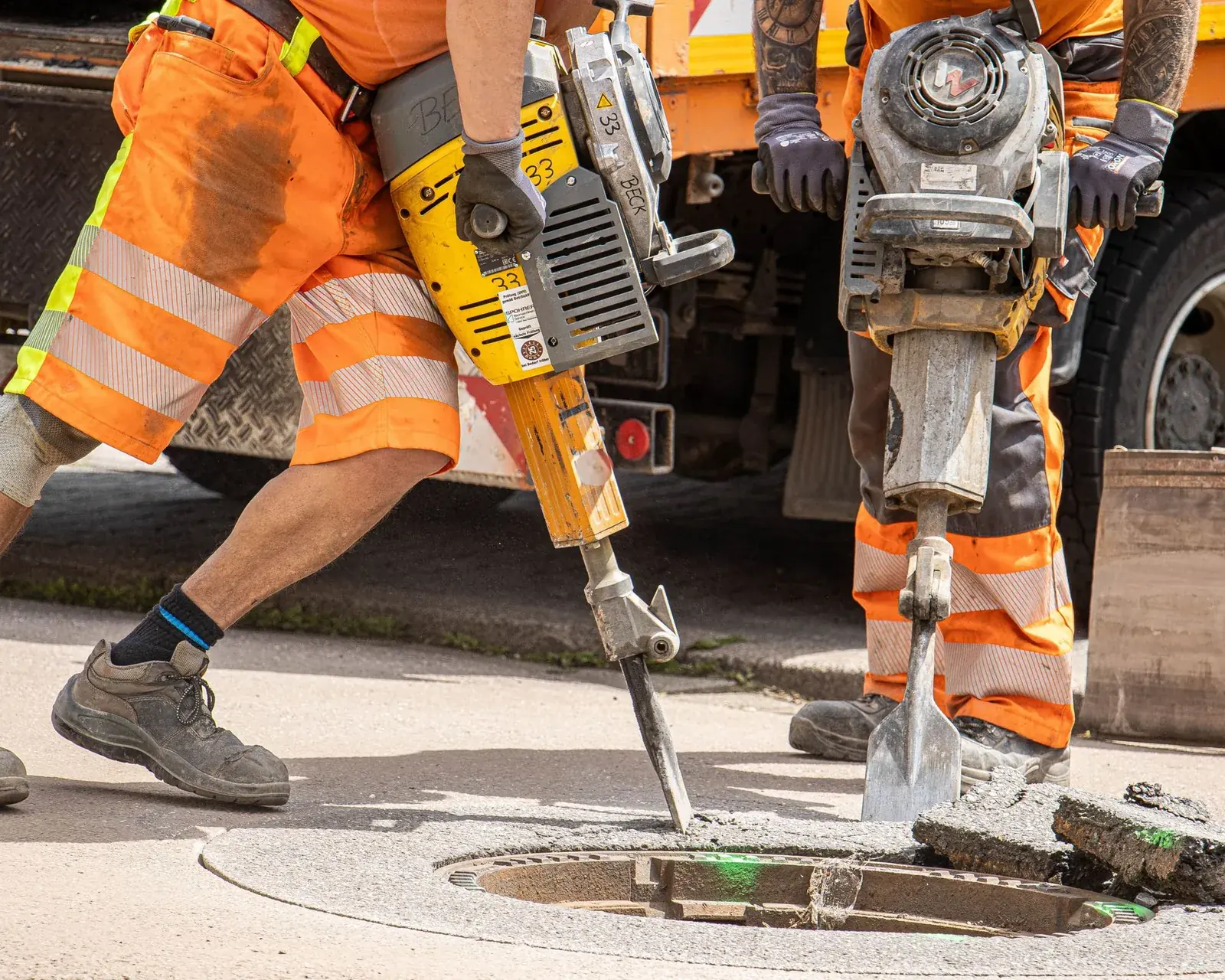
Based on your result
What you'll need
Quantities update after every calculation. The container count is the figure that surprises people — concrete hits a weight limit long before it fills the box.
- Dumpster or trailer
- Heavy-debris containers, counted by weight
- Calculate above
- Breaker
- Electric or hydraulic breaker, plus a sledge
- 1
- Pry bar and barrow
- Lifting broken sections and moving them out
- As needed
- Protection
- Goggles, ear defenders, gloves, steel toes
- Always
Cost
Concrete removal cost per square foot
Contractors quote concrete demolition at $2 to $6 per square foot, and that figure usually leaves out disposal. Haul-away is charged per container, and a container fills by weight, so the thicker the slab, the more the disposal adds to every square foot.
| Slab | Weight per sq ft | Slab per container | Disposal per sq ft | All in, per sq ft |
|---|---|---|---|---|
| 4 in | 50 lb | 120 sq ft | $3.75 | $5.75 – $9.75 |
| 5 in | 63 lb | 96 sq ft | $4.69 | $6.69 – $10.69 |
| 6 in | 75 lb | 80 sq ft | $5.63 | $7.63 – $11.63 |
Plain concrete at 150 lb per cubic foot, a 3-ton container at $450. Typical US figures — enter your own quotes in the calculator above.
What a 20 × 20 ft slab costs to remove
At four inches, 400 square feet is 10 tons of concrete, which takes 4 containers. Demolition runs $800 to $2,400 and disposal $1,800, so the job lands between $2,600 and $4,200. Whether concrete demolition cost lands at the bottom or the top of that range depends on steel in the slab, machine access, and whether a recycling yard will take the rubble cheaper than a landfill.
Removal cost for sidewalks, patios and driveways
| Job | Size | Debris | Removed and hauled |
|---|---|---|---|
| Sidewalk | 4 × 30 ft, 4 in | 3 t | $690 – $1,170 |
| Small patio | 12 × 12 ft, 4 in | 3.6 t | $1,188 – $1,764 |
| Patio | 16 × 20 ft, 4 in | 8 t | $1,990 – $3,270 |
| Single driveway | 12 × 40 ft, 5 in | 15 t | $3,210 – $5,130 |
| Two-car driveway | 24 × 36 ft, 6 in | 32.4 t | $6,678 – $10,134 |
Small jobs cost more per square foot than the band suggests, because the first container is charged in full whatever is in it. That is why a sidewalk run is often cheaper to break up and take to a recycling yard in a trailer, and why a contractor may quote it as a minimum charge rather than by the foot.
Removal plus a new slab
Most slabs come out to be replaced, and the two halves of the job are quoted separately. Pouring the same 20 × 20 ft slab back at four inches takes 4.9 cubic yards of ready-mix at $125 to $195 a yard, and $3 to $8 per square foot to form, place and finish it — $1,817 to $4,163 before any new base stone or steel. Added to the removal, the whole replacement runs about $4,417 to $8,363.
The concrete calculator sizes the new pour for your own dimensions, including the gravel sub-base, and concrete mix and bag yields covers when bagged concrete beats a truck. If the old slab is being replaced with gravel instead, the gravel calculator gives the tons.
Ways to bring the cost down
- Break it yourself, hire the haul. Demolition labor is the half of the bill you can do yourself on a small slab, and an electric breaker rents by the day.
- Keep it clean. Recycling yards often take unmixed concrete cheaply or free; soil, wood or trash in the load turns it into mixed debris at landfill rates.
- Cut the steel out on site. Clean rubble and scrap steel are each worth more apart than together.
- Reuse it. Crushed on site, old concrete makes a sound sub-base for the new slab — less to haul away and less stone to buy.
- Order the right container. Count by weight: an overweight container is surcharged, and a second trip costs less than the fine.
The maths
How this concrete removal cost calculator works
Disposal is charged by weight, and concrete is heavy: 150 pounds per cubic foot, more with steel in it. A four-inch slab weighs 50 pounds per square foot, so a modest driveway is several tons before anyone lifts a breaker.
weight = volume × 150 lb (155 reinforced)
debris = volume × 1.5 (broken concrete bulks up)
containers = ⌈ tons ÷ weight limit ⌉
cost = area × rate + containers × container cost
- 150 lb
- per cubic foot
- 50 lb
- per sq ft at 4 in
- 1.5×
- debris swell
- 2–3 t
- 10-yard limit
- $2–6
- per sq ft, demolition
- 2 000 lb
- = 1 ton
-
01
Weigh it before you price it
A 20 by 20 foot slab at four inches is ten tons. Every quote you get is really a quote on that number.
-
02
Containers fill by weight, not volume
A ten-yard dumpster is capped near three tons of heavy debris — it will look a third full when you hit the limit, and overweight loads get surcharged hard.
-
03
Broken concrete takes more room
Rubble bulks up about half again over the solid slab, which matters if you are stockpiling before haul-away rather than loading straight out.
-
04
Reinforcement changes the job
Mesh and rebar hold a slab together while you break it and have to be cut out. It adds weight and it adds hours, which is why the rate band is wide.
-
05
Ask about clean fill
Clean, unreinforced concrete is often accepted free or cheap at a recycling yard, and sometimes collected. Sorting steel out first can pay for itself.
Good to know
Concrete removal questions, answered
Two to six dollars per square foot for demolition, before disposal. Thin, unreinforced patio slabs sit at the bottom of that band; thick reinforced driveways and anything a machine cannot reach sit at the top. Haul-away is charged separately, by weight.
About 150 pounds per cubic foot, so 50 pounds per square foot at four inches and 75 at six. A 20 by 20 foot four-inch slab is roughly ten tons.
Count by weight, not by volume. A ten-yard heavy-debris container is usually capped at two to three tons, so that ten-ton slab needs three or four containers even though the rubble would fit in one by volume.
Usually not. Most companies require a dedicated heavy-debris or clean-fill container for concrete, brick and dirt, because a standard dumpster filled with rubble is too heavy to lift safely.
For a small patio, often yes — a rented electric breaker is inexpensive and the saving is real. Past a few hundred square feet, or anything reinforced, the labor becomes brutal and a crew with a machine is usually cheaper per square foot.
Broken concrete makes good sub-base fill under a new slab or driveway once it is crushed. Burying it whole on site is prohibited in many places and traps a problem for the next owner. Recycling yards take clean loads.
Rarely for a patio or path. Driveways that meet the road, anything structural, and any work that changes drainage often do need one. A quick call to the local building department costs nothing.
A two-car driveway of 24 by 36 feet at six inches is 864 square feet and about 32 tons of concrete. Demolition and haul-away together come to roughly $6,678 to $10,134, with reinforced slabs and tight access at the top of that range.