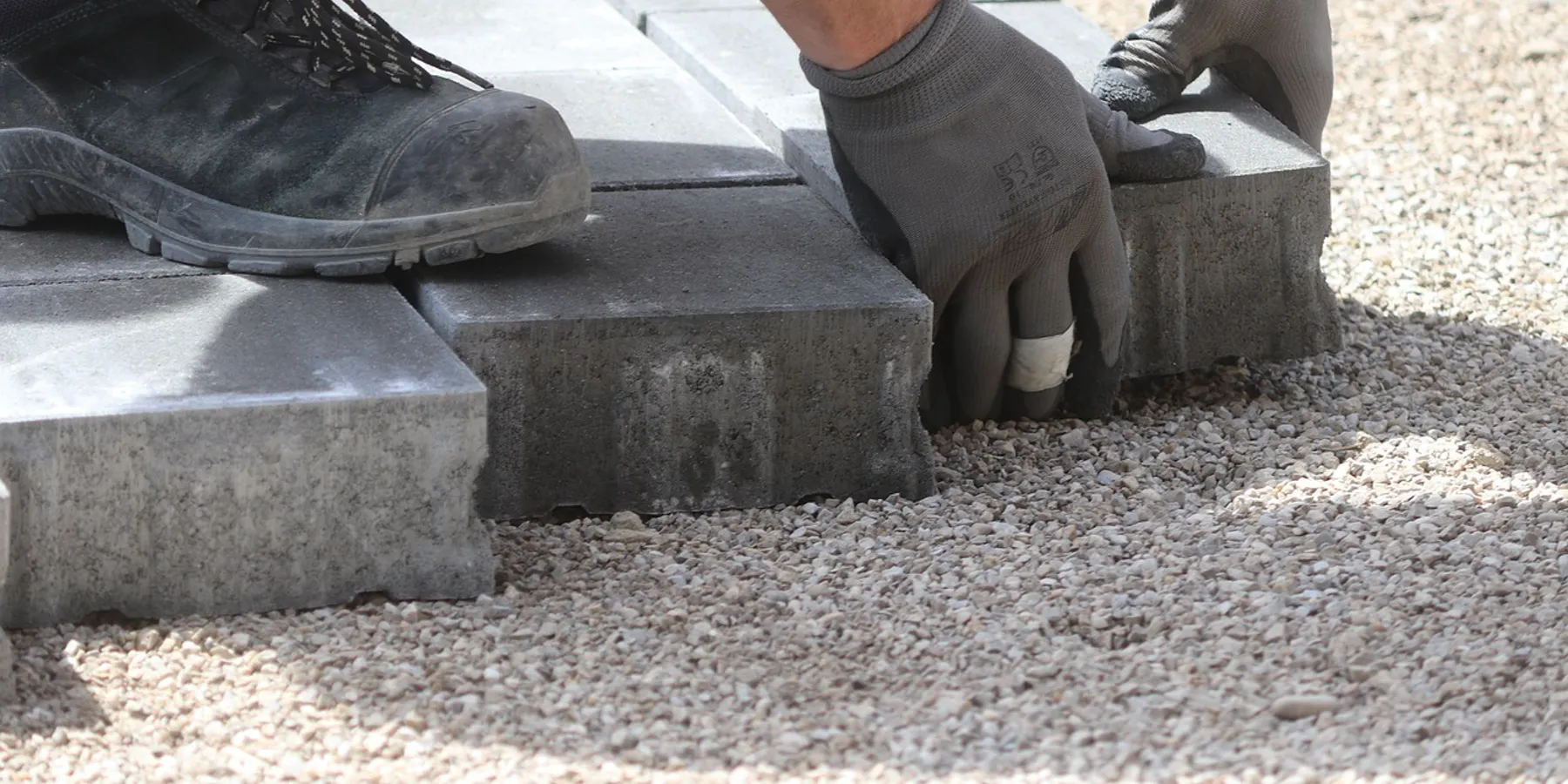
Base, bedding and joint sand
Paver base calculator
Pavers sit on 4 to 8 in of compacted crushed stone under a patio or walkway, depending on the soil, and 6 to 14 in under a driveway, with 1 in of bedding sand on top. A 10 × 12 ft patio on average soil takes about 4.3 tons (3.2 cu yd) of base, 10 cu ft of sand and 2 bags of polymeric sand.
Enter your areaOptional
What will it cost?
Every material the calculator worked out gets its own price. Each field starts at a typical US figure so you have something to work from — change any of them to what your own supplier charges.
These prices are approximate. They are national US retail figures, and what you actually pay varies with your region, your supplier, the season and how much you buy at once. Treat them as a starting point, not a quote — always price the job from your own supplier's current figures before you order.
Your prices
More in this series
Put these figures to work
Every wall here is counted the same way underneath. Start wherever your job starts; the figures carry across.
- Brick Calculator Bricks, concrete blocks, mortar bags and wall ties
- Concrete Block Calculator Concrete blocks, pallets, mortar bags, grout fill and rebar
- Paver Calculator Pavers, gravel base, bedding sand, joint sand and edging
- Retaining Wall Calculator Wall blocks, caps, base stone, drainage backfill and geogrid
- Concrete Block Sizes and Weights Nominal and actual CMU dimensions, weights and course heights
- Brick Dimensions and Course Heights US brick sizes, bricks per square foot, course heights and wall ties
- Paver Sizes and Weights Paver sizes and thicknesses, weight each and what a pallet weighs
- Retaining Wall Block Sizes Garden, segmental and large block dimensions, weights and blocks per square foot
- Brick Weight and Bricks per Pallet What a brick weighs by size, how many bricks are on a pallet, what a pallet weighs and bricks per square foot
Tools for the job
What makes this job easier
Tools and materials that suit this kind of job. These are affiliate links: if you buy through one, Renovimo may earn a commission at no extra cost to you. It never changes the figures on this page.
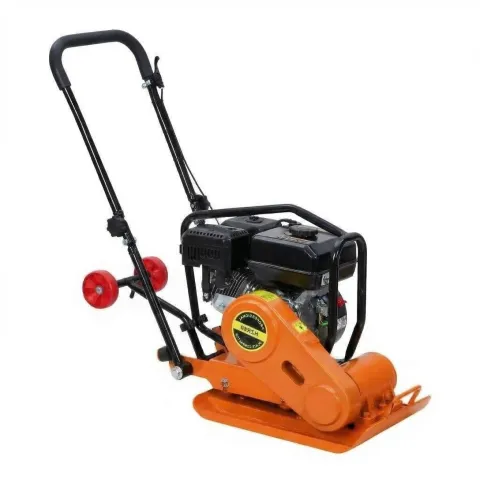 Garvee
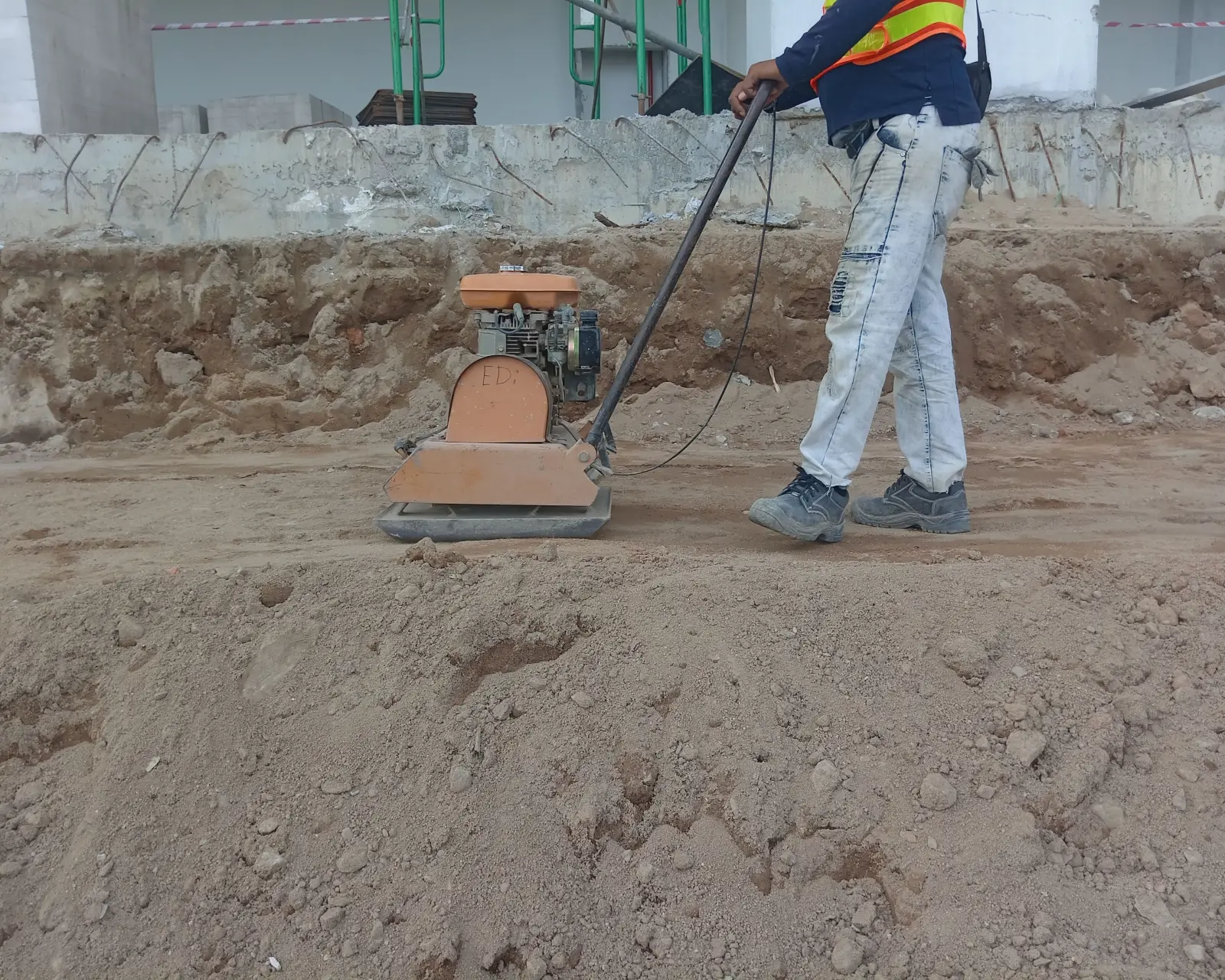
Plate compactor, 7 HP
Compacts the base in lifts of 2 to 3 in, then settles the pavers into the sand and vibrates the polymeric sand down the joints.
Check price
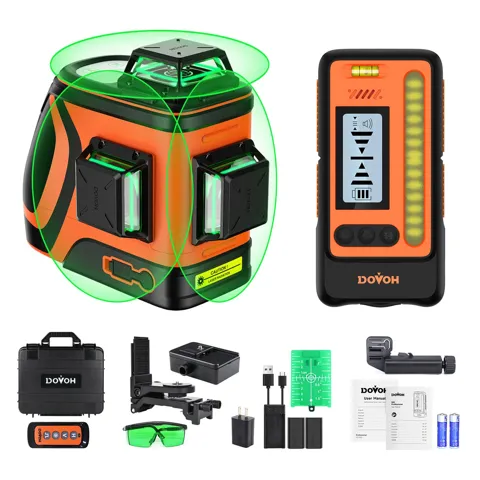 Dovoh
Outdoor laser level with receiver
Sets the grade of the dig and the top of the base with a steady slope for drainage, one person and a rod.
Check price
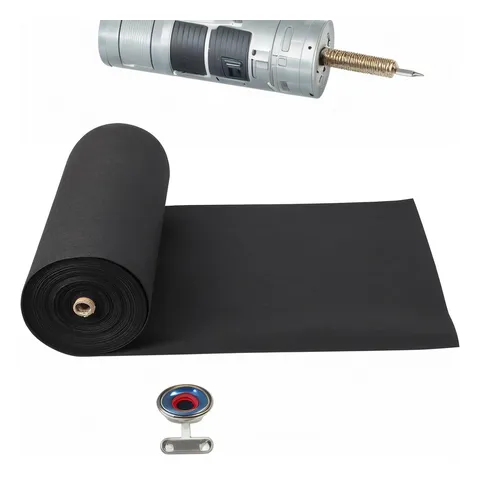 Garvee
Geotextile landscape fabric, 4 × 50 ft
Goes on the floor of the dig before the first lift, so the stone stays on top of the soil.
Check price
 Garvee
Steel landscape edging
Holds the outer pavers at the line; spike it into the base, not into the lawn.
Check price
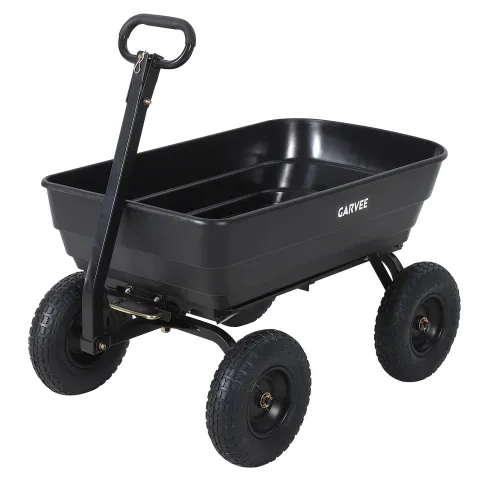 Garvee
Dump cart, 1200 lb
Moves tons of base stone from the driveway pile to the dig in loads you can tip in place.
Check price
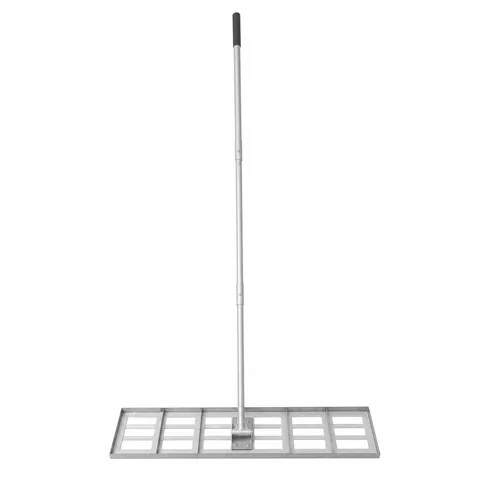 Garvee
Lawn leveling rake, 30 in
Spreads each lift of stone to an even thickness before the compactor goes over it.
Check price
Not the tool you were after? Browse the whole range at Garvee or Dovoh — the stores these picks come from.
Based on your result
What you'll need
Quantities update after every calculation. Bulk stone and sand come by the ton from a landscape yard; the bags are the same material for a small job.
- Base stone, bulk
- Crushed stone or crusher run, delivered and compacted in lifts
- Calculate above
- Or bagged base
- The same stone in 0.5 cu ft bags, for a small walkway
- —
- Bedding sand
- Coarse concrete sand, ASTM C33, screeded 1 in
- —
- Polymeric sand Amazon
- Swept into the joints and wetted, in 50 lb bags
- —
- Edge restraint Amazon
- Along every edge not against the house
- —
- Edging spikes, 10 in Amazon
- Driven through the restraint into the base
- —
- Geotextile Amazon
- Under the base and up the sides of the dig
- —
- Hand tamper Amazon
- For corners and edges the plate compactor cannot reach
- —
- Screed rails
- Two 1 in pipes and a straight board to strike off the sand
- 2 pipes
As an Amazon Associate I earn from qualifying purchases.
The maths
How much paver base do I need?
The base is the paved area grown past the edges, times the compacted depth, plus what the stone loses when the plate goes over it. Everything else is a thin layer over the pavers' own footprint.
base area = area + open perimeter × edge + corners
base, loose = base area × depth ÷ 12 × (1 + 20%)
tons = cu yd × lb per cu yd ÷ 2,000
bags = cu ft ÷ 0.5
sand = area × 1 in ÷ 12
polymeric bags = area ÷ coverage per 50 lb bag
volume check = 65 × holland ⅛ in joint volume ÷ your joint volume
dig = base + sand + paver thickness
Loose weights come from the same table as the gravel calculator: crushed stone base 2,700 lb per cubic yard, crusher run 3,000, sand 2,700. A yard of stone that has been compacted fills about a fifth less than it did in the truck, hence the 20% allowance.
- 01
Pick the depth
The ICPI minimum is 4 in of compacted base under a patio or walkway and 6 in under a residential driveway, on well-drained soil; it says to go thicker in cold climates and weak soils. Unilock's typical range is 6–8 in for patios and walkways and 10–14 in for driveways, deeper in clay. The calculator uses the ICPI minimum on well-draining soil, the low end of the range on average soil and the high end on clay.
- 02
Run the base past the edges
ICPI over-excavates by the greater of 6 in or the base depth, so the edge restraint and the outer pavers stand on compacted stone, not on soil. On a 10 × 12 ft patio that strip is about a sixth of the base.
- 03
Allow for compaction
Order the compacted volume plus 20%, and compact in lifts of 2 to 3 in with a plate compactor (Unilock). A 6 in base is two or three passes of spreading and compacting, not one.
- 04
Screed the bedding sand
One inch of coarse concrete sand (ICPI: 1 in nominal, ASTM C33), struck off between 1 in pipes and never walked on. It is not compacted until the pavers are on it.
- 05
Fill the joints
Polymeric sand is bought by coverage, which the makers publish as a range per 50 lb bag for narrow and wide joints. The calculator places your job in that range by paver size and joint width and scales it for thickness, then checks it against joint volume: it scales the maker’s figure for 4 × 8 in pavers with ⅛ in joints by how much more joint your pavers have, and never claims more square feet than that.
- 06
Edge and fabric
Edge restraint along every open edge, spiked about every 12 in (8 in under cars). Geotextile in strips lapped 24 in; we also turn it up the sides of the dig.
Base depth
How thick should paver base be?
Compacted crushed stone, in inches, by what the surface carries and what it sits on. Clay holds water and moves with it, so it gets the deepest base; sandy, gravelly ground drains on its own and can take the minimum.
| Use | Well-draining soil | Average soil | Clay | ICPI min. | Unilock typical |
|---|---|---|---|---|---|
| Walkway | 4 in · 10 cm | 6 in · 15 cm | 8 in · 20 cm | 4 in | 6–8 in |
| Patio | 4 in · 10 cm | 6 in · 15 cm | 8 in · 20 cm | 4 in | 6–8 in |
| Driveway | 6 in · 15 cm | 10 in · 25 cm | 14 in · 36 cm | 6 in | 10–14 in |
The ICPI figures are minimums for well-drained soil, with a note to increase the thickness in colder climates or weak soils; both ICPI and Unilock treat a patio and a walkway alike. On top of the base: 1 in of bedding sand and the paver, so a patio of 2⅜ in pavers on 6 in of base is dug about 9⅜ in below the finished surface. In frost country, your local hardscape supplier or building department may ask for more.
Polymeric sand calculator
How much polymeric sand do I need?
Polymeric sand makers publish coverage as a range per 50 lb bag, for pavers 2⅜ in thick, because the real figure depends on the paver's size and the joint width. Small pavers have more joint per square foot, so they sit at the low end; big slabs at the high end.
| Joint width | Alliance Gator Maxx G2 / SuperSand | Techniseal HP NextGel | Bags per 100 sq ft |
|---|---|---|---|
| Narrow, ⅛–⅜ in | 65–85 sq ft | 60–120 sq ft | 2 |
| Wide, ¾–1¼ in | 22–42 sq ft | 25–40 sq ft | 3–5 |
Coverage per 50 lb bag from the Alliance Gator 2025 reference guide (Beige, Slate Grey and Ivory; the darker Black Diamond covers about 10% less) and the Techniseal HP NextGel data sheet. The calculator reads the Alliance range: 4 × 8 in holland pavers at the low end, 12 × 12 in and larger at the high end, the low end again as a joint widens toward the top of its band, the ends interpolated for ½ in joints, and the range cut in proportion for a thicker paver. Then a volume check, our own: the low end of the narrow band, 65 sq ft, is taken as the figure for 4 × 8 in pavers 2⅜ in thick with ⅛ in joints, and scaled by joint volume, (12 ÷ width + 12 ÷ length) ft × 12 × joint width × thickness per sq ft. When that gives fewer square feet than the band, the calculator uses it and says so: the same pavers cover about 43 sq ft a bag at 3/16 in joints, 22 at ⅜ and 11 at ¾, while larger pavers with ⅛ in joints stay on the band. Concrete pavers with spacer nubs are laid at 1/16 to 3/16 in joints (ICPI). Polymeric sand is swept into dry joints after the pavers are compacted, compacted again, swept off and wetted.
Base rock calculator
Base rock and leveling sand: tons, yards or bags
Landscape yards sell base rock by the ton or the cubic yard; home centers sell it as paver base in 0.5 cu ft bags. The result gives all three. At 2,700 lb a loose cubic yard, a ton of crushed stone base is about 20 cu ft and covers about 33 sq ft at 6 in compacted, the same as about 40 bags.
As a leveling sand calculator, the page keeps to the 1 in bed: the area times 1 in, so 100 sq ft takes about 8⅓ cu ft, or 17 bags of 0.5 cu ft. Use coarse concrete sand, not play sand or stone dust, and level the base rather than making up the difference in sand. The sand goes under the pavers only, not under the base strip past the edge.
Good to know
Paver base questions, answered
Multiply the area, grown 6 in past each open edge, by the compacted depth and add 20% for compaction. A 10 × 12 ft patio on 6 in of base takes about 3.2 cu yd, or 4.3 tons of crushed stone base, or about 172 bags of 0.5 cu ft. Use the calculator for your own area, soil and stone.
ICPI sets a minimum of 4 in of compacted base under a patio or walkway and 6 in under a residential driveway, on well-drained soil, and says to go thicker in cold climates and weak soils. Unilock gives 6–8 in for patios and walkways and 10–14 in for driveways, deeper on clay.
A 50 lb bag covers 65–85 sq ft of pavers with narrow joints (⅛ to ⅜ in) and 22–42 sq ft with wide joints (¾ to 1¼ in), for 2⅜ in pavers (Alliance Gator). Small pavers with wider joints hold more than the range implies, so the calculator also scales the maker’s ⅛ in figure by joint volume: a 120 sq ft patio of 2⅜ in holland pavers with ⅛ in joints takes 2 bags, with 3/16 in joints 3.
The base depth plus 1 in of sand plus the paver thickness, so the pavers finish at the level you want: about 9⅜ in for 2⅜ in pavers on a 6 in base. Dig the same depth across the strip past the edges, and slope the dig the way the surface will drain.
Yes for a small walkway or a repair. A 0.5 cu ft bag covers 1 sq ft at 6 in loose, and less once it is compacted, so a 10 × 12 ft patio would need about 172 bags. Past a ton or two of stone, a delivery is cheaper and far less carrying.
Both are dense-graded ¾ in stone with fines that lock together under a compactor, which is what a paver base needs. The loose weights differ a little (2,700 and 3,000 lb per cubic yard in our table). Unilock pairs a crusher run base with a coarse sand bed, and a clear stone base (no fines) with a ⅛ in chip bed instead of sand.
ICPI lists it as needed ("Geotextile as needed"). On clay or silty soil it keeps the base from being pushed into the subgrade, and it costs little next to the stone. On clean sand or gravel it is often left out.
Coarse, washed concrete sand to ASTM C33, screeded 1 in thick and left loose until the pavers are compacted into it. Not play sand, masonry sand or stone dust, and not polymeric sand, which belongs in the joints only.
Sources: ICPI (now the Concrete Masonry & Hardscapes Association), Construction Tolerances and Recommendations for Interlocking Concrete Pavements, for minimum base thickness, over-excavation, bedding thickness, joint width and paver thickness; Unilock Project Planning Guide for typical base depths, soil and compaction lifts; Alliance Gator 2025 reference guide and the Techniseal HP NextGel data sheet for polymeric sand coverage; Western Interlock and Fortress install specifications for spike spacing; USDA NRCS Wisconsin Construction Specification 13 for geotextile laps (24 in, its road-stabilization figure). Stone and sand weights from our gravel table. Local codes, frost depth and your paver maker’s instructions come first.