Reference
Pilot hole sizes
A lag screw or wood screw needs a hole of its own before it goes in: too small and the wood splits or the screw snaps, too big and the thread has nothing to bite. The right size depends on the screw and on how dense the wood is.
What size pilot hole for a lag screw? Two holes: one the lag's own diameter where the smooth shank sits, and a smaller lead hole for the thread, 40 to 85 % of the diameter depending on the wood. For a 5/16 in lag screw in Douglas-fir or Southern pine, drill 3/16 in (4.8 mm) for the thread and 5/16 in for the shank; in cedar or white pine 9/64 in, in oak 13/64 in.
What size pilot hole for a 5/16 lag screw?
Formula: lead hole = lag diameter × 40–70 % (cedar, white pine), 60–75 % (Douglas-fir, Southern pine) or 65–85 % (oak), the low end for small lags; shank hole = lag diameter. Worked figure: 5/16 in = 0.3125 in × 60–75 % = 0.188–0.234 in, so a 3/16 in bit (0.188 in) for the thread in Douglas-fir or Southern pine, and a 5/16 in bit for the shank.
The shank hole goes as deep as the smooth part of the lag; the lead hole carries on for the threaded part. A 3/8 in lag in the same wood takes a 15/64 in lead hole. Turn lag screws in with a wrench — never drive them with a hammer — and rub soap on the threads so they turn more easily. For long lags, a lead hole a little larger than the chart helps them turn. This chart sizes the hole, not the connection: the diameter, number and spacing of lags in a ledger, beam or other structural joint come from the building code or an engineer.
Pilot hole size chart for lag screws
The bold figure is a typical bit for each lag and wood, as fastener maker Triangle Fastener lists it from the NDS. Below it, the range is every 1/64 in bit that falls inside the percentage for that wood. The NDS (2018, §12.1.4.2) sets the same three ranges by specific gravity: G ≤ 0.5, 0.5 < G ≤ 0.6 and G > 0.6. By the NDS species table, spruce-pine-fir and hem-fir (G 0.42–0.43) belong in the first column and Southern pine (0.55) in the second; Douglas fir-larch (0.50) sits on the line between them, where the two ranges overlap at 60–70 %.
| Lag screw | Shank hole | Cedars, white pines and other low-density softwoods (40–70 %) | Douglas-fir and Southern pine (60–75 %) | Oaks and other dense hardwoods (65–85 %) |
|---|---|---|---|---|
| 1/4 in (6.4 mm) | 1/4 in | 3/32 in* 7/64–11/64 in |
5/32 in 5/32–3/16 in |
3/16 in 11/64–13/64 in |
| 5/16 in (7.9 mm) | 5/16 in | 9/64 in 1/8–7/32 in |
3/16 in 3/16–15/64 in |
13/64 in 13/64–17/64 in |
| 3/8 in (9.5 mm) | 3/8 in | 11/64 in 5/32–1/4 in |
15/64 in 15/64–9/32 in |
1/4 in 1/4–5/16 in |
| 1/2 in (12.7 mm) | 1/2 in | 15/64 in 13/64–11/32 in |
5/16 in 5/16–3/8 in |
11/32 in 21/64–27/64 in |
| 5/8 in (15.9 mm) | 5/8 in | 5/16 in 1/4–7/16 in |
13/32 in 3/8–15/32 in |
29/64 in 13/32–17/32 in |
| 3/4 in (19.1 mm) | 3/4 in | 13/32 in 5/16–33/64 in |
1/2 in 29/64–9/16 in |
9/16 in 1/2–5/8 in |
* For a 1/4 in lag in cedar or white pine, the typical 3/32 in bit is a hair under 40 % of the diameter (0.100 in); a 7/64 in bit is the smallest inside the range.
Pilot hole size for wood screws by gauge
A wood screw's pilot is sized from the root of its thread — the solid core inside the threads — not from its outside diameter. The Forest Products Laboratory's withdrawal figures assume a lead hole of about 70 % of the root in softwoods and about 90 % in hardwoods; the bits below are the nearest 1/64 in. Through the top board, drill a clearance hole the size of the shank so the screw pulls the two pieces together.
| Screw | Shank | Thread root | Softwood pilot (70 %) | Hardwood pilot (90 %) |
|---|---|---|---|---|
| #6 | 0.138 in | 0.113 in | 5/64 in (2.0 mm) 0.079 in |
7/64 in (2.8 mm) 0.102 in |
| #8 | 0.164 in | 0.131 in | 3/32 in (2.4 mm) 0.092 in |
1/8 in (3.2 mm) 0.118 in |
| #10 | 0.190 in | 0.152 in | 7/64 in (2.8 mm) 0.106 in |
9/64 in (3.6 mm) 0.137 in |
| #12 | 0.216 in | 0.171 in | 1/8 in (3.2 mm) 0.120 in |
5/32 in (4.0 mm) 0.154 in |
Drill bit size for plastic anchors in masonry
A plastic anchor is sized to its own hole, so the bit is whatever the maker prints on the box, matched to a screw range. The figures below are DEWALT Fluted Plastic Anchor's, for concrete, block, brick and stone, drilled with a carbide masonry bit. Its allowable loads are in 2,000 psi concrete with a safety factor of 4 already taken; the maker does not recommend them overhead or where the hold is critical. Anchors made for drywall come in other sizes — use the bit on their package.
| Screw size | Anchor length | Drill bit | Allowable tension / shear |
|---|---|---|---|
| #4–#6 | 1 in | 3/16 in (4.8 mm) | Not listed |
| #10–#12 | 1 in | 1/4 in (6.4 mm) | 110 / 70 lb |
| #10–#12 | 1-1/4 in | 1/4 in (6.4 mm) | 125 / 70 lb |
| #10–#12 | 1-1/2 in | 1/4 in (6.4 mm) | 130 / 70 lb |
| #14 | 1-1/2 in | 5/16 in (7.9 mm) | 135 / 135 lb |
What you'll need to drill pilot holes
| Item | What it's for |
|---|---|
| Drill bit set in 1/64 in steps Amazon | Every pilot and lead hole here up to 1/2 in; the largest holes for 5/8 and 3/4 in lags need bigger bits |
| 5/16 × 3 in hex lag screws, galvanized Amazon | The lag in the worked example: a 3/16 in lead hole in Douglas-fir |
| 1/2 × 4 in hex lag screws, galvanized Amazon | Takes a 5/16 in lead hole in Douglas-fir |
| Countersink bit set Amazon | Pilot, clearance and head recess in one pass for #6–#12 wood screws |
| 1/4 in carbide masonry bit Amazon | The hole for #10–#12 plastic anchors in concrete or brick |
| #10–#12 × 1 in plastic anchors Amazon | Light fixings into concrete, block or brick |
As an Amazon Associate I earn from qualifying purchases.
Work out the load on each deck post →Figures: Lag screws: USDA Forest Products Laboratory, Wood Handbook (FPL-GTR-113, 1999), Chapter 7 “Fastenings” (L. A. Soltis), section Lag Screws — the lead hole for the shank is the same diameter as the shank; the lead hole for the threaded part is 40 to 70 % of the shank diameter in low-density softwoods such as the cedars and white pines, 60 to 75 % in Douglas-fir and Southern Pine and 65 to 85 % in dense hardwoods such as oaks, the smaller percentage for the smaller lag screws; lag screws are turned in with a wrench, never driven with a hammer (https://research.fs.usda.gov/download/treesearch/7144.pdf). The same three ranges, by specific gravity (G ≤ 0.5, 0.5 < G ≤ 0.6, G > 0.6): American Wood Council, National Design Specification for Wood Construction 2018, §12.1.4.2 (https://awc.org/resources/2018-nds/). Typical drill bits by lag screw diameter and wood group: Triangle Fastener Corp. (TFC Design and Engineering Center), “Pilot Hole Sizes for Lag Screws”, form PD030105JS, 2012, from the 2005 NDS (https://trianglefastener.com/content/files/TFC/TECHNICAL%20SHEETS/Lag_Screw_Hole_Size.pdf). Wood screws: shank diameter by gauge, Wood Handbook Table 7–9; thread root diameter, NDS 2018 Appendix Table L3 (ANSI/ASME B18.6.1); lead hole about 70 % of the root diameter in softwoods and about 90 % in hardwoods, Wood Handbook Chapter 7, Screws — Withdrawal Resistance. Plastic anchors in masonry: DEWALT, Fluted Plastic Anchor technical guide (2022, rev. A) — ANSI drill bit 3/16 in for #4–#6 screws, 1/4 in for #10–#12, 5/16 in for #14; allowable loads in 2,000 psi normal-weight concrete at a safety factor of 4.0; not recommended overhead or where holding values are critical (https://anchors.dewalt.com/anchors/_documents/uploads/DWANF_FlutedPlasticAnchor-TP-EN-rA_DDS1.pdf). Accessed 2026-11-17.
Good to know
Questions, answered
3/16 in (4.8 mm) for the thread in Douglas-fir or Southern pine, 9/64 in in cedar or white pine and 13/64 in in oak, with a 5/16 in hole where the smooth shank sits.
15/64 in in Douglas-fir or Southern pine, 11/64 in in cedar or white pine and 1/4 in in oak, plus a 3/8 in shank hole.
Yes. The Forest Products Laboratory's Wood Handbook says lag screws, like wood screws, need prebored holes: one the diameter of the shank for the smooth part, and a smaller lead hole for the thread.
3/32 in in softwood and 1/8 in in hardwood — about 70 and 90 % of the screw's 0.131 in thread root.
The one printed on its package. For DEWALT Fluted Plastic Anchors in masonry it is 3/16 in for #4–#6 screws, 1/4 in for #10–#12 and 5/16 in for #14.
Tools for the job
What makes this job easier
Tools and materials that suit this kind of job. These are affiliate links: if you buy through one, Renovimo may earn a commission at no extra cost to you. It never changes the figures on this page.
 Garvee
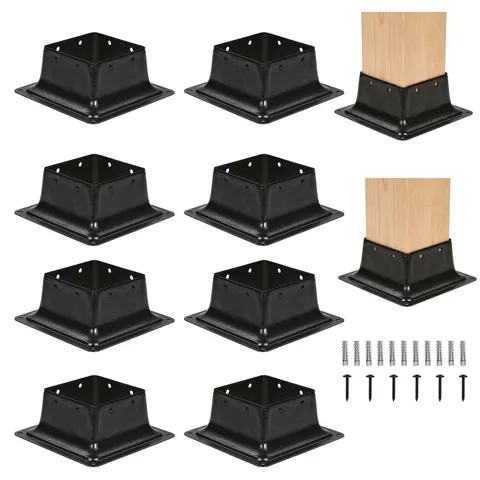
4 × 4 post base brackets, 8-pack
Holds each post on its footing clear of standing water; the load on the post goes into the concrete, not into the end grain.
Check price
 Dovoh
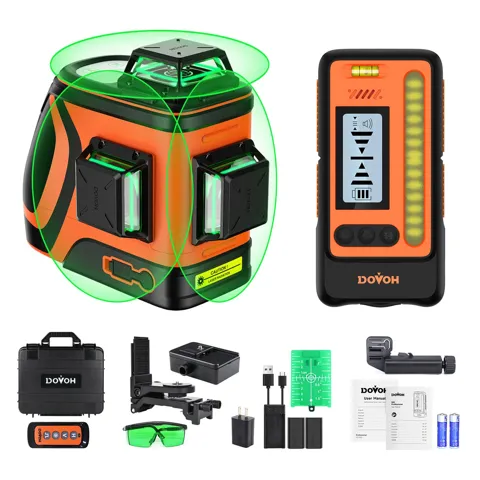
Outdoor laser level with receiver
Sets every footing top and post cut at one height across the deck, so the beam lands level.
Check price
 Garvee
Two-wheel wheelbarrow
Carries 80 lb concrete bags and form tubes to the holes; a deck footing set is several hundred pounds of mix.
Check price
 Garvee
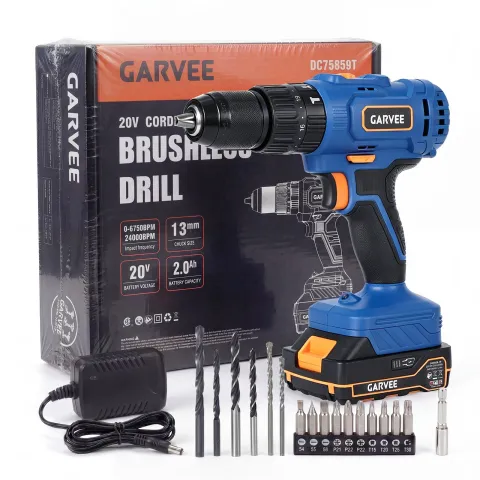
20V cordless hammer drill
Drills the anchor holes for the post bases and the ledger fasteners into the house rim.
Check price
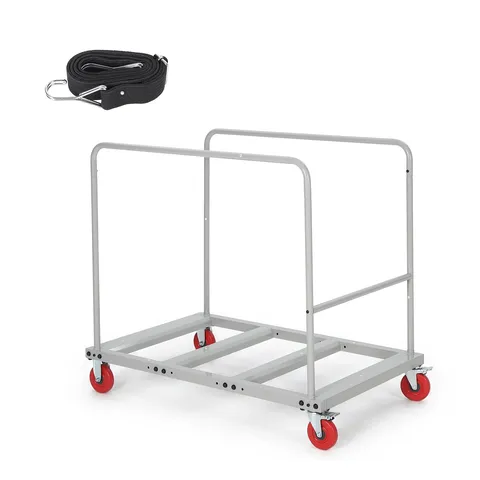 Garvee
Collapsible material cart, 1800 lb
Moves beam lumber and 6 × 6 posts from the drive to the build site; a 12 ft double 2 × 10 beam is heavy.
Check price
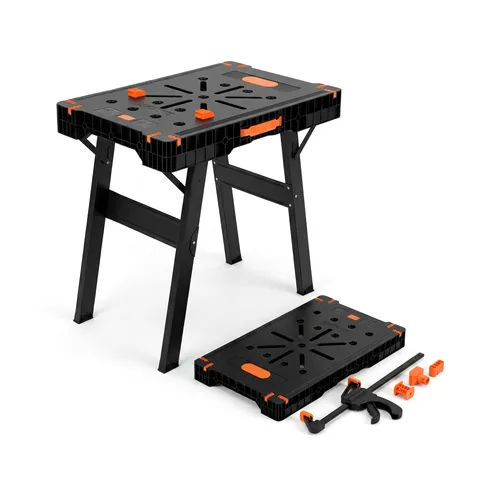 Garvee
Folding work table and sawhorse
Holds the beam plies at cutting height while you crown, trim and nail them together.
Check price
Not the tool you were after? Browse the whole range at Garvee or Dovoh — the stores these picks come from.