Reference
Standard brick dimensions and course heights
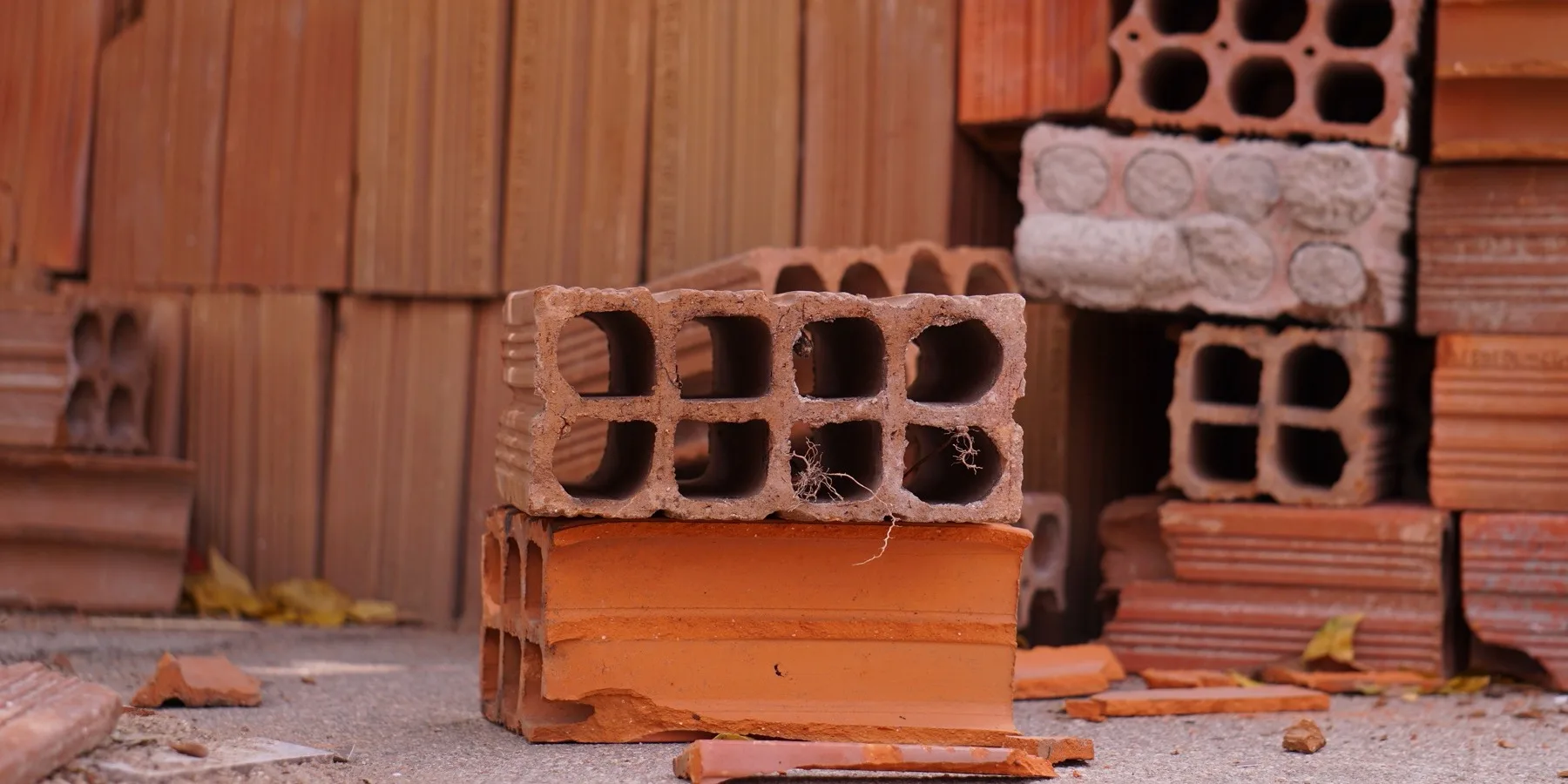
Brick is sold by a nominal size that includes the mortar joint and laid at an actual size that does not. Both matter, and mixing them up is the fastest way to order the wrong quantity. Here is each US brick, what it covers, how it stacks, and what goes around it.
Standard brick dimensions in the US
Actual size is the fired brick as it arrives. Nominal size is the actual size plus one 3/8 inch joint, and it is the figure that makes the arithmetic come out in whole inches. Dimensions read width × height × length.
| Brick | Actual (in) | Nominal (in) | Per sq ft | Per m² |
|---|---|---|---|---|
| Modular | 3⅝ × 2¼ × 7⅝ | 4 × 2⅔ × 8 | 6.86 | 74 |
| Standard | 3⅝ × 2¼ × 8 | — | 6.55 | 71 |
| Engineer modular | 3⅝ × 2 13/16 × 7⅝ | 4 × 3⅕ × 8 | 5.65 | 61 |
| Queen | 3⅛ × 2¾ × 7⅝ | — | 5.76 | 62 |
| King | 2¾ × 2⅝ × 9⅝ | — | 4.61 | 50 |
| Roman | 3⅝ × 1⅝ × 11⅝ | 4 × 2 × 12 | 6.00 | 65 |
| Norman | 3⅝ × 2¼ × 11⅝ | 4 × 2⅔ × 12 | 4.57 | 49 |
| Utility | 3⅝ × 3⅝ × 11⅝ | 4 × 4 × 12 | 3.00 | 32 |
Counts are for a single wythe laid in running bond with 3/8 inch joints, before waste. Add 5% on a plain wall and 10% where there are many openings, returns or cut closers.
Bricks per square metre, and why the answer is usually 60
Search for bricks per square metre and almost every answer says 60. That figure is correct — for the metric brick used across the UK, Ireland and Australia, which measures 215 × 102.5 × 65 mm and is laid with a 10 mm joint. A 225 × 75 mm nominal face divides into a square metre 59.3 times, so the trade rounds to 60.
US modular brick is a different shape entirely: a nominal 8 × 2⅔ inch face gives 6.86 bricks per square foot, or 74 per square metre. If a supplier quotes 60 per square metre for American brick, they are quoting the wrong brick — the difference is 23%, which on a 400 square foot wall is over 500 bricks.
Course heights with a 3/8 inch joint
Modular brick is designed so three courses come to exactly 8 inches. That is the whole point of the modular system: window heads, sills and floor levels land on course lines without a cut, provided the joints hold at 3/8 inch.
| Courses | Modular height | Lands on |
|---|---|---|
| 1 | 2⅔ in | One course |
| 3 | 8 in | The modular unit |
| 6 | 16 in | Sill height on many plans |
| 9 | 24 in | Counter height |
| 12 | 32 in | |
| 24 | 64 in | |
| 30 | 80 in | A standard door head |
| 36 | 96 in | An 8 ft wall plate |
Joints are the adjustment. Running the bed joints a sixteenth of an inch fat over 30 courses gains almost two inches of height, which is how a wall that started level arrives at a window head out of square.
How many wall ties per 1,000 brick
Anchored brick veneer in the US needs one tie for every 2.67 square feet of wall, with a maximum spacing of 32 inches horizontally and 25 inches vertically. Ties are specified by wall area, so converting to a per-thousand figure means going through coverage first.
ties = 146 ÷ 2.67 sq ft per tie = 55 ties
per sq ft = 0.375 ties
So a thousand modular bricks takes about 55 ties, or 0.375 ties per square foot of veneer. Order 60 — ties are cheap, and the spacing maximum has to be met at every opening, corner and edge, which is where the extras go. Around windows and doors, code adds ties within 12 inches of the opening at no more than 36 inches apart, and those are on top of the field spacing.
The equivalent UK figure is different again: metric brick at 60 per square metre with ties at 900 × 450 mm gives about 2.5 ties per square metre, or roughly 42 ties per thousand brick.
Mortar per thousand brick
This one is worth deriving rather than looking up, because published figures vary by a factor of two depending on whether they assume full bedding, face-shell bedding or a generous bricklayer.
head joint = 3.625 × 2.25 × 0.375 = 3.1 cu in
per brick = 13.5 cu in
per 1 000 = 13 500 cu in ÷ 1 728 = 7.8 cu ft
The Brick Industry Association's table agrees closely: 8.1 cubic feet of mortar per thousand modular brick at a 3/8 in joint (10.3 at 1/2 in), net of waste, and tells estimators to add 15 to 25% for what falls off the board, squeezes out of the joints and stiffens in the tub (BIA Technical Note 10, Table 4 and the Mortar Waste section). That makes 9.3 to 10.1 cubic feet, call it 10, for a thousand modular brick. An 80 lb bag of premixed Type N or S mortar yields about 0.6 cubic feet, so a thousand brick takes about 16 to 17 bags. The bag label is more cautious, quoting 35 to 37 brick per bag, so buy a few extra if the mix will be used generously.
Count brick for your wall →Building in concrete block rather than brick? Every unit on this page has a CMU equivalent in concrete block sizes and weights, and one 8 × 16 in block face covers what nine modular bricks cover. The concrete block calculator lays that wall out in courses, and the retaining wall calculator handles the setback and drainage a wall holding soil needs.
More in this series
Put these figures to work
These are the dimensions every masonry calculator on the site runs on. Each tool applies them to one kind of wall.
- Brick Calculator Bricks, concrete blocks, mortar bags and wall ties
- Concrete Block Calculator Concrete blocks, pallets, mortar bags, grout fill and rebar
- Paver Calculator Pavers, gravel base, bedding sand, joint sand and edging
- Retaining Wall Calculator Wall blocks, caps, base stone, drainage backfill and geogrid
- Concrete Block Sizes and Weights Nominal and actual CMU dimensions, weights and course heights
- Paver Sizes and Weights Paver sizes and thicknesses, weight each and what a pallet weighs
- Retaining Wall Block Sizes Garden, segmental and large block dimensions, weights and blocks per square foot
- Brick Weight and Bricks per Pallet What a brick weighs by size, how many bricks are on a pallet, what a pallet weighs and bricks per square foot
Tools for the job
What makes this job easier
Tools and materials that suit this kind of job. These are affiliate links: if you buy through one, Renovimo may earn a commission at no extra cost to you. It never changes the figures on this page.
 Garvee
Two-wheel wheelbarrow
Stable on two wheels for bagged concrete, block and soil.
Check price
Garvee
Two-wheel wheelbarrow
Stable on two wheels for bagged concrete, block and soil.
Check price
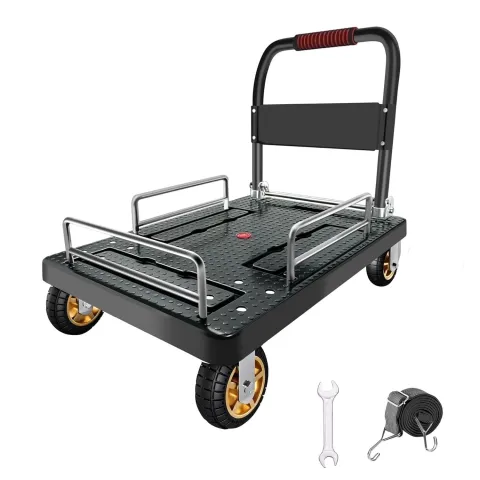 Garvee
Folding platform truck, 1300 lb
Moves stacks of bags, block and brick without a wheelbarrow tipping.
Check price
Garvee
Folding platform truck, 1300 lb
Moves stacks of bags, block and brick without a wheelbarrow tipping.
Check price
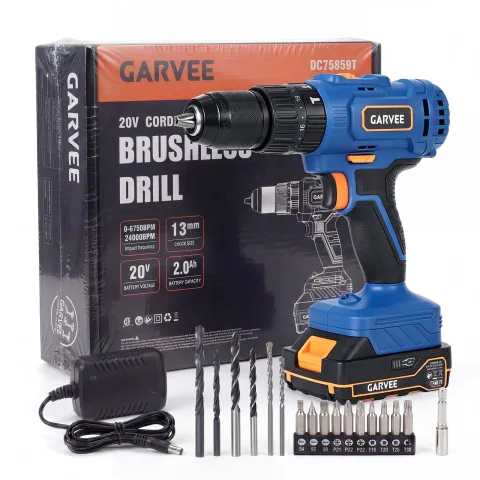 Garvee
20V cordless hammer drill
Drills masonry and concrete for anchors, and drives screws everywhere else.
Check price
Garvee
20V cordless hammer drill
Drills masonry and concrete for anchors, and drives screws everywhere else.
Check price
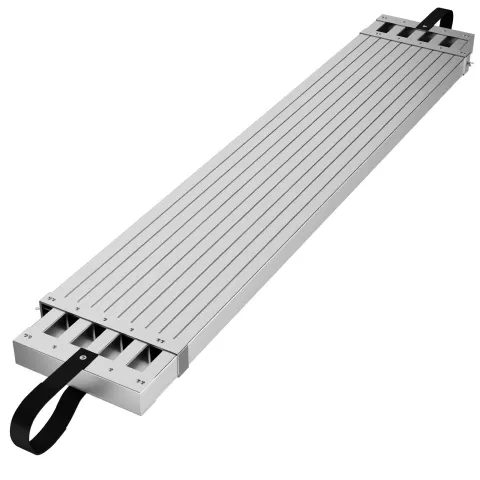 Garvee
Telescoping work platform
Spans two ladders or steps for ceilings, upper walls and stairwells.
Check price
Garvee
Telescoping work platform
Spans two ladders or steps for ceilings, upper walls and stairwells.
Check price
 Garvee
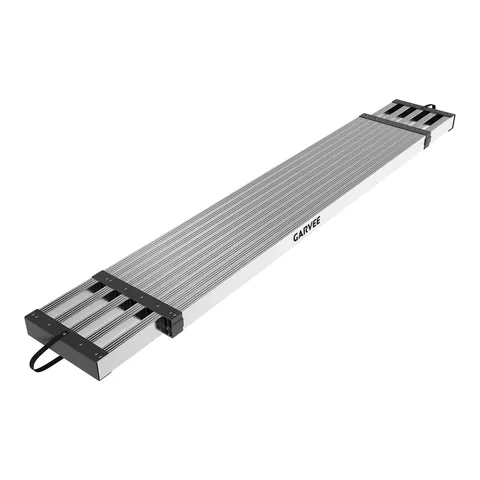
Telescoping scaffold plank, 69–112 in
Spans two ladders for ceilings, crown and the top of the wall.
Check price
Garvee
Telescoping scaffold plank, 69–112 in
Spans two ladders for ceilings, crown and the top of the wall.
Check price
 Garvee
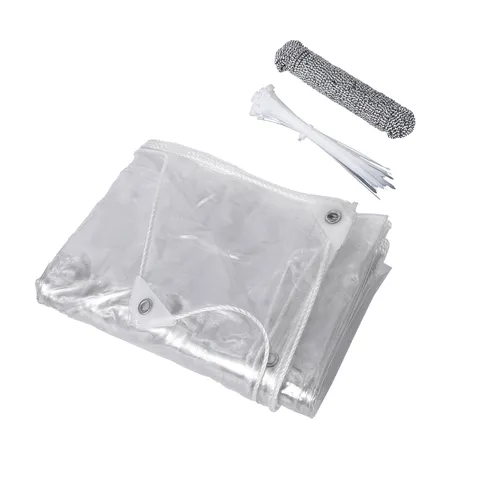
Clear PVC tarp, 8 × 10 ft
Covers a fresh slab to cure, or keeps a lumber or drywall stack dry.
Check price
Garvee
Clear PVC tarp, 8 × 10 ft
Covers a fresh slab to cure, or keeps a lumber or drywall stack dry.
Check price
Not the tool you were after? Browse the whole range at Garvee — the store these picks come from.