Asphalt calculator
Asphalt calculator:
tons of hot mix by area and thickness
Hot mix is ordered by the ton and laid by the inch. Enter the area and the compacted thickness, and get the tonnage the plant will ask for — with the base under it. It works as an asphalt estimator and paving calculator for driveways, paths and lots, and converts square yards to tons and back.
Enter your drivewayOptional
What will it cost?
Every material the calculator worked out gets its own price. Each field starts at a typical US figure so you have something to work from — change any of them to what your own supplier charges.
These prices are approximate. They are national US retail figures, and what you actually pay varies with your region, your supplier, the season and how much you buy at once. Treat them as a starting point, not a quote — always price the job from your own supplier's current figures before you order.
Your prices
Tools for the job
What makes this job easier
Tools and materials that suit this kind of job. These are affiliate links: if you buy through one, Renovimo may earn a commission at no extra cost to you. It never changes the figures on this page.
 Garvee
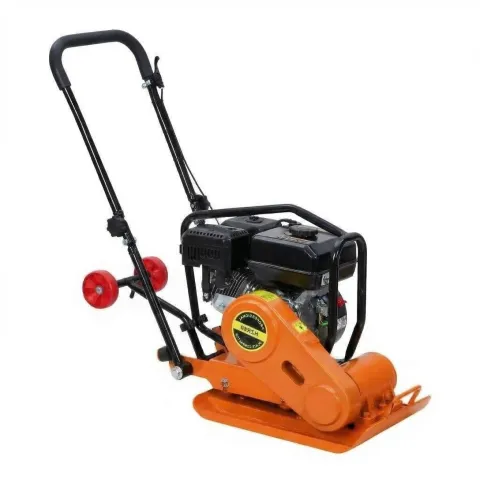
Plate compactor, 7 HP
Compacts the crushed-stone base in 3 in lifts — the base, not the asphalt, is what holds a driveway up.
Check price
 Garvee
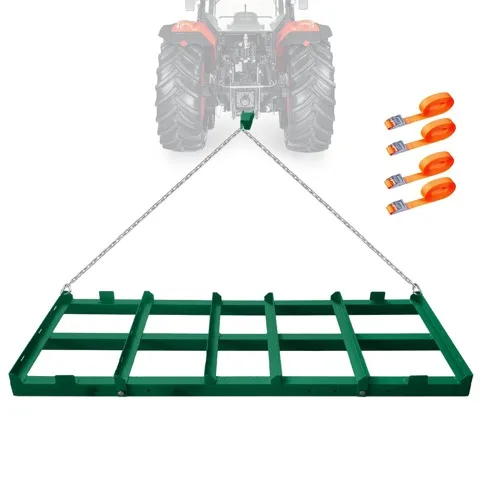
Drag harrow, 4 ft
Towed behind a tractor or ATV, it levels the crushed-stone base of a long driveway before it is compacted.
Check price
 Garvee
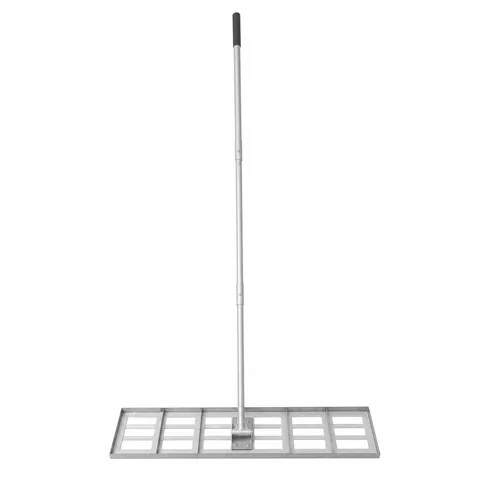
Lawn leveling rake, 30 in
Spreads and levels the crushed stone to grade before it is compacted.
Check price
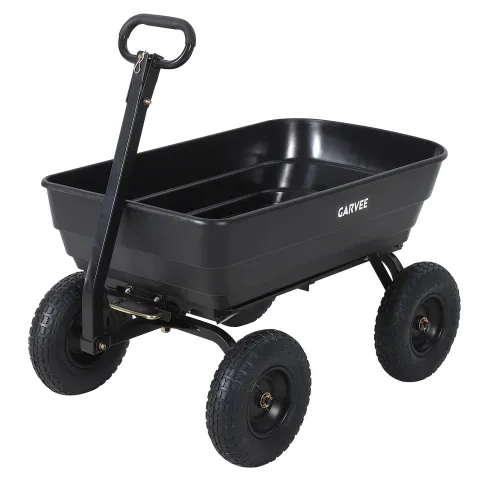 Garvee
Dump cart, 1200 lb
Tips a whole load of gravel, mulch or debris where you want it.
Check price
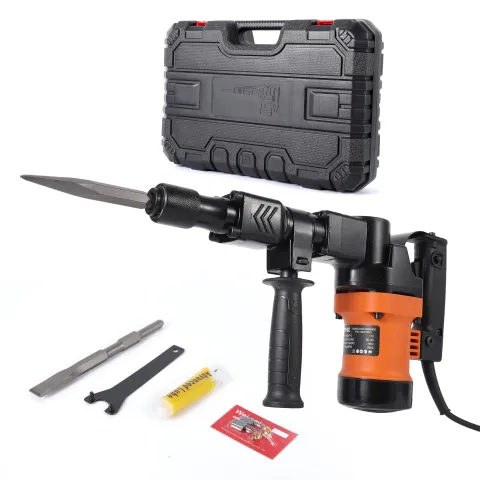 Garvee
Electric demolition hammer, 1400 W
Breaks out an old slab or broken asphalt before the new driveway goes in.
Check price
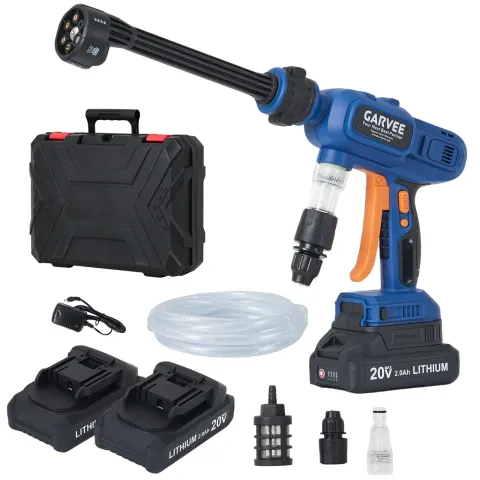 Garvee
Cordless pressure washer
Cleans the drive before it is sealed; sealer will not bond over dust and oil.
Check price
Not the tool you were after? Browse the whole range at Garvee — the store these picks come from.
Based on your result
What you'll need
Hot mix arrives at 300 °F and has to be laid and rolled before it cools below about 185 °F, so the base must be graded and compacted before the first truck shows up — and the air must be at least 50 °F and rising.
- Hot-mix asphalt
- Ordered by the half ton from the plant; the ticket shows the net weight
- Calculate above
- Crushed stone base
- Crusher run or road base, compacted in 3 in lifts
- —
- Tack coat
- Emulsion sprayed so asphalt bonds: about 0.09 gal per sq yd on old asphalt, 0.06 between new lifts
- —
- Sealcoat
- Not now: after the first 3–12 months, 2 coats at about 76 sq ft per gallon each
- —
- Roller and lute
- A vibratory roller, a lute rake and a hand tamper for the edges
- 1 each
Tons per square yard
Asphalt tonnage calculator: tons per square yard by thickness
At 145 lb per cubic foot compacted, every inch of hot mix weighs about 109 lb per square yard. Plants and DOT estimators work from this table; multiply your square yards by the row for your thickness.
| Compacted thickness | Tons per sq yd | Sq yd per ton | Tons per 1,000 sq ft |
|---|---|---|---|
| 1.5 in · 38 mm | 0.082 | 12.3 | 9.1 |
| 2 in · 51 mm | 0.109 | 9.2 | 12.1 |
| 3 in · 76 mm | 0.163 | 6.1 | 18.1 |
| 4 in · 102 mm | 0.218 | 4.6 | 24.2 |
When the new driveway can take a car, a parked car and a sealcoat is on the asphalt curing and drive-on times guide.
The maths
How much asphalt do I need?
The driveway the calculator opens with is 60 by 12 feet, 720 square feet, at 3 inches. That is 180 cubic feet, 189 with 5% waste, and at 145 lb a cubic foot 13.70 tons — 14 tons ordered by the half ton.
weight = volume × 145 lb/ft³
tons = weight ÷ 2,000, rounded up to the half ton
sq yd from tons = tons × 2,000 ÷ 145 ÷ (thickness ÷ 12) ÷ 9
- 01
Measure the area
Length and width for a driveway, diameter for a turnaround, base and height for a corner. A lot already measured in square yards or acres can go straight into the area field.
- 02
Pick the compacted thickness
2 in for an overlay, 3 for a new driveway, 4 for a lot that takes trucks. The paver lays about 25% more and the roller takes it down.
- 03
Add waste
Five percent for straight edges, ten for curves and hand work at the garage apron.
- 04
Use the plant's density
145 lb per cubic foot is the common planning figure; the plant's mix design may be 140 to 150. Ask, and type it in.
- 05
Order by the half ton, then the base
Plants sell in half tons and deliver by the truck, about 20 tons a tri-axle. A new driveway also needs 6 to 8 in of compacted crushed stone, run 1 ft past each edge so the asphalt edge does not crumble.
Good to know
How this asphalt calculator works, and other questions
About 15 tons for a 20 × 40 ft driveway at 3 in: 800 sq ft × 0.25 ft is 200 cu ft, 29,000 lb at 145 lb per cubic foot, plus 5% waste.
About 6.1 sq yd at 3 in thick, 9.2 at 2 in and 18.4 at 1 in. Switch the calculator to "The tons" to work it for any load.
3,915 lb — about 2.0 tons — at 145 lb per cubic foot compacted. Loose in the truck it takes up a little more room for the same weight.
3 in of hot mix over 6–8 in of compacted base; 2 in carries cars on firm, well-drained ground. Overlays are 1½–2 in of hot mix over sound existing asphalt. Driveway thickness and curing →
Colder than 50 °F air or 40 °F ground; a thin lift of 1½ in or less wants 60 °F. In the cold, hot mix stiffens before the roller can compact it, and a driveway laid in November ravels by spring.
Multiply the square yards by the tons per square yard for your thickness: 0.163 at 3 in, 0.109 at 2 in, at 145 lb per cubic foot. 100 sq yd at 3 in is about 16.3 tons. Switch the calculator to "The tons" to go the other way.
From 3 in up, two: a binder course of coarser mix, then a surface course of about 1.5 in on top. Each lift compacts properly only when it is thin enough, and the fine surface mix seals and wears better. The calculator splits the tons between the two.
About 2% — a quarter inch per foot — falling away from the house, and never less than 1%. A 60 ft driveway drops about 14 in from garage to street. The slope is set in the base; the asphalt follows it.
The paver spreads the mix about 25% thicker than it will end up; the roller compacts it to the finished depth. Order and calculate on the compacted thickness — 3 in compacted is about 3¾ in laid.