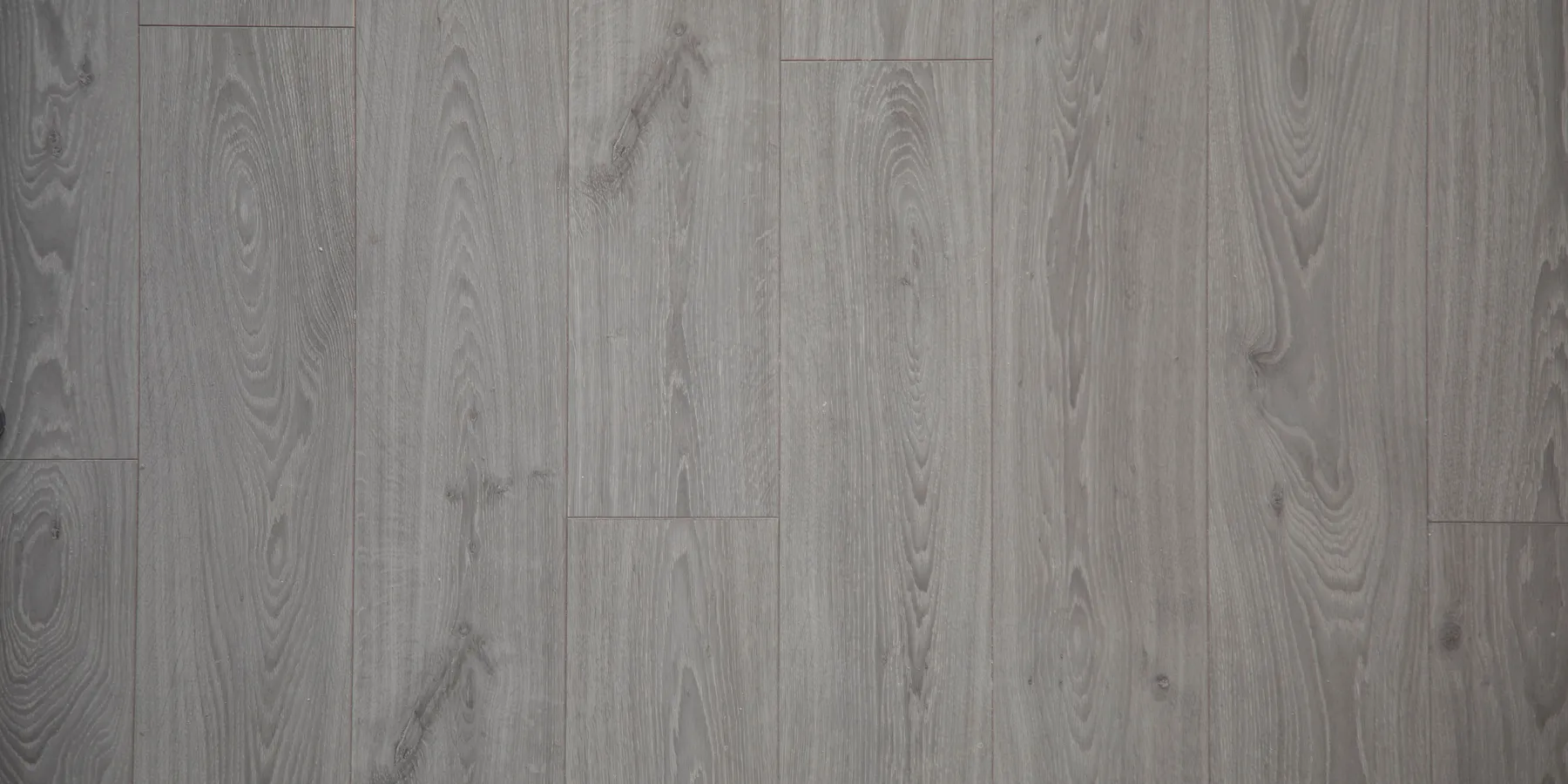
Reference
Laminate flooring thickness
Thickness is the first number on every box of laminate and the one that matters least for how long the floor lasts. It changes how the floor sounds and feels underfoot and how much it forgives an uneven subfloor. Wear is decided by the AC rating, which is a different line on the same box.
What is the best thickness for laminate flooring? 8 to 10 mm for most rooms in a house, at AC3 or better. 12 mm is worth paying for over a joisted floor, upstairs or in a condo, where it sounds more solid. 6 and 7 mm are fine over a flat slab in rooms that see light traffic.
Laminate flooring thickness chart
Laminate is sold in millimeters even in the US. The figure is the plank alone: a pad attached to the back adds another 1 to 2 mm that is not counted in the name.
| Thickness | Inches | Feel and sound | Where it fits |
|---|---|---|---|
| 6 mm | 0.24 in | Hollow; shows every dip | Rentals, closets, a flat slab |
| 7 mm | 0.28 in | Light | Bedrooms over concrete |
| 8 mm | 0.31 in | Solid on a good subfloor | Most rooms. The common middle |
| 10 mm | 0.39 in | Noticeably quieter | Living areas, kitchens, upper floors |
| 12 mm | 0.47 in | Closest to solid wood | Over joists, condos, long open runs |
| 14 mm | 0.55 in | Heavy, rarely stocked | Specialty lines only |
In fractions: 6 mm is about ¼ in, 8 mm about 5/16 in, 10 mm about ⅜ in and 12 mm just under ½ in.
Is 6mm laminate flooring any good?
Over a flat concrete slab, in a bedroom or a rental, yes — 6 mm laminate of a decent AC class wears as well as a thicker plank of the same class. Its weaknesses are the hollow sound and a subfloor that is anything less than flat: the thin core flexes into dips and the joints work loose. Over a wood subfloor, or anywhere you will hear the floor from below, go to 8 mm or more.
Is there 20 mm laminate?
Not as laminate. The thickest planks stop at about 12 to 14 mm; a figure near 20 mm is usually the plank plus its pad and underlayment, or an engineered wood floor, which has a real wood top layer and is a different product.
Is thicker laminate flooring better?
Better in three ways, and no better in the one people assume.
- It sounds less hollow. A floating floor drums under heels; more fiberboard core means more mass and less drum. This is most of what you are paying for in 12 mm.
- It bridges small dips. A stiffer plank spans a low spot in the subfloor instead of flexing into it, which is what breaks click joints over time. It does not replace leveling — it buys a little tolerance.
- It locks more firmly. A deeper edge has a deeper tongue and groove, which holds a little better on a less-than-perfect subfloor. Peaking and gapping, though, come from a missing expansion gap or from moisture — no thickness prevents them.
- It does not wear longer. The surface that takes the traffic is a thin layer of aluminum oxide over the photo print, and it is the same on a 7 mm plank as on a 12 mm one of the same grade. That is what the AC rating measures.
AC rating: the number that decides wear
AC classes come from the European standard EN 13329, which grinds, stains, burns and drops weights on the surface; the standard runs from AC1 to AC6, and the descriptions below are the uses retailers attach to each class. Read it alongside thickness, not instead of it: two planks of the same thickness can be two classes apart.
| Rating | Typically sold for | In a home |
|---|---|---|
| AC1 | Light residential | Guest bedrooms, closets |
| AC2 | General residential | Bedrooms, dining rooms |
| AC3 | Heavy residential, light commercial | Anywhere in the house |
| AC4 | General commercial | Busy households, pets, entries |
| AC5 | Heavy commercial | Rarely needed at home |
| AC6 | Very heavy commercial | Not needed at home |
There is no "AC4 wear layer thickness" to look up: the class is set by how many turns of an abrasive wheel the surface survives, not by a wear layer measured in mils — that figure belongs to vinyl plank. So the order of decisions is: AC3 or AC4 first, then the thickness the room's subfloor and noise call for. An AC4 8 mm floor will outlast an AC2 12 mm one.
Underlayment thickness for laminate
Laminate wants a thin, firm underlayment, and thicker is not better here. A soft pad lets the planks rock at the joints with every step, and the click locks wear loose. Most laminate makers specify foam of about 2 to 3 mm, and many installation guides exclude joint damage over anything spongier from the warranty. Never lay laminate over carpet pad.
| Underlayment | Thickness | When to use it |
|---|---|---|
| Standard foam | 2 mm | The default over wood subfloors |
| Foam with film | 2–3 mm | Over concrete: the film is the moisture barrier |
| Premium foam, felt or cork | 3 mm | Upper floors, where sound to the room below matters |
| Attached pad | 1–2 mm | Already on the plank. Over concrete, add a 6-mil poly sheet unless the pad has a built-in vapor barrier |
Most makers do not allow a second foam layer under a plank that already has a pad attached: the extra give works the click joints loose, and many installation guides exclude it from the warranty. A few allow their own thin underlayment under their own planks — the box says which.
Is thick underlay better for laminate?
No. Thick underlay is right under carpet and wrong under laminate, where 3 mm is about the limit. The carpet pad thickness and density guide covers the other case, and the underlay calculator counts the rolls for either.
Finished floor height, doors and transitions
The floor you lay is the plank plus the underlayment, and that is the height the doors have to clear and the transition strips have to meet.
| Plank | + 2 mm foam | + 3 mm foam |
|---|---|---|
| 7 mm | 9 mm · 0.35 in | 10 mm · 0.39 in |
| 8 mm | 10 mm · 0.39 in | 11 mm · 0.43 in |
| 10 mm | 12 mm · 0.47 in | 13 mm · 0.51 in |
| 12 mm | 14 mm · 0.55 in | 15 mm · 0.59 in |
A door needs trimming if the new floor takes up more than the gap under it; a 12 mm plank on 3 mm foam is 15 mm, just under ⅝ in. Leave a ¼ in expansion gap at every wall and doorframe — ⅜ in on runs longer than about 40 ft, or a transition break if your product's guide sets a maximum run — and cover it with baseboard or shoe molding.
Before any of this, the subfloor has to be flat: most makers ask for 3/16 in over 10 ft, about 5 mm over 3 m. A thicker plank does not get you out of that. High spots are ground down and dips deeper than that are filled with a leveler — self-leveling concrete thickness covers how thin and how thick it can go.
The laminate flooring calculator counts the boxes, the underlayment rolls and the transition strips for your rooms.
Count planks and underlayment →Trim to finish the edges is sized in baseboard and crown molding sizes.
Figures: thickness and underlayment ranges as sold by US retailers; AC classes from EN 13329. Flatness and underlayment limits vary by maker and are set in each product's installation guide, which is what the warranty is judged against.
More in this series
The rest of the floor
These figures sit under every floor on the site. Each tool turns them into an order for one material.
- Flooring Calculator Laminate, vinyl plank, engineered wood and parquet
- Stair Carpet Calculator Stair runner length or wall-to-wall carpet, pad, tack strip and staples for a flight and its landings
- Laminate Flooring Calculator Laminate planks, boxes, underlayment, transition strips and quarter round
- Vinyl Plank Flooring Calculator LVP planks, boxes, adhesive, underlayment and transition strips
- Hardwood Flooring Calculator Hardwood boards, cleats or staples, rosin paper and transition strips
- Carpet Calculator Broadloom carpet, pad, tack strip, seam tape and transition bars
- Underlay Calculator Flooring underlay rolls, strip layout and joint tape
- Flooring Square Footage and Waste Measuring a room, what to subtract, and turning square feet into boxes
- Carpet Pad Thickness and Density Thickness, density and what each one is actually for
Tools for the job
What makes this job easier
Tools and materials that suit this kind of job. These are affiliate links: if you buy through one, Renovimo may earn a commission at no extra cost to you. It never changes the figures on this page.
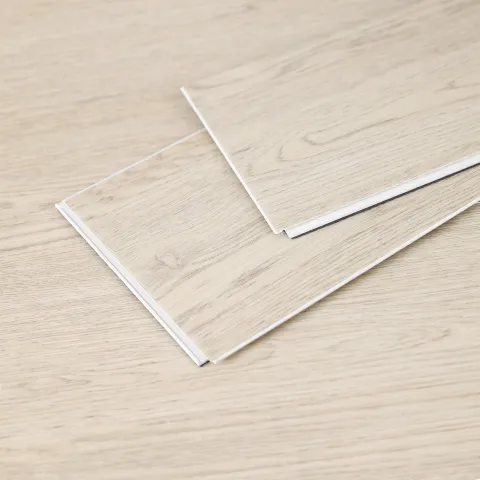 Jeedeson
SPC click-lock plank
Rigid-core, waterproof vinyl plank for kitchens and basements.
Check price
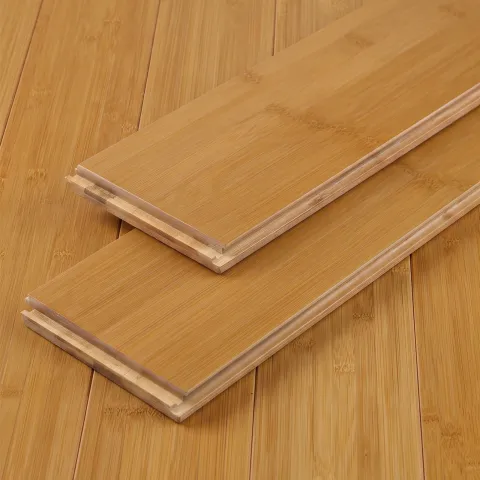 Jeedeson
Click-lock bamboo flooring
Floating, no glue — 20 sq ft per box.
Check price
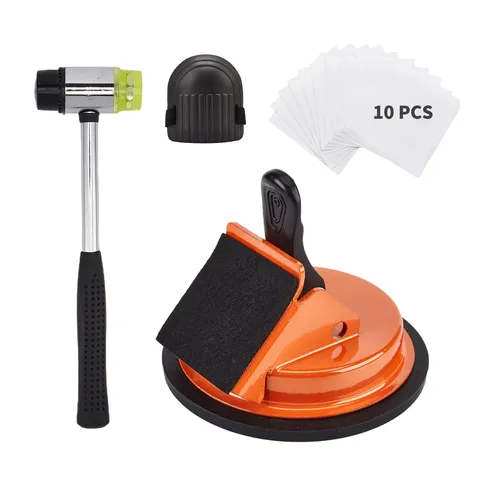 Garvee
Floor gap fixer kit
Suction cup and mallet to close gaps in laminate and vinyl plank after laying.
Check price
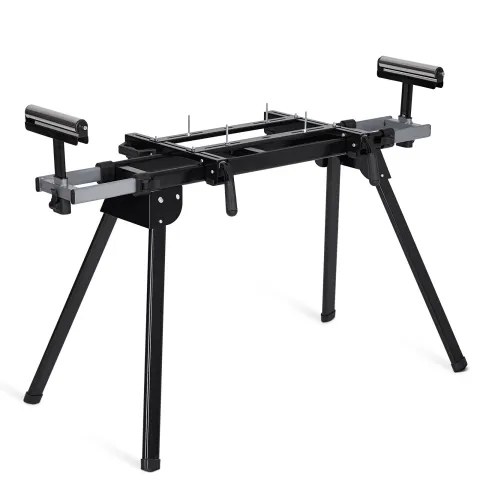 Garvee
Miter saw stand
Supports long trim, planks and boards at cutting height.
Check price
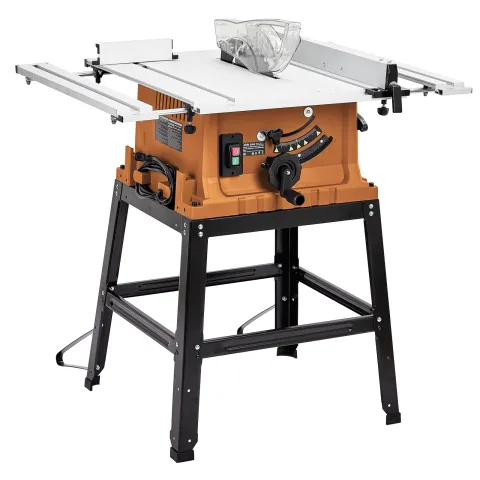 Garvee
10 in table saw
Rips boards, treads and flooring to width.
Check price
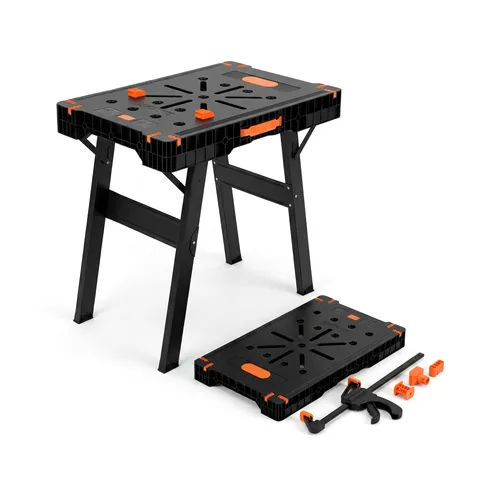 Garvee
Folding work table and sawhorse
Holds boards, trim and sheets at cutting height; folds flat after.
Check price
Not the tool you were after? Browse the whole range at Jeedeson or Garvee — the stores these picks come from.