Reference
Paver sizes and weights
Concrete weighs about 145 pounds a cubic foot, and everything below follows from that one number: 12 pounds per square foot for every inch of thickness. Once you have that, the weight of any paver, any pallet and any load is arithmetic.
Paver thickness, and what it is for
Three thicknesses cover almost everything sold. The thickness is chosen by what drives over it, not by how it looks — and it is the only variable in the weight of a square foot.
| Thickness | Metric | Weight per ft² | Where it goes |
|---|---|---|---|
| 1⅜ in | 35 mm | 16.5 lb | Patios and walkways, foot traffic only |
| 2⅜ in | 60 mm | 28.5 lb | The standard. Patios, walkways and residential driveways |
| 3⅛ in | 80 mm | 37.5 lb | Commercial drives, anything taking trucks |
How much does a paver weigh?
Face area times thickness times twelve. These are the sizes a yard actually stocks, at the standard 2⅜ in unless noted.
| Size | Face area | Per ft² | Weight each | Lift limit |
|---|---|---|---|---|
| 4 × 8 in (holland) | 0.22 ft² | 4.5 | 6.3 lb | One hand |
| 6 × 6 in | 0.25 ft² | 4.0 | 7.1 lb | One hand |
| 6 × 9 in | 0.38 ft² | 2.7 | 10.7 lb | One hand |
| 12 × 12 in, 1⅜ in thick | 1.00 ft² | 1.0 | 16.5 lb | Two hands |
| 12 × 12 in, 2⅜ in thick | 1.00 ft² | 1.0 | 28.5 lb | Two hands |
| 16 × 16 in | 1.78 ft² | 0.56 | 50.7 lb | Two hands, short carry |
| 24 × 24 in slab, 2 in thick | 4.00 ft² | 0.25 | 96 lb | Two people or a lifter |
A 12 × 12 in paver is the one people ask about, and the answer depends entirely on which of the two thicknesses is in front of you: 16 or 28 pounds. The thin one is a stepping stone, the thick one is paving.
How much does a pallet of pavers weigh?
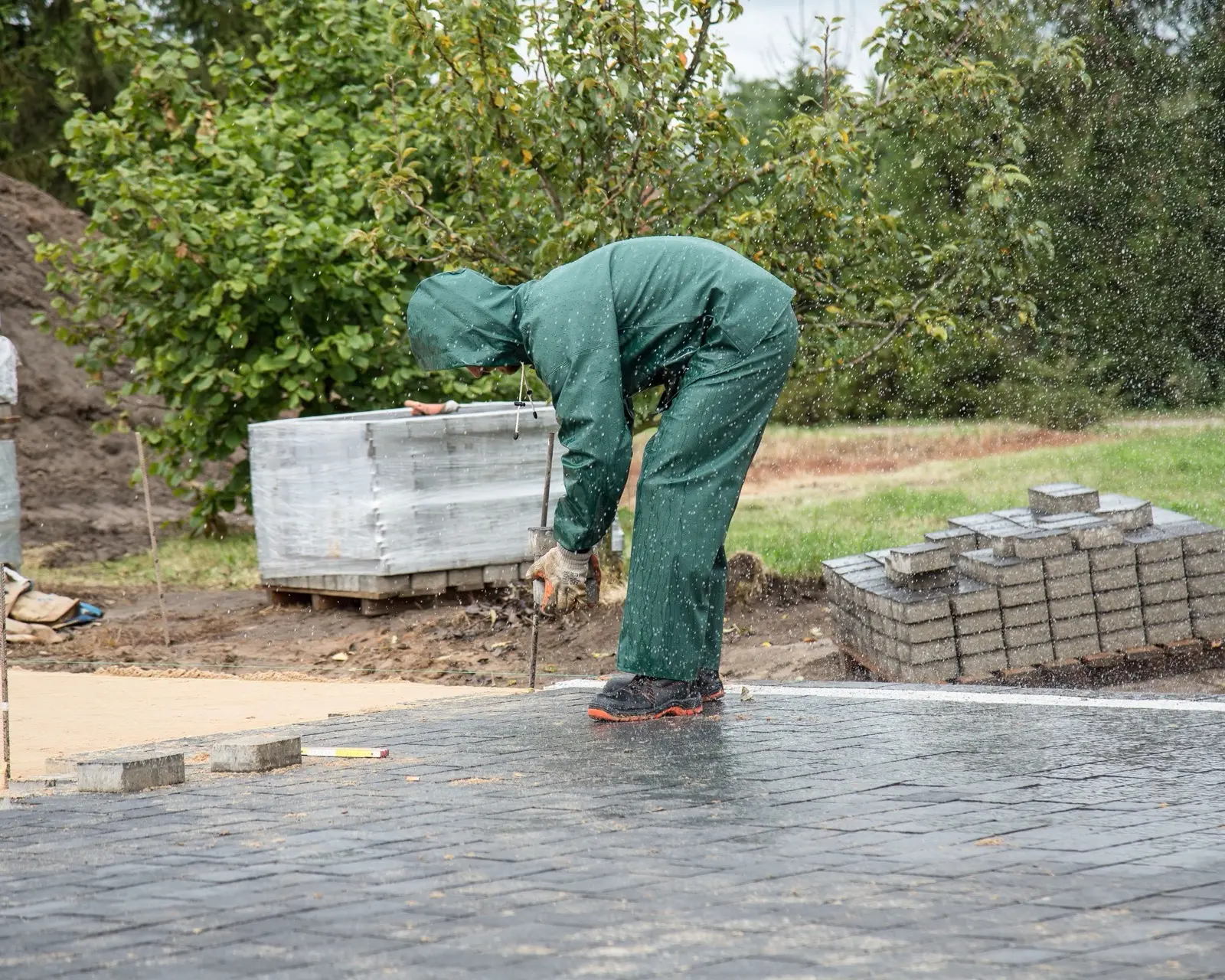
Pallets are built to a coverage, not to a count, so the weight follows the thickness and how many square feet the yard puts on one.
| Thickness | Typical coverage | Pallet weight | Moving it |
|---|---|---|---|
| 1⅜ in | 120–150 ft² | 2 000–2 500 lb | Half-ton pickup: one pallet, at the limit |
| 2⅜ in | 100–120 ft² | 2 900–3 400 lb | Boom truck. Not a pickup |
| 3⅛ in | 80–100 ft² | 3 000–3 800 lb | Boom truck, forklift on site |
Three to four thousand pounds is the honest answer for a standard pallet, and yards do go to 4 800 lb on heavy commercial units. That is more than most half-ton pickups are rated to carry, which is why pavers turn up on a boom truck and get set where you want them rather than tipped at the kerb.
Two figures worth having before you order: a 16 × 12 ft patio is 192 ft², so about two standard pallets and roughly 5 500 lb of paver alone — before the base stone, which weighs more again.
Size the pavers and the base →The stone under all this is sized in crushed stone sizes and coverage. Building a wall from the same material? Concrete block sizes and weights runs the same arithmetic for CMU.
More in this series
Put these figures to work
These are the dimensions every masonry calculator on the site runs on. Each tool applies them to one kind of wall.
- Brick Calculator Bricks, concrete blocks, mortar bags and wall ties
- Concrete Block Calculator Concrete blocks, pallets, mortar bags, grout fill and rebar
- Paver Calculator Pavers, gravel base, bedding sand, joint sand and edging
- Retaining Wall Calculator Wall blocks, caps, base stone, drainage backfill and geogrid
- Concrete Block Sizes and Weights Nominal and actual CMU dimensions, weights and course heights
- Brick Dimensions and Course Heights US brick sizes, bricks per square foot, course heights and wall ties