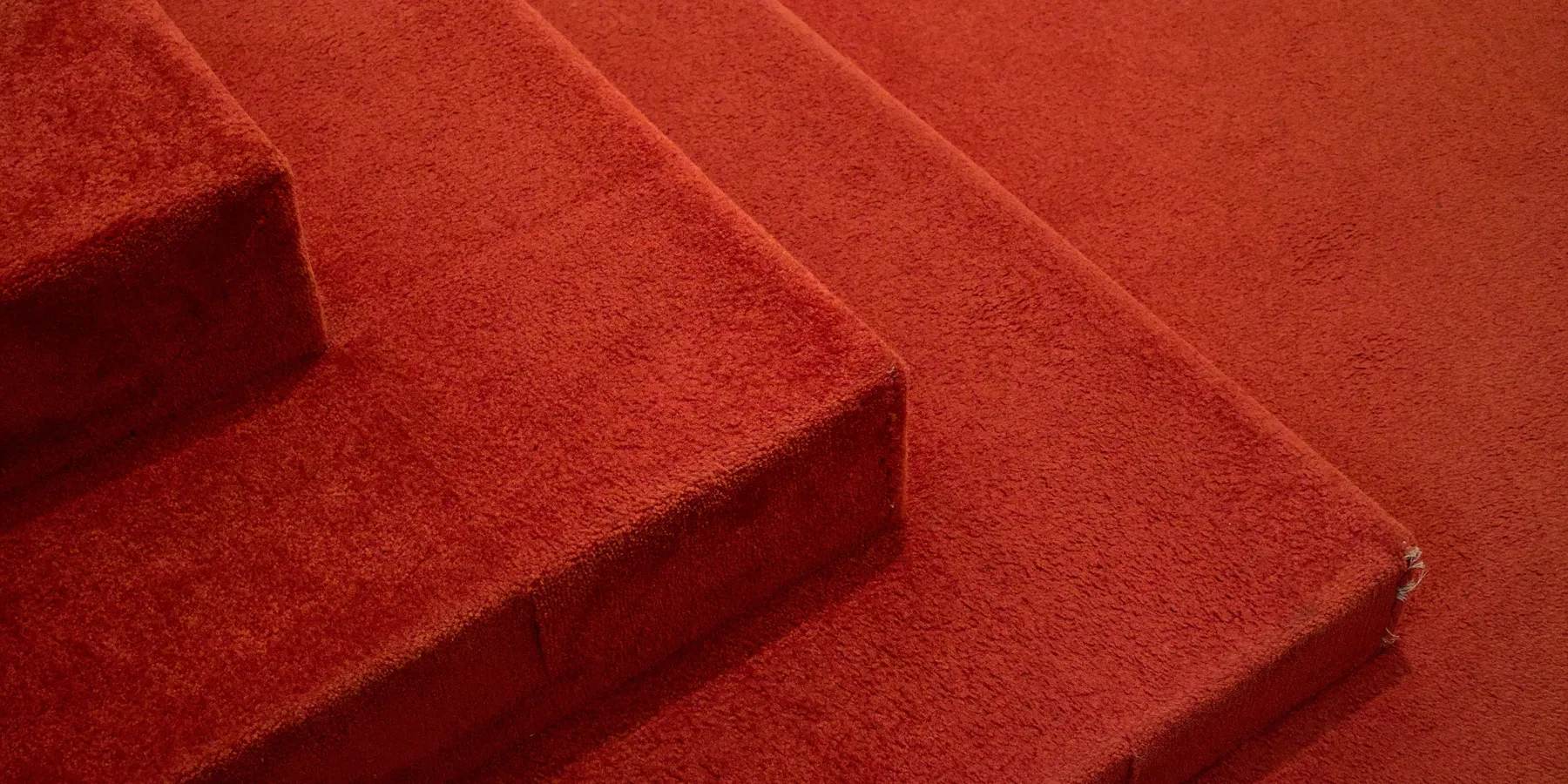
Stair runner and wall-to-wall
Stair carpet calculator
Carpet a staircase with a runner or wall to wall and get the length or square yards, pad, tack strip and staples. Each step is measured as tread plus riser plus the nosing the carpet wraps, and the 3D preview shows your color.
Enter the stairsStair runner calculator
Optional
What will it cost?
Every material the calculator worked out gets its own price. Each field starts at a typical US figure so you have something to work from — change any of them to what your own supplier charges.
These prices are approximate. They are national US retail figures, and what you actually pay varies with your region, your supplier, the season and how much you buy at once. Treat them as a starting point, not a quote — always price the job from your own supplier's current figures before you order.
Your prices
More in this series
The rest of the floor
A room is rarely one material and nothing else. The measurements you have entered here carry straight across to the floor next door, and to the pad under both.
- Flooring Calculator Laminate, vinyl plank, engineered wood and parquet
- Laminate Flooring Calculator Laminate planks, boxes, underlayment, transition strips and quarter round
- Vinyl Plank Flooring Calculator LVP planks, boxes, adhesive, underlayment and transition strips
- Hardwood Flooring Calculator Hardwood boards, cleats or staples, rosin paper and transition strips
- Carpet Calculator Broadloom carpet, pad, tack strip, seam tape and transition bars
- Underlay Calculator Flooring underlay rolls, strip layout and joint tape
- Flooring Square Footage and Waste Measuring a room, what to subtract, and turning square feet into boxes
- Carpet Pad Thickness and Density Thickness, density and what each one is actually for
- Laminate Flooring Thickness 6 to 12 mm in inches, what thickness changes, AC ratings and underlayment
Tools for the job
What makes this job easier
Tools and materials that suit this kind of job. These are affiliate links: if you buy through one, Renovimo may earn a commission at no extra cost to you. It never changes the figures on this page.
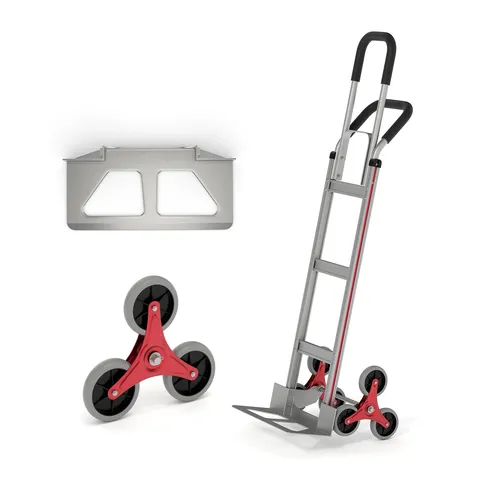 Garvee
Stair-climbing hand truck, 330 lb
Carries the roll of carpet or runner and the pad up to the top landing in one trip; a 12 ft roll is heavy and awkward on a stair.
Check price
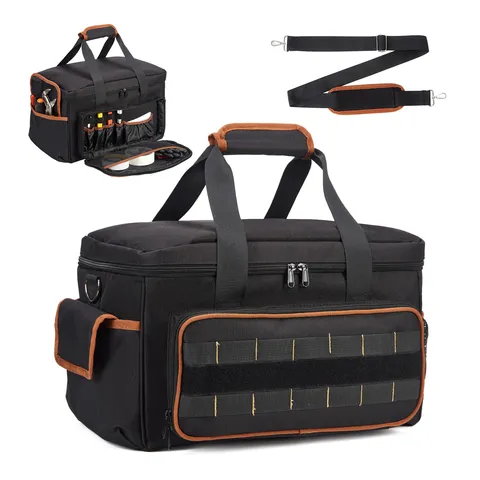 Garvee
Tool bag, 17 in
Keeps the stair tool, knee kicker, stapler, utility knife and tape in one place, up the flight with you.
Check price
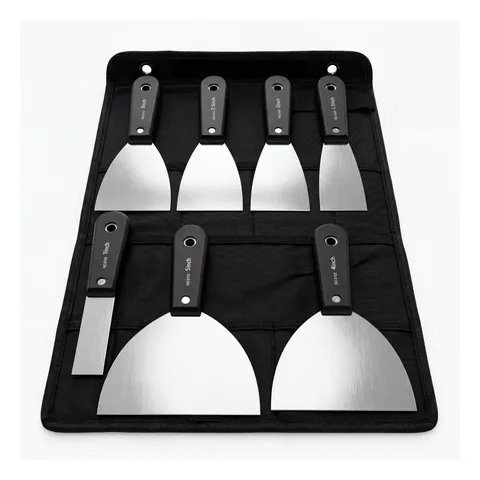 Garvee
Putty knife set, 1–5 in
A stiff blade tucks the carpet edge into the gap against the wall and the riser crease before the last staples go in.
Check price
 Garvee
20V cordless hammer drill
Drills the pilot holes for stair rod brackets in the riser and the wall, and the anchors for a new handrail.
Check price
 Garvee
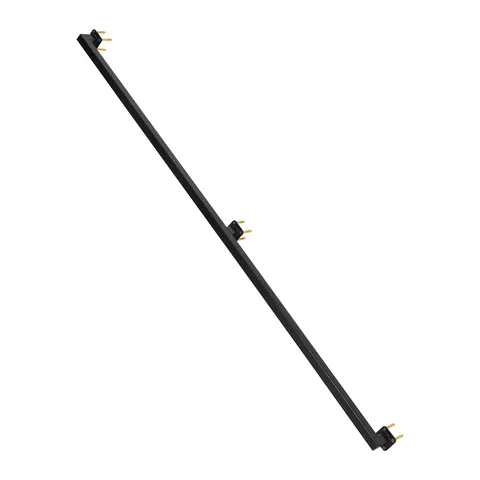
Stair handrail, 6 ft
A new carpeted flight is the time to fit or replace the handrail; the carpet should not be tucked under it.
Check price
 Plastic Place
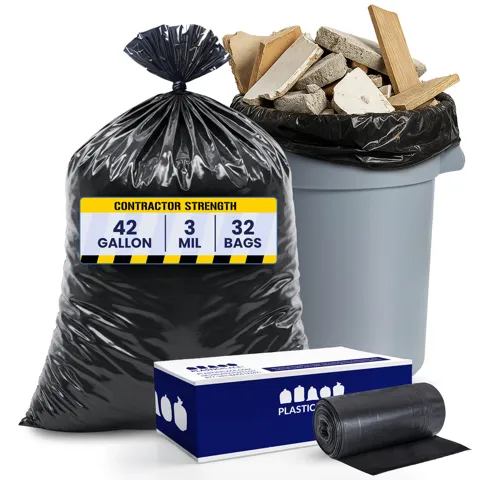
Contractor bags, 42 gal, 3 mil
Bags torn-out carpet, pad and staples as you go, so nothing stays on the stairs to trip over.
Check price
Not the tool you were after? Browse the whole range at Garvee or Plastic Place — the stores these picks come from.

Based on your result
What you'll need
Quantities update after every calculation. Order the runner or carpet in one piece from one dye lot, and add the pad only if you ticked it.
- Carpet or runner Amazon
- Runner by the foot, or wall to wall cut from the roll, waste included
- Calculate above
- Carpet pad Amazon
- Stair-grade pad on each tread and over the nose, riser bare
- —
- Tack strip Amazon
- Wall to wall: each tread, plus each riser for a waterfall install
- —
- Staples Amazon
- 1/2 to 9/16 in staples, boxes of 1 250
- —
- Stair tool and knee kicker Amazon
- Tucks and stretches the carpet into each crease
- one each
- Stair rods Amazon
- Optional, one per riser crease, with brackets
- —
As an Amazon Associate I earn from qualifying purchases.
The maths
Stair carpet calculator: how the length is counted
Carpet follows the stair like a ribbon: along each tread, over the nosing and down the riser. One step uses tread plus riser plus nosing; multiply by the number of steps, add waste, and convert.
runner (ft) = ⌈ (steps × step + landing depths) × (1 + waste) ÷ 12 ⌉
pieces across the roll = ⌊ roll width ÷ stair width ⌋
roll length = ⌈ ⌈ steps ÷ pieces across ⌉ × step × (1 + waste) ÷ 12 ⌉ ft
carpet billed (sq yd) = roll width × roll length ÷ 9
pad per step = tread + nosing + 2 in · tack strip = steps × width × 2 (waterfall) or × 1 (Hollywood)
For a whole room of carpet use the carpet calculator; pad thickness and density are in the carpet pad guide.
- 01
Count the steps and measure one
Count the risers from the floor to the top landing. Measure the tread depth, the riser height and how far the tread overhangs, on a middle step: the first and last are often different.
- 02
Add the nosing
The carpet wraps over the edge, so each step needs tread + riser + nosing. A 10 in tread, 7.5 in riser and 1 in nosing is 18.5 in of carpet a step.
- 03
Add the landings
A runner continues across a landing by its depth; wall-to-wall carpet is cut for the landing's width times its depth from the same roll.
- 04
Add waste and convert
10 percent covers the cuts and the extra at the top and bottom step. 13 steps of 18.5 in is 240.5 in; with 10 percent that is 264.55 in, 22.05 ft, so you buy 23 ft of runner. Wall-to-wall carpet is cut one piece per step with the pile running down the stair (CRI 105 section 11.3), so a 36 in stair gets 4 pieces across a 12 ft roll: 4 rows of 18.5 in, 74 in, 81.4 in with waste, so 7 ft of roll, billed as 12 ft x 7 ft / 9 = 9.4 sq yd.
- 05
Size pad, tack strip and staples
Under the carpet the pad goes on each tread and over the nose, about tread + nosing + 2 in a step, and the riser stays bare (CRI 105 section 11.2). Wall-to-wall carpet is gripped by tack strip on every tread, and on every riser too for a waterfall install; a Hollywood install needs the treads only. A runner is stapled, about every 3 in in two rows a step, with 1/2 to 9/16 in staples.
Runner or wall to wall
How much carpet for stairs?
A straight flight of 13 steps with a 10 in tread, 7.5 in riser and 1 in nosing takes about 23 ft of runner, or 7.4 sq yd of net wall-to-wall carpet 36 in wide with 10 percent waste. Carpet is bought off the roll, though: cut one piece per step from a 12 ft roll, 7 ft of it, billed as 9.4 sq yd. A 36 × 36 in landing is another row cut from the roll and takes the buy to 11 ft, 14.7 sq yd.
A runner is narrower than the stair and leaves 4 to 6 in of wood showing each side, with the edges bound in a darker or matching tape. Wall-to-wall carpet covers the full width and is stretched over a pad. Runners are usually quicker to fit and less carpet to buy; wall-to-wall is quieter and warmer underfoot. For rooms, see the carpet calculator, and for thickness and density of the pad underneath the carpet pad guide.
Stair dimensions matter to safety as well as to carpet. The US residential code (IRC R311.7.5) allows a riser of 7¾ in at most and a tread of at least 10 in; the calculator shows a note when your numbers are outside that.
Good to know
Stair carpet questions, answered
Count the risers and multiply by tread plus riser plus nosing, add 10 percent for waste, and divide by 12. Thirteen steps of 10 in tread, 7.5 in riser and 1 in nosing is 23 ft of runner.
Measure the tread run (nosing edge to nosing edge), the riser height and the nosing overhang on a middle step. Measure the width at the narrowest point. Count the risers up to the top landing, and add each landing you will carpet.
Many runners go over a thin pad or none, so this page leaves it off for a runner and on for wall to wall. Pad cushions the step and lengthens the life of the carpet; tick the box to price it.
Most are 26 to 32 in wide, leaving 4 to 6 in of the tread showing each side of a 36 in stair. Keep at least 2 in (5 cm) bare each side, and centre it so the margins match.
A staple about every 3 in across the carpet, in a row at the back of each tread and one under the nosing, 1/2 to 9/16 in long so they go through the backing and the pad. A box of 1 250 covers a runner up a normal flight.
By the foot from a roll in whole feet, usually 26 to 32 in wide, or as ready-made rugs in 8, 10, 12 and 14 ft lengths. A rug is a fixed length, so the page shows the shortest standard rug that covers your flight, and the joins you would need if the flight is longer than 14 ft. Rugs are hard to join invisibly on a stair, so measure for cut-to-length when you can.
A waterfall install carries the carpet straight over each nosing and down the riser, with tack strip on the treads and the risers. Hollywood (cap and band) tucks the carpet under the nosing, takes about 1 in more per step, and needs tack strip on the treads only.