Topsoil calculator
Topsoil calculator
Soil is ordered by the yard, delivered by the ton and settles once it is down. Enter the lawn, bed or hole you are filling and get the yards to order, what the load weighs dry or wet, and how many bags or truckloads that is.
Enter your areaOptional
What will it cost?
Every material the calculator worked out gets its own price. Each field starts at a typical US figure so you have something to work from — change any of them to what your own supplier charges.
These prices are approximate. They are national US retail figures, and what you actually pay varies with your region, your supplier, the season and how much you buy at once. Treat them as a starting point, not a quote — always price the job from your own supplier's current figures before you order.
Your prices
More in this series
The rest of the yard
A bed is rarely one material: stone under the path, soil to fill, mulch on top. Each has its own calculator, built for how that material is sold.
- Gravel Calculator Gravel, crushed stone, sand and road base by volume, tons and bags
- Mulch Calculator Cubic yards, bags or bales of mulch for every bed, topped up over the old layer
- Crushed Stone Sizes and Coverage What each stone grade is for, and what a ton and a yard cover
- Topsoil Weight and Coverage What a yard of soil weighs dry, moist and wet, and how far it spreads
- Mulch Coverage, Bags and Weight How far a yard and a bag of mulch spread, and what they weigh
Tools for the job
What makes this job easier
Tools and materials that suit this kind of job. These are affiliate links: if you buy through one, Renovimo may earn a commission at no extra cost to you. It never changes the figures on this page.
 Garvee
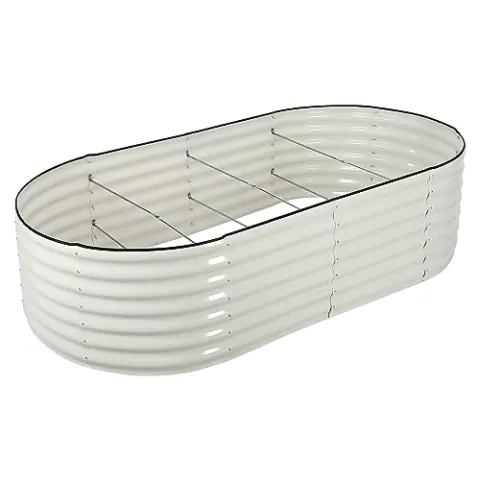
Raised garden bed, 8 × 4 ft
A 2 ft deep steel bed — fill it with the topsoil you just worked out.
Check price at Garvee
Garvee
Raised garden bed, 8 × 4 ft
A 2 ft deep steel bed — fill it with the topsoil you just worked out.
Check price at Garvee
 Garvee
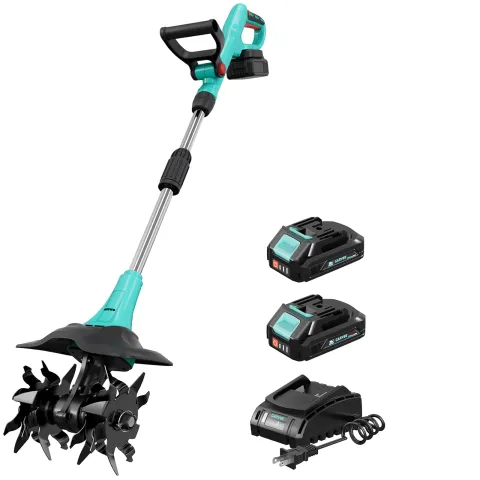
Cordless tiller
Works new topsoil into the ground below so it does not sit as a layer.
Check price at Garvee
Garvee
Cordless tiller
Works new topsoil into the ground below so it does not sit as a layer.
Check price at Garvee
 Garvee
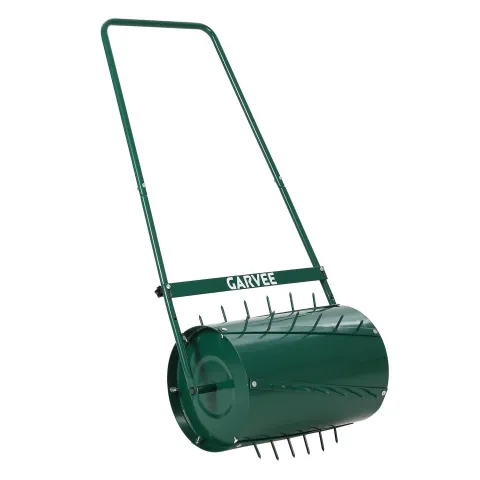
Lawn roller and aerator
Firms new topsoil and seed so the surface does not sink unevenly.
Check price at Garvee
Garvee
Lawn roller and aerator
Firms new topsoil and seed so the surface does not sink unevenly.
Check price at Garvee
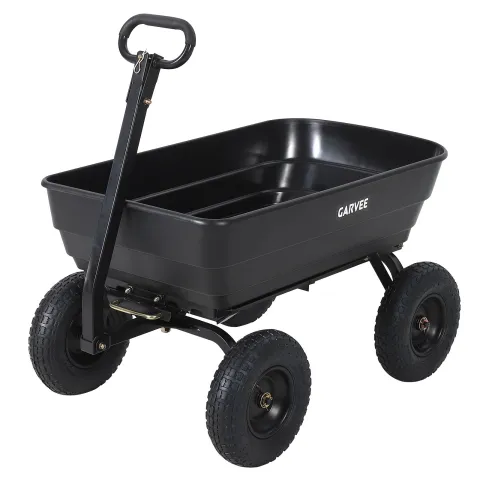 Garvee
Dump cart, 1200 lb
Tips a whole load of gravel, mulch or debris where you want it.
Check price at Garvee
Garvee
Dump cart, 1200 lb
Tips a whole load of gravel, mulch or debris where you want it.
Check price at Garvee
Based on your result
What you'll need
Have the drop spot cleared before the truck arrives — a load of soil is several tons and is tipped where it lands.
- Topsoil, fill or compost
- Bags or a bulk load, with the settling allowance
- Calculate above
- Compost
- Optional, mixed into the top few inches of a new bed
- —
- Landscape rake
- Levels the soil before seeding or turf
- 1
- Wheelbarrow and shovel
- For moving a bulk load from the drop spot
- 1
- Lawn roller
- Firms a new lawn bed so it settles evenly
- 1
Worked example
How much topsoil do I need?
Take the lawn the calculator opens with: 27 by 20 feet, so 540 square feet, to get 4 inches of new topsoil before seeding. Four inches is a third of a foot, so the finished layer is 540 ÷ 3 = 180 cubic feet, or 6.67 cubic yards.
Loose soil settles once it is raked, rolled and watered, so it is ordered over the finished depth. With 15 per cent for settling that is 7.67 cubic yards — about 8.4 tons of moist topsoil, which is a delivery, not a trip in a pickup.
What a yard weighs dry, moist and wet, and how far it spreads, is set out in topsoil weight and coverage.
Topsoil calculator for raised beds
For a raised bed, choose Raised bed and enter the height of the bed. If gravel or rubble goes in the bottom for drainage, enter its depth too — the soil fills only what is left. These are the common kit sizes, with 15 per cent for settling.
| Bed | Height | Cubic feet | Cubic yards to order | 0.75 cu ft bags |
|---|---|---|---|---|
| 4 × 8 ft | 10 in | 30.7 | 1.14 | 41 |
| 4 × 8 ft | 12 in | 36.8 | 1.36 | 50 |
| 4 × 8 ft | 18 in | 55.2 | 2.04 | 74 |
| 3 × 6 ft | 12 in | 20.7 | 0.77 | 28 |
| 4 × 12 ft | 12 in | 55.2 | 2.04 | 74 |
Bagged soil suits one or two small beds. From about three cubic yards up the calculator gives the answer as a bulk load, which is usually where delivery becomes cheaper than bags.
The maths
How this topsoil calculator works
The area is measured by its shape. The finished volume is area times depth; the settling allowance goes on top, because loose soil loses height once it is firmed and watered. The weight depends on how wet the soil is, which changes the tons but not the yards.
cu ft = area × depth in ÷ 12 × (1 + settling)
cu yd = cu ft ÷ 27
tons = cu yd × lb per cu yd ÷ 2,000
bags = ⌈ cu ft ÷ bag size ⌉
truckloads = ⌈ cu yd ÷ 12 ⌉
- 01
Measure the area
Length and width, a diameter, or a base and height. For several areas, work each one out and add the yards.
- 02
Set the finished depth
About 4 inches under new turf or seed, the full height of a raised bed less any drainage layer, or whatever the low spot needs.
- 03
Add for settling
Loose soil firms down as it is rolled and watered. Ten to twenty per cent more than the finished volume is the usual allowance.
- 04
Weigh it wet or dry
Moist topsoil runs about 2,200 lb a cubic yard, dry about 1,900 and wet about 2,600. That is the difference between a pickup load and a broken axle.
Good to know
Topsoil questions, answered
About 2,200 lb moist — a little over a ton. Dry it is nearer 1,900 lb, and soaked by rain it can reach 2,600 lb. Fill dirt is heavier, compost far lighter.
A cubic yard is 27 cubic feet, so it takes 36 bags of 0.75 cu ft, 27 bags of 1 cu ft, or 18 bags of 1.5 cu ft.
Set the depth to the inside height of the bed, less any drainage layer. A 4 by 8 foot bed 12 inches deep holds 32 cubic feet; with 15 per cent for settling that is about 1.4 cubic yards, or 50 bags of 0.75 cu ft.
Fill dirt is subsoil for raising grade and filling holes — it packs hard and grows little. Topsoil is the screened upper layer that plants grow in. Compost is organic matter mixed into topsoil, not a replacement for it. Fill low spots with fill dirt, then finish with topsoil.
At 4 inches deep a cubic yard covers about 81 square feet; at 2 inches about 162, and at 6 inches about 54.