Reference
Brick weight and bricks per pallet
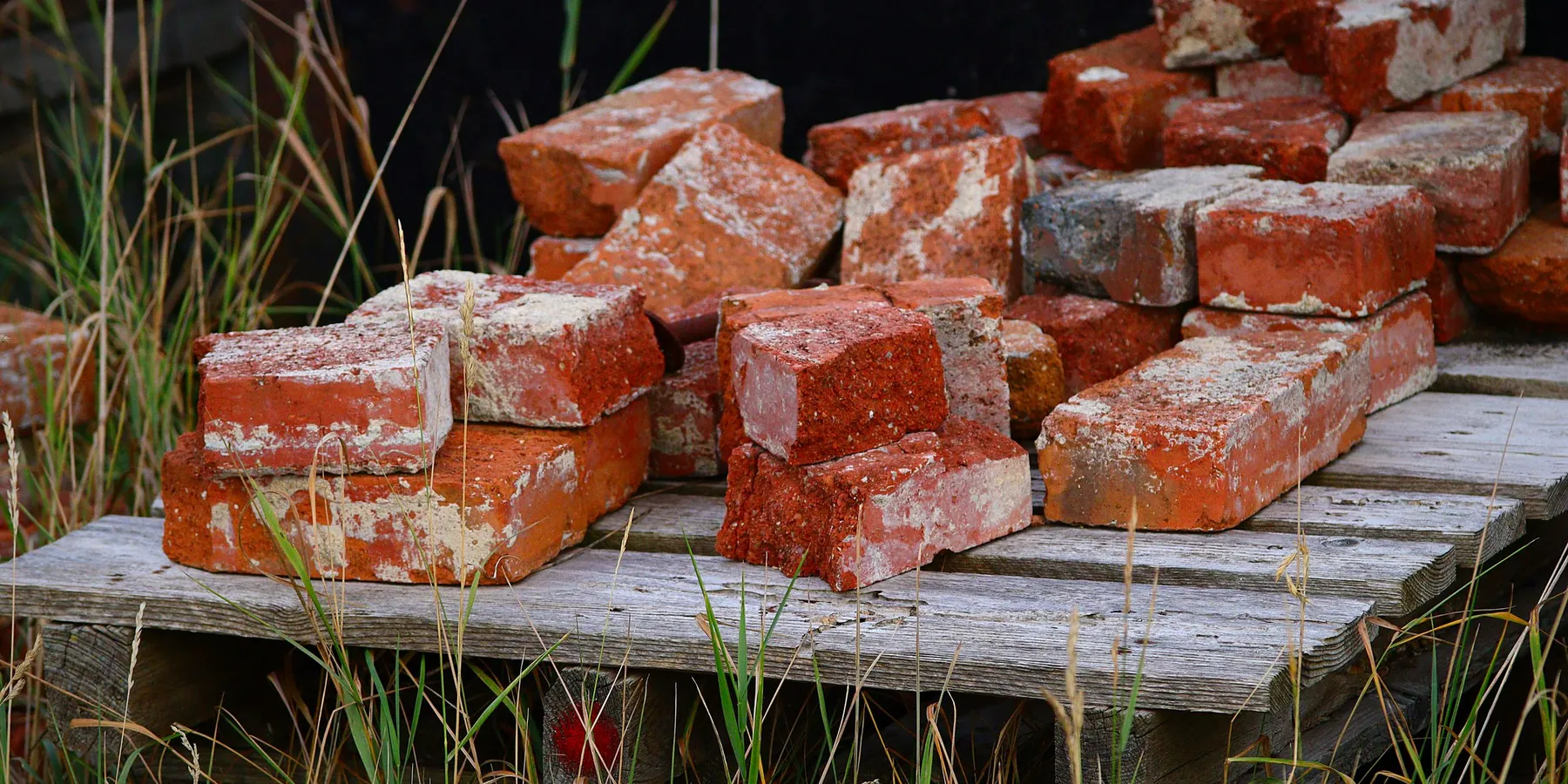
A common brick weighs four to five pounds, a pallet holds roughly 200 to 525 of them depending on size, and a pallet of modular brick comes to about a ton. Below: the weight of each common size, the count and weight of a pallet, bricks per square foot, what a brick wall weighs, and the mortar to lay it.
How much does a brick weigh? A modular brick weighs about 4.3 lb typical (2.0 kg; 3.6–4.4 lb by maker). A pallet (cube) holds about 525 modular bricks and weighs about 2,250 lb typical (1,020 kg), with a range of 1,900–2,300 lb by maker. Queen bricks run 430–520 to a pallet.
How much does a brick weigh?
The weight of a brick follows its size and how dense the clay is fired. A modular brick weighs about 4.3 lb (2.0 kg), the brick most houses are built with, but makers publish anything from 3.6–4.4 lb: Glen-Gery's plant sheets run 3.6 to 4.1 lb, Belden lists 4.39 lb and Old Carolina 4.3 lb. Treat the first number in each row as the typical weight and the bracket as the spread between makers.
| Brick | Size (L × W × H) | Typical weight each | By maker | Metric (typical) |
|---|---|---|---|---|
| Modular | 7⅝ × 3⅝ × 2¼ in | 4.3 lb | 3.6–4.4 lb | 2.0 kg |
| Standard | 8 × 3⅝ × 2¼ in | 4.4 lb | 4.4–4.6 lb | 2.0 kg |
| Queen | 7⅝ × 3 × 2¾ in | 4.5 lb | 3.9–5 lb | 2.0 kg |
| King | 9⅝ × 2¾ × 2⅝ in | 4 lb | 3.7–4.2 lb | 1.8 kg |
| Utility | 11⅝ × 3⅝ × 3⅝ in | 9.7 lb | 9.6–10.2 lb | 4.4 kg |
| Solid clay paver, Old Carolina | 8 × 4 × 2¼ in | 5 lb | one maker | 2.3 kg |
| Solid clay paver, Belden | 8 × 4 × 2¼ in | 6.3 lb | one maker | 2.9 kg |
| UK / metric facing brick | 215 × 102.5 × 65 mm | 4.3–5.5 lb | UK packs of 400–520 | 1.95–2.5 kg |
The queen weight is the midpoint of the two makers we found (3.9 and 5 lb), and the standard row is Glen-Gery's 4.4 lb with Belden's 4.58 lb as the top. The utility brick is the outlier: it is as tall as it is wide and three times as long as it is thick, so it weighs a little over twice a modular brick (9.7 lb against 4.3). The king brick is longer but thinner, so at about 4 lb it weighs about the same as a modular. The UK row is for readers working in metric: a 215 × 102.5 × 65 mm facing brick, about 60 per m² at a 10 mm joint. Lightweight and hollow bricks weigh less, and a damp brick weighs more than a dry one, so use these figures for estimating, not for a structural load check.
How many bricks are on a pallet?
Brick is sold by the pallet, which the trade calls a cube, strapped and stacked to a count the plant sets. A modular or standard pallet carries 525 bricks; the larger queen brick means fewer, 430–520 depending on maker; a king pallet holds 368 and a utility pallet 198–201. Solid clay pavers vary by maker: 470 to 500 to a pallet, and the 8 × 4 × 2¼ in clay paver sold at Home Depot comes 240 to a pallet covering 53 ft².
| Brick | Bricks per pallet | Covers |
|---|---|---|
| Modular | 525 | about 77 ft² of wall |
| Standard | 525 | about 80 ft² of wall |
| Queen | 430–520 | about 82 ft² of wall |
| King | 368 | about 81 ft² of wall |
| Utility | 198–201 | about 66 ft² of wall |
| Solid clay paver, Old Carolina | 500 | about 111 ft² (flat, no joint) |
| Solid clay paver, Belden | 470 | about 101 ft² (flat, no joint) |
| Home Depot clay paver (Mutual Materials) | 240 | 53 ft² (flat, no joint) |
Counts differ by manufacturer and plant, and a pallet tag is the figure to order from. Wall coverage is the count divided by the bricks per square foot below, before any waste; the paver rows are flat paving, with no mortar joint. Belden's 470 pavers are quoted at about 101 ft² with sand joints, a little under the 104 ft² that 470 ÷ 4.5 gives.
How much does a pallet of bricks weigh?
Count times unit weight: 525 modular bricks at 4.3 lb is about 2,250 lb (1,020 kg) typical. Across the makers above the range is 1,900–2,300 lb, so a modular pallet is "about a ton" and not a figure to the pound. The wooden pallet and strapping add a little on top.
| Brick | Count × weight | Typical pallet weight | Range by maker | Metric (typical) |
|---|---|---|---|---|
| Modular | 525 × 4.3 lb | 2,250 lb | 1,900–2,300 lb | 1,020 kg |
| Standard | 525 × 4.4 lb | 2,300 lb | 2,300–2,400 lb | 1,040 kg |
| Queen | 430–520 × 4.5 lb | 2,100 lb | 2,000–2,150 lb | 950 kg |
| King | 368 × 4 lb | 1,500 lb | 1,350–1,550 lb | 680 kg |
| Utility | 198–201 × 9.7 lb | 1,900 lb | 1,900–2,050 lb | 860 kg |
| Solid clay paver, Old Carolina | 500 × 5 lb | 2,500 lb | one maker | 1,130 kg |
| Solid clay paver, Belden | 470 × 6.3 lb | 2,960 lb | one maker | 1,340 kg |
The typical figures are rounded to the nearest 50 lb. A pallet of modular, standard, queen or utility brick is roughly a ton, which is more than most half-ton pickups can carry in one go; king brick comes in lighter at about 1,500 lb. Yards deliver on a boom truck, and the same arithmetic applies to pavers, whose pallet weight is worked out in the paver sizes and weights guide.
How many bricks per square foot?
In a wall, a modular brick plus its mortar joint covers about 0.146 ft², which is 6.86 bricks per square foot of wall face (about 73.8 per m²) at a 3/8 in joint. Bigger bricks cover more, so fewer go in each square foot.
| Brick | Glen-Gery, per ft² | BIA TN 10, per ft² | Per 100 ft² (Glen-Gery, else BIA) |
|---|---|---|---|
| Modular | 6.86 | 6.75 | 686 |
| Standard | 6.55 | 6.55 | 655 |
| Queen | 5.76 | 5.5 | 576 |
| King | — | 4.55 | 455 |
| Utility | 3 | 3 | 300 |
| Solid clay paver, Old Carolina | 4.5 | — | 450 |
| Solid clay paver, Belden | 4.5 | — | 450 |
Why does modular read 6.86 in one place and 6.75 in another? The Brick Industry Association (Technical Note 10, Table 4) counts modular brick on the nominal 2⅔ in course, 675 per 100 ft², while Glen-Gery divides the wall by the actual 2⅝ in brick height plus the 3/8 in joint, 8 × 2⅝ in per brick, which gives 686. Both are right for their method; the 6.86 here is what the brick calculator uses. Standard and utility agree in both; queen differs (5.76 and 5.5) for a similar reason, since makers cut it to different heights. King brick is given only in the BIA table, and some makers quote 4.8 to 5 per ft² for it.
These counts are for a running-bond wall with 3/8 in joints and no waste; add 5 to 10 % for cuts and breakage. The solid paver rows are for a paved surface, not a wall. To turn a wall's height and length into bricks, mortar and pallets, use the brick calculator.
How much does a brick wall weigh?
A single wythe (one brick thick, 3⅝ in) of modular brick at 6.86 bricks per ft² and 4.3 lb each is about 29.5 lb of brick per square foot of wall, and its mortar joints add about 6 lb, so a finished wall comes to roughly 36 lb per ft² (173 kg per m²). Engineers carry a design allowance of 40 lb per ft² for 3⅝ in brick veneer, which covers the lighter and the heavier makers. A 10 × 8 ft wall is then about 2,840 lb.
How much mortar per 1,000 bricks?
The Brick Industry Association puts the mortar in the joints of 1,000 modular bricks at 8.1 cubic feet with a 3/8 in joint (10.3 at 1/2 in), or about 5.5 ft³ per 100 ft² of wall. That is the net figure; add 15 to 25 % for the mortar that is dropped, squeezed out and left in the mixer. For modular brick that is 9.3 to 10.1 ft³, which is 16 to 17 bags of 80 lb premixed Type N or S mortar.
| Brick (3/8 in joint) | Net, ft³ per 1,000 | With 15–25 % waste | 80 lb bags (0.6 ft³) | 70 lb bags (about 0.5 ft³) |
|---|---|---|---|---|
| Modular | 8.1 | 9.3–10.1 ft³ | 16–17 | 18–20 |
| Standard | 14.5 | 16.7–18.1 ft³ | 28–31 | 32–35 |
| Queen | 12.2 | 14.0–15.3 ft³ | 24–26 | 27–30 |
| King | 14.2 | 16.3–17.8 ft³ | 28–30 | 32–34 |
| Utility | 12.3 | 14.1–15.4 ft³ | 24–26 | 27–30 |
The bag yield is Quikrete's 0.6 ft³ for an 80 lb bag of Type N mortar mix; the 70 lb column scales that by weight. A bag label that says "37 bricks per bag" is a cautious field figure, about 27 bags per 1,000, so buy a few extra if the crew will lay generously. The brick calculator and the brick dimensions and course heights guide use the same BIA basis.
Count the bricks for your wall →Sizes and course heights are in brick dimensions and course heights.
Sources
- Brick Industry Association (BIA), Technical Note 10, Dimensioning and Estimating Brick Masonry (gobrick.com): Table 4 bricks per 100 sq ft (modular 675, standard 655, queen 550, king 455, utility 300) and net mortar per 1,000 brick at a 3/8 in joint (modular 8.1 cu ft, 10.3 at 1/2 in, queen 12.2, king 14.2, standard 14.5, utility 12.3); "Mortar Waste": add 15 to 25 percent to the net mortar.
- Bricks per square foot, Glen-Gery Brick Sizes and Dimensions table (glengery.com/brick-sizes): modular 6.86, standard 6.55, queen 5.76, utility 3.0. Glen-Gery works from the actual brick height (8 × 2⅝ in), BIA from the 2⅔ in nominal course, which is why the modular figures are 6.86 and 6.75.
- Unit weights and bricks per cube, Glen-Gery plant technical data sheets (Pittsburgh Red Essentials series; Iberia/Uptown 2024): modular 3.6 to 4.1 lb, standard 4.4 lb, utility 9.6 to 9.7 lb, 525 per cube for modular and standard, 198 to 201 for utility, queen 520 per cube at 3.9 lb.
- Belden Brick dimensions guide (beldenbrick.com/resources/brick-dimensions-guide): modular 4.39 lb, standard 4.58 lb; its older guide lists 4.20 and 4.40 lb. Belden clay paver 4 × 8 × 2¼ in: 470 per pallet covering about 101 sq ft with sand joints (Gertens dealer listing) at 6.3 lb each (Kuhlman listing for Belden Regimental Red).
- Old Carolina Brick Company packaging table: modular 4.3 lb and 525 per pallet, queen 5 lb and 430 per pallet, 4 × 8 × 2¼ in paver 5 lb and 500 per pallet. General Shale brick weight chart (queen 460 per cube) and King Size brochure (9⅝ × 2¾ × 2⅝ in, 4.0 lb, 368 per cube; its Cortez Kingsize listing says 4.2 lb; Triangle Brick lists 3.7 lb).
- Mutual Materials 8 × 4 × 2¼ in clay paver, Home Depot item 314445355: 240 per pallet, 53 sq ft; the listing gives no pallet weight.
- UK and metric facing brick, 215 × 102.5 × 65 mm: retailer listings for Wienerberger Harvest Buff (500 per pack, 975 kg, 1.95 kg each) and Forterra Woodside (504 per pack, about 2.5 kg each) at mkm.com and travisperkins.co.uk; packs run 400 to 520. About 60 per m² follows from the size plus a 10 mm joint.
- Mortar bag yield: an 80 lb bag of Quikrete Mortar Mix Type N (1102) yields about 0.6 cu ft; its data sheet quotes up to 37 standard brick per bag. A 70 lb bag is scaled by weight (about 0.5 cu ft), not from a data sheet. Wall weight: brick plus mortar worked from the figures above; Weyerhaeuser lists 40 psf for 3⅝ in brick veneer.
- Pallet weights are the brick count times the unit weight and leave out the wooden pallet and strapping. Weight and count vary by maker and plant; the pallet tag decides. Accessed 2026-10-23.
Good to know
Questions, answered
A modular brick weighs about 4.3 lb (2.0 kg) typical, and 3.6–4.4 lb across makers. A standard brick is about 4.4 lb, a queen brick 3.9–5 lb, a king brick about 4 lb and a utility brick 9.6–10.2 lb. A solid 4 × 8 × 2¼ in clay paver runs 5 to 6.3 lb depending on maker.
A pallet of modular or standard bricks holds about 525, a pallet of queen bricks 430–520 depending on maker, king bricks 368, utility bricks about 198–201 and solid clay pavers 470 (Belden) to 500 (Old Carolina). The exact count is on the pallet tag.
A pallet of modular bricks weighs about 2,250 lb typical (1,020 kg), and 1,900–2,300 lb across makers, before the wooden pallet. Queen pallets run 2,000–2,150 lb, king about 1,500 lb and utility about 1,900 lb.
A modular brick wall takes 6.86 bricks per square foot at a 3/8 in joint, about 686 per 100 ft² (the Brick Industry Association counts 6.75 on the nominal course height). Add 5 to 10 % for cuts and breakage.
A single wythe of modular brick weighs about 36 lb per square foot including mortar; the usual design allowance for 3⅝ in brick veneer is 40 lb per square foot.
About 9.3 to 10.1 cubic feet for 1,000 modular bricks, which is 16 to 17 bags of 80 lb Type N or S mortar mix. That is 8.1 cubic feet net (Brick Industry Association Technical Note 10) plus 15 to 25 % waste.
More in this series
Put these figures to work
These are the dimensions every masonry calculator on the site runs on. Each tool applies them to one kind of wall.
- Brick Calculator Bricks, concrete blocks, mortar bags and wall ties
- Concrete Block Calculator Concrete blocks, pallets, mortar bags, grout fill and rebar
- Paver Calculator Pavers, gravel base, bedding sand, joint sand and edging
- Retaining Wall Calculator Wall blocks, caps, base stone, drainage backfill and geogrid
- Concrete Block Sizes and Weights Nominal and actual CMU dimensions, weights and course heights
- Brick Dimensions and Course Heights US brick sizes, bricks per square foot, course heights and wall ties
- Paver Sizes and Weights Paver sizes and thicknesses, weight each and what a pallet weighs
- Retaining Wall Block Sizes Garden, segmental and large block dimensions, weights and blocks per square foot
Tools for the job
What makes this job easier
Tools and materials that suit this kind of job. These are affiliate links: if you buy through one, Renovimo may earn a commission at no extra cost to you. It never changes the figures on this page.
 Garvee
Two-wheel wheelbarrow
Stable on two wheels for bagged concrete, block and soil.
Check price
 Garvee
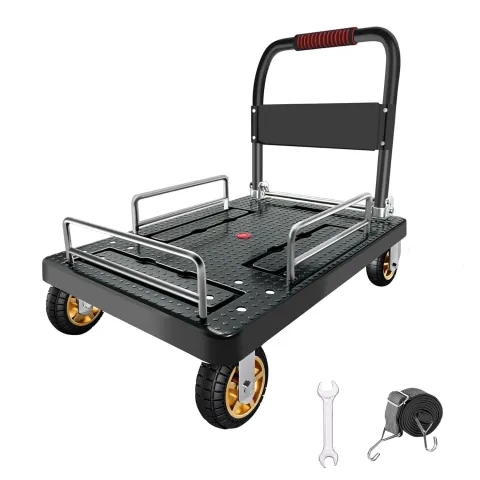
Folding platform truck, 1300 lb
Moves stacks of bags, block and brick without a wheelbarrow tipping.
Check price
 Garvee
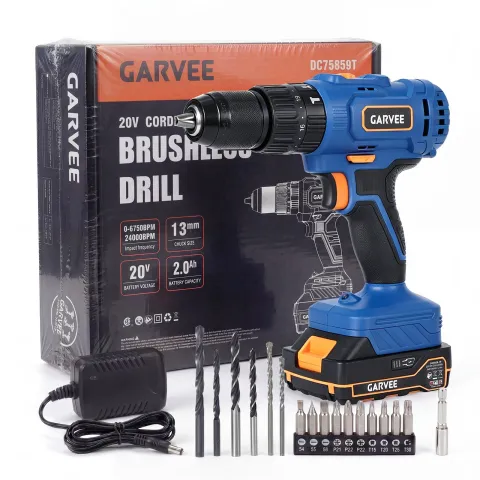
20V cordless hammer drill
Drills masonry and concrete for anchors, and drives screws everywhere else.
Check price
 Garvee
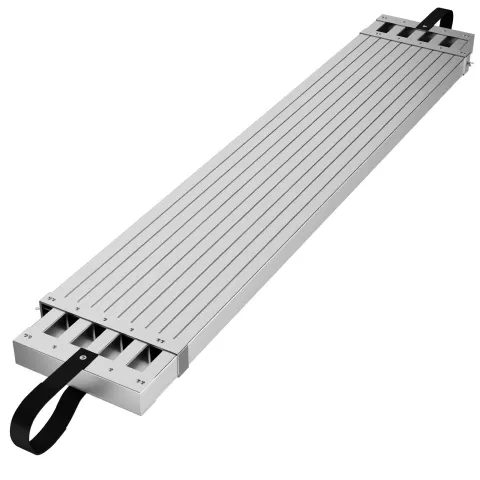
Telescoping work platform
Spans two ladders or steps for ceilings, upper walls and stairwells.
Check price
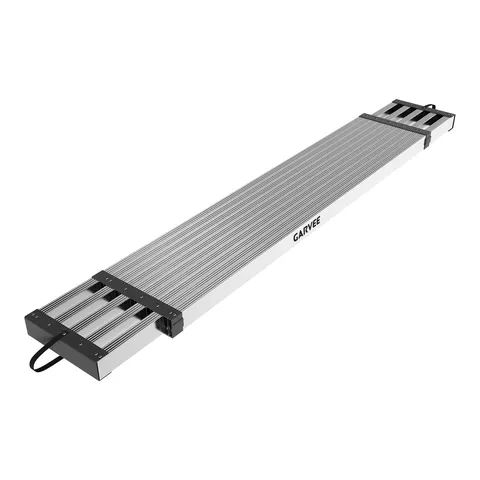 Garvee
Telescoping scaffold plank, 69–112 in
Spans two ladders for ceilings, crown and the top of the wall.
Check price
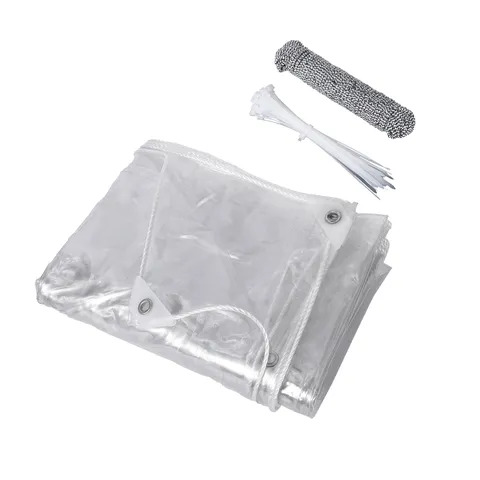 Garvee
Clear PVC tarp, 8 × 10 ft
Covers a fresh slab to cure, or keeps a lumber or drywall stack dry.
Check price
Not the tool you were after? Browse the whole range at Garvee — the store these picks come from.