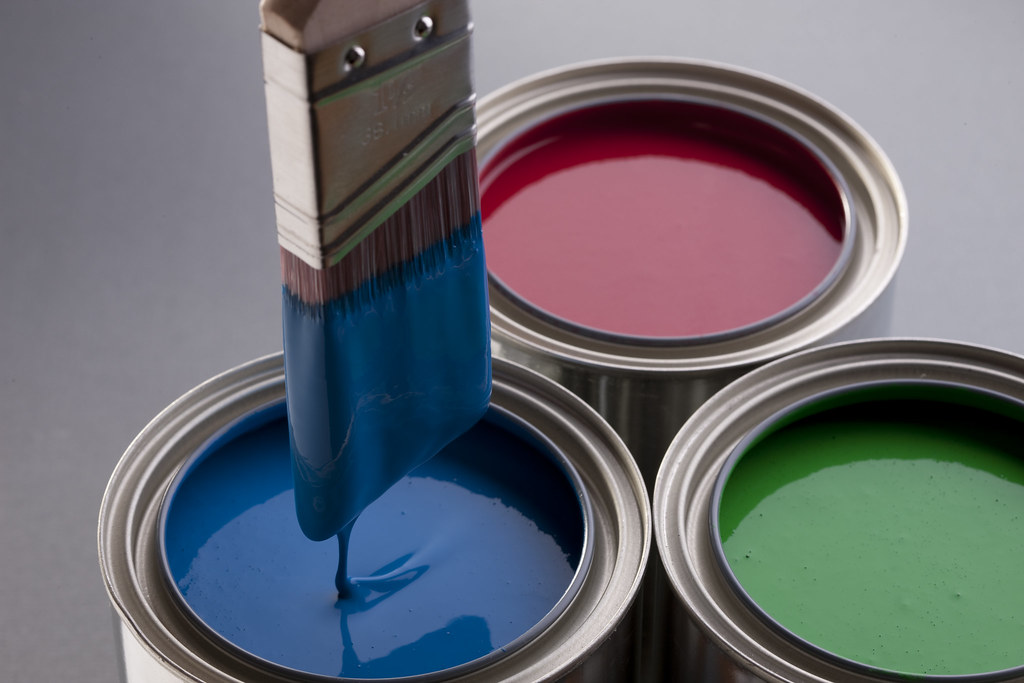
Paint calculator
Interior painting
cost calculator
Calculate wall and ceiling paint in gallons or litres. Add each wall, subtract doors and windows, choose coats and primer, and get paint cans, rollers, brushes and tape with waste included. Then price it at your own cost per gallon to see the job total.
Enter measurementsRoom measurements
Optional
What will it cost?
Every material the calculator worked out gets its own price. Each field starts at a typical US figure so you have something to work from — change any of them to what your own supplier charges.
These prices are approximate. They are national US retail figures, and what you actually pay varies with your region, your supplier, the season and how much you buy at once. Treat them as a starting point, not a quote — always price the job from your own supplier's current figures before you order.
Your prices
Tools for the job
What makes this job easier
Tools and materials that suit this kind of job. These are affiliate links: if you buy through one, Renovimo may earn a commission at no extra cost to you. It never changes the figures on this page.
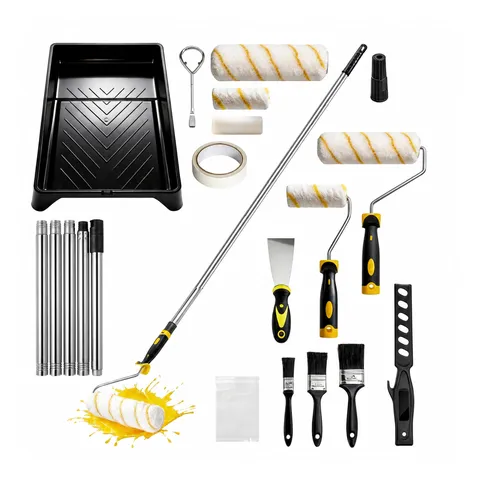 Garvee
House painting kit, 25 pieces
Rollers, tray, pole and drop cloth for one room — the kit the gallon count assumes you already own.
Check price
Garvee
House painting kit, 25 pieces
Rollers, tray, pole and drop cloth for one room — the kit the gallon count assumes you already own.
Check price
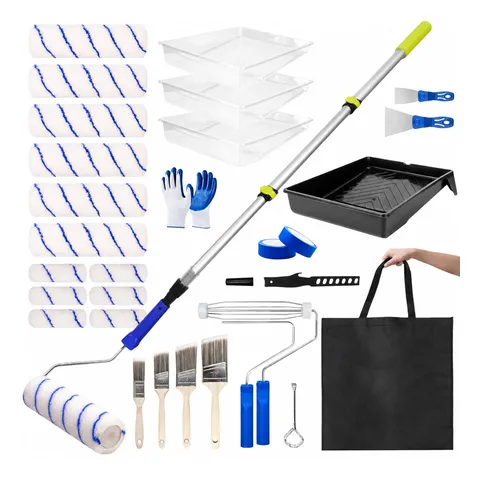 Garvee
Pro paint roller kit, 32 pieces
9 in and 4 in rollers on a telescoping pole, for walls and ceilings without a ladder.
Check price
Garvee
Pro paint roller kit, 32 pieces
9 in and 4 in rollers on a telescoping pole, for walls and ceilings without a ladder.
Check price
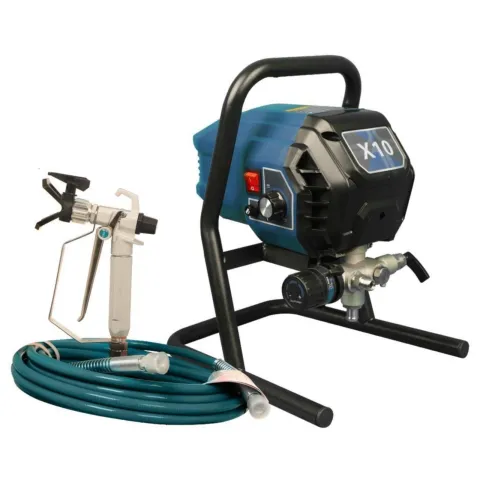 Garvee
Airless paint sprayer, 2900 PSI
Coats whole rooms, fences and siding far faster than a roller.
Check price
Garvee
Airless paint sprayer, 2900 PSI
Coats whole rooms, fences and siding far faster than a roller.
Check price
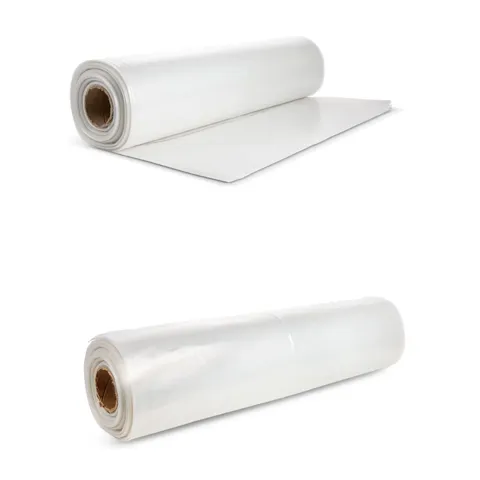 Plastic Place
Poly sheeting, 4 mil, 10 × 100 ft
Covers floors and furniture from spatter, and tapes up as a dust wall across a doorway.
Check price
Plastic Place
Poly sheeting, 4 mil, 10 × 100 ft
Covers floors and furniture from spatter, and tapes up as a dust wall across a doorway.
Check price
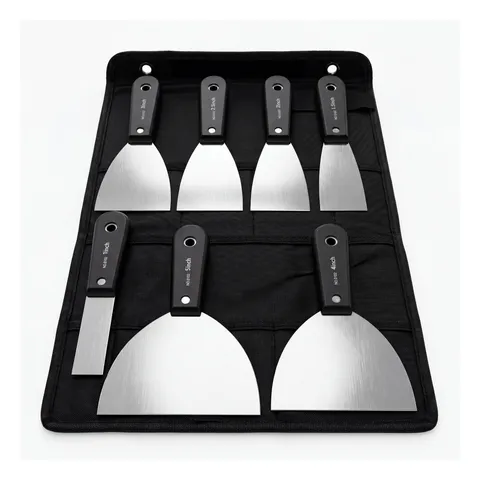 Garvee
Putty knife set, 1–5 in
Taping knives for mudding joints and filling holes before paint.
Check price
Garvee
Putty knife set, 1–5 in
Taping knives for mudding joints and filling holes before paint.
Check price
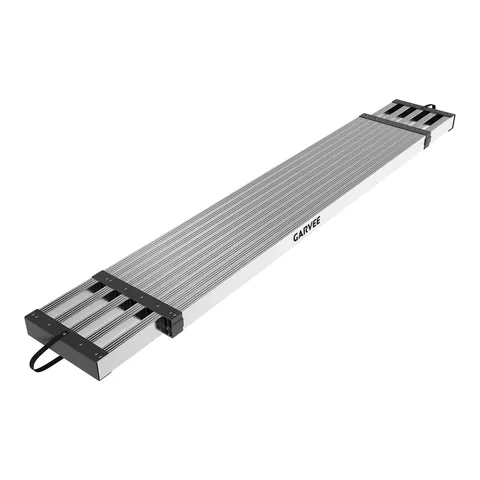 Garvee
Telescoping scaffold plank, 69–112 in
Spans two ladders for ceilings, crown and the top of the wall.
Check price
Garvee
Telescoping scaffold plank, 69–112 in
Spans two ladders for ceilings, crown and the top of the wall.
Check price
Not the tool you were after? Browse the whole range at Garvee or Plastic Place — the stores these picks come from.
Based on your result
What you'll need
Quantities update after every calculation. Enter your cost per gallon below to price the whole job.
- Interior paint
- Wall and ceiling finish
- Calculate above
- Primer
- For bare or patched surfaces
- Calculate above
As an Amazon Associate I earn from qualifying purchases.
The maths
How we work out your paint
Each wall you select is calculated on its own, so its doors and windows come off before coverage and waste are applied. Painting the ceiling or adding a primer coat simply adds another surface with the same maths — nothing is averaged, and quantities are only rounded at the very end.
Coverage assumes smooth, previously painted interior walls. Fresh plaster, bare wood and textured or very dark surfaces drink more paint, which is exactly what the primer coat and the waste margin are there to absorb.
paintable = wall area − doors − windows
ceiling = length × width (if included)
paint = Σ paintable × coats ÷ 350 × 1.05
primer = Σ paintable ÷ 350 × 1.05
- 350 sq ft
- per gallon, per coat
- 21 sq ft
- removed per door
- 15 sq ft
- removed per window
- +5%
- waste & touch-ups
- 2 coats
- typical for a repaint
- ft ↔ m
- converted automatically
-
01
Measure every wall
Enter width and height separately for each wall you plan to paint, in feet or metres — the calculator keeps them apart so odd-shaped rooms still add up.
-
02
Remove its openings
Doors and windows are deducted from the specific wall where they appear, so you are not buying paint for glass and panels.
-
03
Add ceiling and primer
Painting the ceiling adds its floor-sized area. A primer coat is counted as one full pass over every painted surface — worth it on bare or patched walls.
-
04
Apply coverage and coats
One gallon covers about 350 square feet per coat. We multiply by your coats, add 5% for waste and round up to a practical quantity to buy.
Cost
Painting cost per square foot
Painters quote interior work by the square foot of surface they paint, not by the gallon. Labor runs about $1.00 to $3.00 per square foot of wall for a two-coat repaint, and the paint itself adds roughly $0.15 to $0.45 a square foot at $25–$75 a gallon. So a painting estimate is mostly labor: on a typical room the crew costs around six times what the paint does.
A 9 × 14 ft wall is 126 sq ft; at $1.50 a square foot, painting it costs $189.
| Room | Wall area | Paint, 2 coats | DIY cost | Hired painter |
|---|---|---|---|---|
| 10 × 10 ft | 284 sq ft | 1 gal + 3 qt | $44 – $131 | $328 – $983 |
| 12 × 12 ft | 348 sq ft | 2 gal + 1 qt | $56 – $169 | $404 – $1,213 |
| 12 × 16 ft | 412 sq ft | 2 gal + 2 qt | $63 – $188 | $475 – $1,424 |
| 14 × 20 ft | 508 sq ft | 3 gal + 1 qt | $81 – $244 | $589 – $1,768 |
Walls only, 8 ft ceilings, one door and one window taken off, paint only — no primer, ceiling or trim. Typical US figures; change any price in the calculator above to match your own supplier or quote.
How much to charge for painting a house per square foot
Painters price interior work at $1.00 to $3.00 per square foot of wall for labor, with the paint adding a few cents more. Multiply the wall area you measured above by a rate in that range, then add doors, trim and prep as separate lines.
DIY or hire a painter?
Doing it yourself saves the labor line and nothing else — the paint, primer, rollers and tape cost the same either way, and a painter often buys them cheaper at a trade discount. What you pay for is speed and the finish: a two-person crew repaints a 12 × 12 ft bedroom in a day, cutting in straight lines freehand, where a first-timer may need a weekend. Ceilings, stairwells and anything above a stepladder are where hiring pays for itself fastest.
What a painting estimate includes
The square-foot rate covers rolling and cutting in. A written painting estimate adds the work that surrounds it: moving and covering furniture, filling holes and sanding patches, priming repairs or stains, caulking gaps at trim, and painting doors, window casings and baseboards — which are usually priced per item or per linear foot rather than per square foot. Every extra colour adds time too, because each one means its own cut-in line. Ask for these as separate lines so two quotes can be compared on the same work.
Commercial and residential painting rates
Commercial painting is estimated the same way — surface area times a rate — but the rate moves for different reasons. Large open walls that can be sprayed bring the labor per square foot down; after-hours work to keep a business open, lifts for tall ceilings and specified coatings push it up. The paint quantity follows the same maths either way, so the calculator's gallons hold for an office as well as a living room.
The outside of the house, kitchen cabinets and trim are priced differently — by the siding, by the door, by the foot — and each has its own tool: the exterior paint calculator, the cabinet paint calculator and the trim paint calculator.
Quantities
Paint calculator per square foot
A gallon covers about 350 square feet per coat, which makes one square foot of wall about 0.003 gallons a coat — or put the other way, a quart covers about 88–100 square feet. Two coats double it. Here is the same rule worked through for common wall areas, with the 5% margin the calculator adds:
| Wall area | One coat | Two coats |
|---|---|---|
| 100 sq ft | 2 qt | 3 qt |
| 250 sq ft | 3 qt | 1 gal + 2 qt |
| 500 sq ft | 1 gal + 2 qt | 3 gal |
| 1,000 sq ft | 3 gal | 6 gal |
| 2,000 sq ft | 6 gal | 12 gal |
How much paint for one wall
A 12 ft wall with an 8 ft ceiling is 96 square feet. Two coats need about 0.58 gallons, so 3 qt does it. Three quarts usually cost about as much as a gallon, so for an accent wall the gallon is the better buy — it leaves some over for touch-ups. Set "Walls to paint" to 1 in the calculator to size your own.
Coverage per gallon changes with the surface — bare drywall, textured walls and dark colours all use more. The paint coverage guide has the figures by surface and the whole-house answer for 1,500 square feet, the ceiling paint calculator handles ceilings on their own, and the paint sheen chart covers which finish goes where.
Good to know
Paint questions, answered
Doing it yourself, a 12 × 12 ft room with 8 ft ceilings needs about 2 gal + 1 qt of paint for two coats — $56 to $169 depending on the brand. Hiring a painter adds $1.00–$3.00 a square foot of wall, bringing the same room to about $404–$1,213 before ceilings, trim and repairs.
They measure the surface to be painted in square feet, multiply by a rate per square foot for walls and ceilings, then add doors, trim and prep as separate items. The calculator gives you the same square footage, so you can check a quote against it.
Most repaints need two coats for an even finish. Big colour changes or bare drywall usually need primer plus two top coats.
Prime bare drywall, patched areas, or when moving from a dark colour to a light one. Sound paint in a similar colour usually does not need it.
About 350–400 square feet per coat on smooth walls. Rough or porous surfaces use more, so the calculator uses 350 square feet.
The extra 5% covers roller loading, touch-ups and small measurement differences so the job is not left unfinished.
Ceilings are usually a flat white or a shade lighter than the walls, which keeps the room feeling taller. Tick “Include ceiling” to add its area, and set a separate ceiling colour in the form.
Matt hides wall imperfections and suits low-traffic rooms; eggshell and satin are slightly shinier and wipe clean, which is handy in hallways, kitchens and kids’ rooms. Both cover at roughly the same rate.
On a small room, not by much. On a large room with patio doors or several windows the openings can remove a whole gallon, which is why each wall subtracts its own doors and windows.
Enter just that wall and set “Walls to paint” to 1. For a single feature wall you will normally need well under a gallon, but two coats are still worth it for an even, streak-free finish.
Yes — enter a brand's price per gallon in the cost section and the calculator prices your whole job at that rate, so you can compare two brands in seconds. Premium paints sometimes cover a little more per gallon, but 350 square feet keeps the estimate safe.
Exterior walls are measured from the footprint and stories, and the siding changes the answer: stucco and brick take nearly three times the paint of vinyl. The exterior paint calculator does that measurement and subtracts the windows and doors. Open the exterior paint calculator.
More in this series
Split the job by surface
This page covers the walls. Every other surface, inside and out, is bought as a different product — ceiling paint, exterior paint, cabinet, door and trim enamel, fence stain, primer, even the siding itself — so each gets an estimate of its own.
- Ceiling Paint Calculator Ceiling paint, stain-blocking primer, roller covers and tape
- Exterior Paint Calculator Gallons of exterior paint and primer by siding type, trim paint, rollers, brushes and tape
- Siding Calculator Squares of siding, panels and boxes of vinyl or planks of fiber cement, J-channel, starter strip, corner posts and nails
- Trim Paint Calculator Quarts of trim enamel and primer for baseboards, casing and crown by the linear foot, brushes, tape and caulk
- Cabinet Paint Calculator Quarts of cabinet enamel and primer for doors, drawers and frames, foam rollers, brushes and degreaser
- Fence Stain Calculator Gallons of stain or paint for both sides of a fence and its posts, by fence type and wood condition
- Primer Calculator Gallons of primer by surface and primer type, with the coats each surface needs, rollers and brushes
- Door Paint Calculator Quarts of enamel and primer for interior and front doors, one or both sides, with frames, brushes and foam rollers
- Paint Coverage per Gallon What a gallon covers on each surface, and gallons for common rooms
- Paint Sheen Chart Flat to gloss: durability, where each finish belongs, and the comparisons
- Paint Drying and Recoat Times Dry to the touch, recoat and cure times for latex, oil-based, primer, polyurethane and stain, and how weather changes them
- Spray Paint Drying Times Dry, handle, recoat and cure times for spray paint by type and surface, and how many cans a job takes
- How Many Coats of Paint and Primer Coats by color change and surface, how long to wait between coats, and coats of polyurethane and stain
- Primer Coats and Coverage How many coats of primer each surface needs, coverage per gallon by primer type, and how long each takes to dry
- Vinyl Siding Sizes and Squares What a square of siding is, vinyl panel lengths and pieces per box, Hardie and LP plank sizes, and trim per square
- Paint Can Sizes and Weights What a quart, gallon and 5 gallon bucket of paint weigh and how many square feet each one covers