Reference
How many coats of paint do you need
The answer is almost always two, and the exceptions are what this page is for: the colors that need three, the surfaces that need a primer first, and the few cases where one coat is honestly enough.
How many coats of paint? Two over a primed or similar-color wall. Three, or two over a tinted primer, when going light over dark or painting a red, yellow or orange. Wait 2–4 hours between coats of latex.
How many coats of paint by color change and surface
| Situation | Coats | Why |
|---|---|---|
| Same or similar color over a sound painted wall | 1–2 | One coat refreshes; two hides roller laps and touch-ups. |
| New color, similar depth, primed or painted wall | 2 | The industry standard for a uniform finish. |
| Light color over a dark one | 2 over a tinted primer, or 3 | Dark pigment shows through two coats of a pale finish; one coat of white or light-tinted high-hide primer stops it. |
| Red, yellow, orange (low-hide pigments) | 3, or 2 over a tinted primer | These pigments are translucent; the primer does the hiding. Gray primer under reds and deep colors, white under yellows. |
| New drywall | 1 primer + 2 paint | Paper and joint compound absorb differently; primer evens them out. |
| Bare wood, trim and doors | 1 primer + 2 enamel | Enamel builds a hard film in two thin coats, not one thick one. |
| Exterior siding, repaint | 2 | Two coats is what manufacturers recommend for full film build and the rated life. |
| Ceiling | 2 | Flat ceiling paint shows laps under side light unless doubled. |
Primer is its own question — which surfaces need it and how many coats are on the primer guide.
How long between coats of paint
| Latex paint | 2–4 hours |
| Oil-based paint | 16–24 hours |
| Waterborne alkyd enamel | 16 hours |
| Oil-based polyurethane | 3–4 hours |
| Water-based polyurethane | 2 hours |
Full dry-to-touch, recoat and cure times for every finish are on the drying times guide.
How many coats of polyurethane and stain
| Finish | Coats | Why |
|---|---|---|
| Polyurethane, oil-based | 3 | Floors and tabletops; sand lightly between coats. |
| Polyurethane, water-based | 3–4 | Thinner film per coat than oil. |
| Interior wood stain | 1–2 | Stain colors; it does not protect. A second coat deepens the tone slightly. |
| Deck or fence stain, transparent or semi | 1–2 | Apply the second while the first is still wet on new wood; weathered wood takes two. |
| Deck or fence stain, solid | 2 | Solid stain behaves like paint. |
When one coat is enough
- The new color is the same as the old one and the wall is sound.
- A paint-and-primer-in-one over a similar color on a smooth, previously painted wall.
- A touch-up with the original can, feathered out from the repair.
The paint calculator takes the coat count and gives the gallons.
Work out your paint →Figures: Coat counts follow common manufacturer and painting-contractor guidance (two coats for a uniform finish), and the Minwax Fast-Drying Polyurethane and Helmsman Spar Urethane product pages (two to three coats; three for floors and exterior). Waits between coats: Behr Premium Plus, Minwax Fast-Drying Polyurethane and Polycrylic sheets; other rows are typical ranges.
Coat questions
Is one coat of paint enough?
Only for the same color on a sound wall, or a paint-and-primer product over a similar color. A new color needs two for an even finish.
How many coats of paint on new drywall?
One coat of drywall primer and two coats of paint. Skipping the primer shows every joint as a dull stripe.
How many coats of primer?
One on new drywall, one of a white high-hide primer over a dark color going light, and one coat of stain-blocker over stains — the full table is on the primer guide.
How many coats of polyurethane on a floor?
Three of oil-based or three to four of water-based, sanding lightly between coats.
How long should I wait between coats of paint?
2–4 hours for latex, 16–24 hours for oil-based. Sooner, and the second coat drags the first.
More in this series
The rest of the paint job
These charts are what every paint and exterior estimate on the site is built from: coverage, coats, drying times and the siding underneath. Each tool applies them to one surface.
- Paint Calculator Wall and ceiling paint, primer, rollers and tape
- Ceiling Paint Calculator Ceiling paint, stain-blocking primer, roller covers and tape
- Exterior Paint Calculator Gallons of exterior paint and primer by siding type, trim paint, rollers, brushes and tape
- Siding Calculator Squares of siding, panels and boxes of vinyl or planks of fiber cement, J-channel, starter strip, corner posts and nails
- Trim Paint Calculator Quarts of trim enamel and primer for baseboards, casing and crown by the linear foot, brushes, tape and caulk
- Cabinet Paint Calculator Quarts of cabinet enamel and primer for doors, drawers and frames, foam rollers, brushes and degreaser
- Fence Stain Calculator Gallons of stain or paint for both sides of a fence and its posts, by fence type and wood condition
- Primer Calculator Gallons of primer by surface and primer type, with the coats each surface needs, rollers and brushes
- Door Paint Calculator Quarts of enamel and primer for interior and front doors, one or both sides, with frames, brushes and foam rollers
- Paint Coverage per Gallon What a gallon covers on each surface, and gallons for common rooms
- Paint Sheen Chart Flat to gloss: durability, where each finish belongs, and the comparisons
- Paint Drying and Recoat Times Dry to the touch, recoat and cure times for latex, oil-based, primer, polyurethane and stain, and how weather changes them
- Spray Paint Drying Times Dry, handle, recoat and cure times for spray paint by type and surface, and how many cans a job takes
- Primer Coats and Coverage How many coats of primer each surface needs, coverage per gallon by primer type, and how long each takes to dry
- Vinyl Siding Sizes and Squares What a square of siding is, vinyl panel lengths and pieces per box, Hardie and LP plank sizes, and trim per square
- Paint Can Sizes and Weights What a quart, gallon and 5 gallon bucket of paint weigh and how many square feet each one covers
Tools for the job
What makes this job easier
Tools and materials that suit this kind of job. These are affiliate links: if you buy through one, Renovimo may earn a commission at no extra cost to you. It never changes the figures on this page.
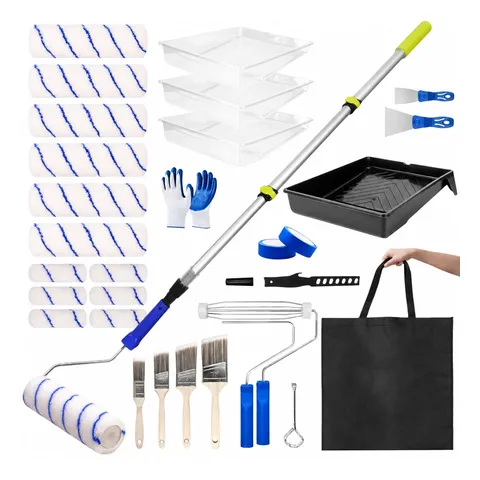 Garvee
Pro paint roller kit, 32 pieces
9 in and 4 in rollers on a telescoping pole, for walls and ceilings without a ladder.
Check price
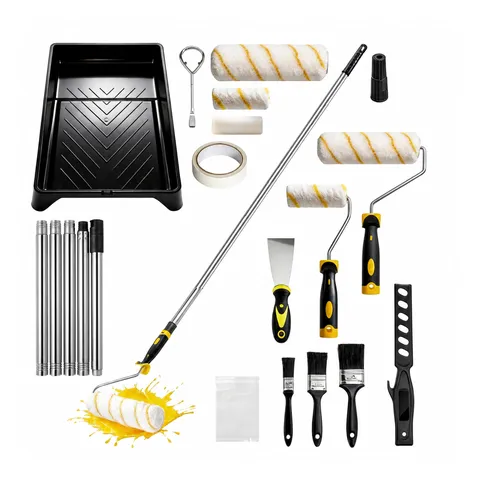 Garvee
House painting kit, 25 pieces
Rollers, tray, pole and drop cloth for one room — the kit the gallon count assumes you already own.
Check price
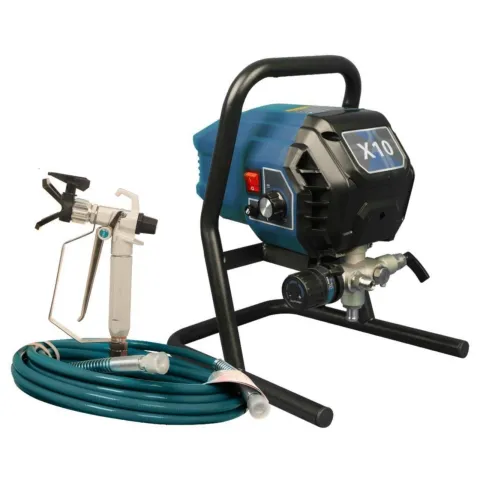 Garvee
Airless paint sprayer, 2900 PSI
Coats whole rooms, fences and siding far faster than a roller.
Check price
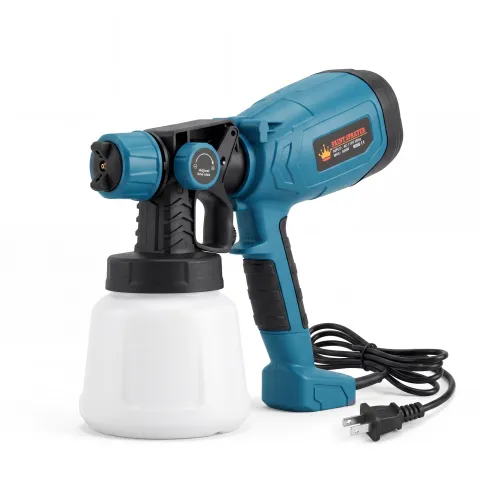 Garvee
Handheld paint sprayer
Small and cheap — right for furniture, railings, fences and deck stain.
Check price
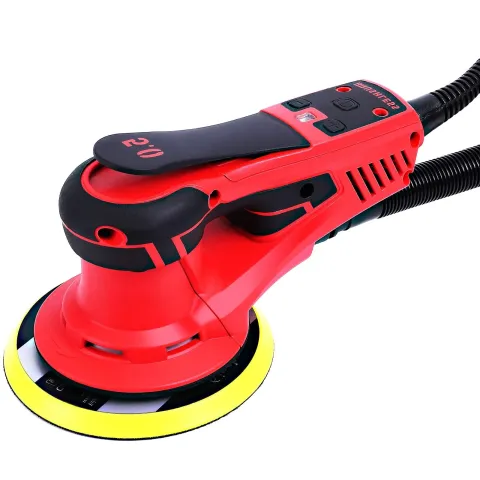 Garvee
6 in random orbital sander
Smooths stair treads, rails and trim before finishing.
Check price
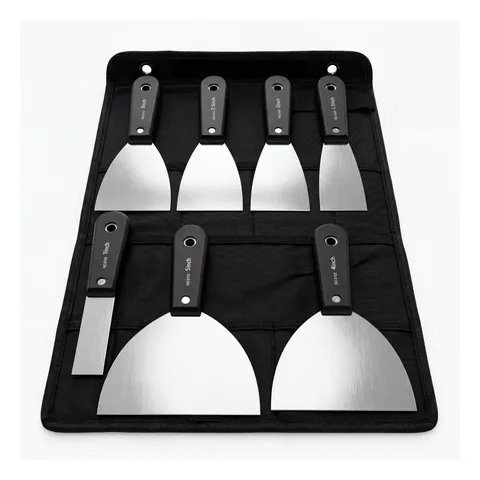 Garvee
Putty knife set, 1–5 in
Taping knives for mudding joints and filling holes before paint.
Check price
Not the tool you were after? Browse the whole range at Garvee — the store these picks come from.