Reference
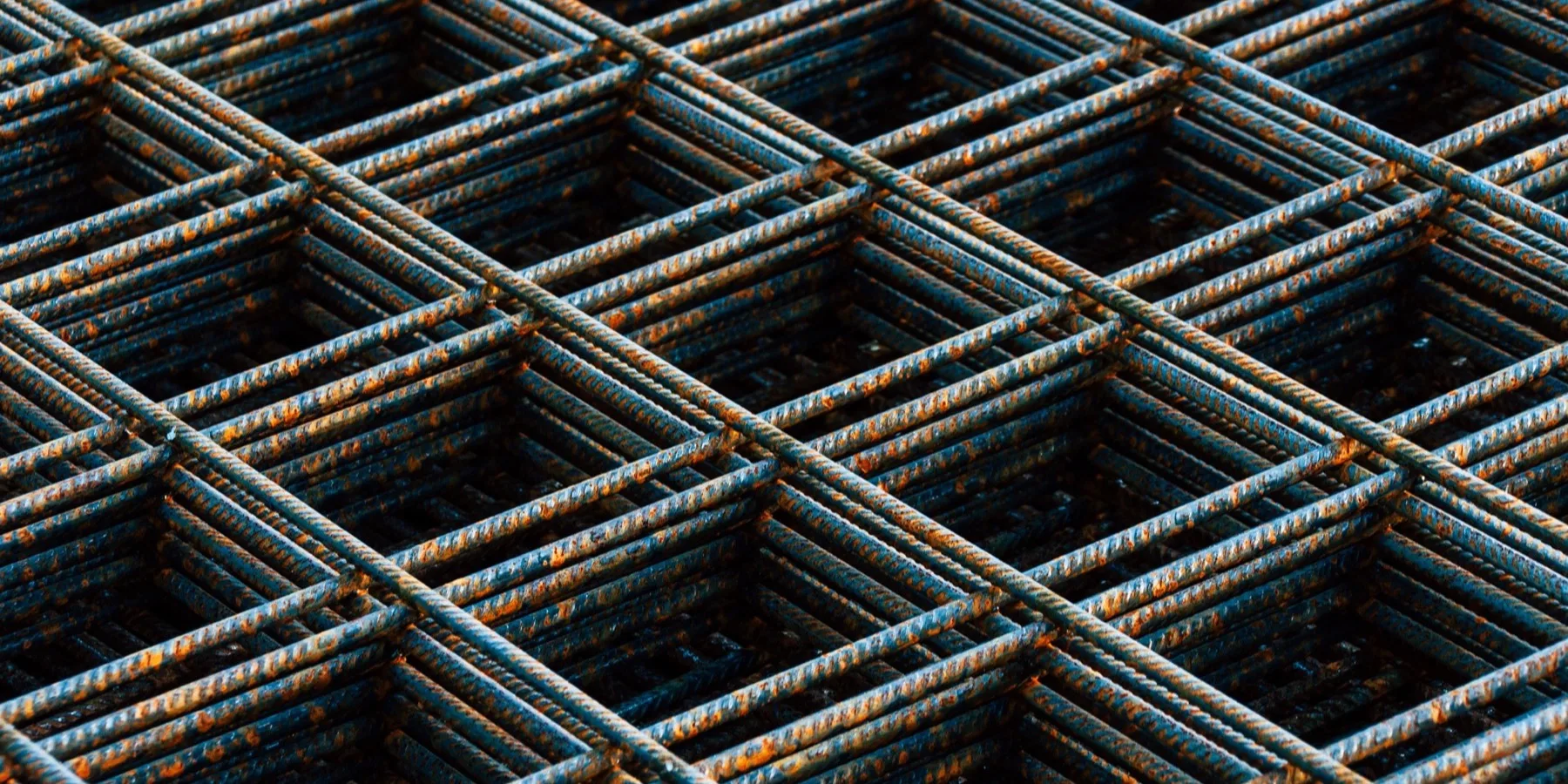
Rebar sizes, diameters and weights
An imperial bar number is its diameter in eighths of an inch. A #4 bar is four eighths — half an inch. That rule holds from #3 up to #8 and then quietly stops, which is where most size charts start to mislead. Here is every figure a supplier quotes from, and what changes above #8.
Rebar sizes: diameter, area and weight
These are the ASTM A615 nominal values. Nominal means the figures a bar is sold and designed against — the deformations that give the bar its grip on the concrete are not counted, so a bar always measures slightly over its nominal diameter with a caliper.
| Size | Diameter | Area | Weight | 20 ft bar |
|---|---|---|---|---|
| #3 | 0.375 in · 9.5 mm | 0.11 sq in · 71 mm² | 0.376 lb/ft · 0.560 kg/m | 7.5 lb |
| #4 | 0.500 in · 12.7 mm | 0.20 sq in · 129 mm² | 0.668 lb/ft · 0.994 kg/m | 13.4 lb |
| #5 | 0.625 in · 15.9 mm | 0.31 sq in · 199 mm² | 1.043 lb/ft · 1.552 kg/m | 20.9 lb |
| #6 | 0.750 in · 19.1 mm | 0.44 sq in · 284 mm² | 1.502 lb/ft · 2.235 kg/m | 30.0 lb |
| #7 | 0.875 in · 22.2 mm | 0.60 sq in · 387 mm² | 2.044 lb/ft · 3.042 kg/m | 40.9 lb |
| #8 | 1.000 in · 25.4 mm | 0.79 sq in · 510 mm² | 2.670 lb/ft · 3.973 kg/m | 53.4 lb |
| #9 | 1.128 in · 28.7 mm | 1.00 sq in · 645 mm² | 3.400 lb/ft · 5.060 kg/m | 68.0 lb |
| #10 | 1.270 in · 32.3 mm | 1.27 sq in · 819 mm² | 4.303 lb/ft · 6.404 kg/m | 86.1 lb |
| #11 | 1.410 in · 35.8 mm | 1.56 sq in · 1006 mm² | 5.313 lb/ft · 7.907 kg/m | 106.3 lb |
| #14 | 1.693 in · 43.0 mm | 2.25 sq in · 1452 mm² | 7.650 lb/ft · 11.38 kg/m | 153.0 lb |
| #18 | 2.257 in · 57.3 mm | 4.00 sq in · 2581 mm² | 13.60 lb/ft · 20.24 kg/m | 272.0 lb |
Notice where the eighths rule breaks. A #9 should be 9/8 of an inch, or 1.125 in — it is 1.128 in. A #10 should be 1.250 in and is 1.270 in. The reason is historical: #9 through #11 replaced the old 1 in, 1⅛ in and 1¼ in square bars, and they were sized to match those bars' cross-sectional areas rather than their width. That is why #9 has an area of exactly 1.00 square inch. Above #11 the sequence skips to #14 and #18, which are the square-bar equivalents of 1½ in and 2 in.
Soft metric bar numbers
US mills have rolled bar to soft metric designations since the late 1990s. The steel is identical — only the stamped number changed, to the nominal diameter rounded to whole millimetres. A bar marked 13 is the same #4 it always was, so the two systems are read interchangeably on a drawing.
| Imperial | Soft metric | Nominal diameter | Called |
|---|---|---|---|
| #3 | #10 | 9.5 mm | Three, or ten mil |
| #4 | #13 | 12.7 mm | Four, half-inch |
| #5 | #16 | 15.9 mm | Five, five-eighths |
| #6 | #19 | 19.1 mm | Six, three-quarter |
| #7 | #22 | 22.2 mm | Seven |
| #8 | #25 | 25.4 mm | Eight, one-inch |
| #9 | #29 | 28.7 mm | Nine |
| #10 | #32 | 32.3 mm | Ten |
| #11 | #36 | 35.8 mm | Eleven |
| #14 | #43 | 43.0 mm | Fourteen |
| #18 | #57 | 57.3 mm | Eighteen |
What each bar size is for
Residential work almost never goes past #6. The larger sizes exist for columns, transfer beams and bridge decks, and they need machine bending — a #8 will not move on a hand hickey bar.
| Size | Where it belongs | Bends by |
|---|---|---|
| #3 | Stirrups and ties, footpaths, light 4 in flatwork | Hand |
| #4 | Driveways, patios, garage slabs, most residential grids | Hand |
| #5 | Slabs over 5 in, strip footings, low retaining walls | Hand, with effort |
| #6 | Heavy footings, tall retaining walls, small columns | Bender |
| #7 – #8 | Structural beams and columns | Bender |
| #9 – #11 | Commercial columns and transfer beams | Shop |
| #14, #18 | Bridge piers, heavy industrial columns | Shop |
Slab spacing and concrete cover
Size and spacing trade against each other: a #4 grid at 12 in puts roughly the same steel in a slab as a #5 grid at 18 in. The smaller bar at tighter centres is usually easier to place and controls cracking more evenly.
| Slab | Bar | Spacing | Notes |
|---|---|---|---|
| 4 in footpath or shed base | #3 | 18 in | Mesh is an acceptable substitute here |
| 4 in patio | #4 | 18 in | The common residential default |
| 4 in driveway, cars | #4 | 16 in | Tighten to 12 in over soft subgrade |
| 5–6 in driveway, trucks | #4 | 12 in | Or #5 at 18 in for the same steel |
| 6 in shop or garage floor | #5 | 12 in | Two mats on anything over 8 in |
| Strip footing | #4 or #5 | Continuous | 2 to 4 bars run the length, tied |
Cover is what keeps the steel from rusting, and ACI 318 sets it by exposure, not by preference: 3 in where concrete is cast directly against earth, 2 in where it is formed but exposed to weather for #6 and larger, 1½ in for #5 and smaller in the same position, and ¾ in in interior slabs and walls. In a 4 in slab that puts the grid on chairs about 2 in up — the middle, not the bottom.
Lap splice lengths by bar size
Where one bar ends and the next begins, the two overlap and the bond to the concrete carries the load across. Forty bar diameters is the working default; codes give a shorter figure for higher-strength concrete and a longer one for bars near the top of a deep pour, where the concrete under them settles.
| Size | 40 × d | 48 × d | 60 × d |
|---|---|---|---|
| #3 | 15 in | 18 in | 23 in |
| #4 | 20 in | 24 in | 30 in |
| #5 | 25 in | 30 in | 38 in |
| #6 | 30 in | 36 in | 45 in |
| #7 | 35 in | 42 in | 53 in |
| #8 | 40 in | 48 in | 60 in |
| #9 | 46 in | 55 in | 68 in |
| #10 | 51 in | 61 in | 77 in |
| #11 | 57 in | 68 in | 85 in |
Working out rebar weight
Mills and yards price steel by weight, not by the foot, so a take-off in linear feet has to be converted before anyone will quote it. The conversion is one multiplication.
linear feet = bars each way × their length + lap allowance
tons = weight lb ÷ 2000
A 12 × 10 ft patio with a #4 grid at 18 in centres takes about 150 linear feet of bar once cover and the extra edge bar are counted. At 0.668 lb per foot that is roughly 100 pounds of steel — eight 20 ft bars, which two people can carry. The same slab in #5 would be 156 pounds, and the price difference is smaller than most people expect, which is why stepping up a size is cheap insurance on a driveway.
Size the grid for your slab →Tools for the job
What makes this job easier
Tools and materials that suit this kind of job. These are affiliate links: if you buy through one, Renovimo may earn a commission at no extra cost to you. It never changes the figures on this page.
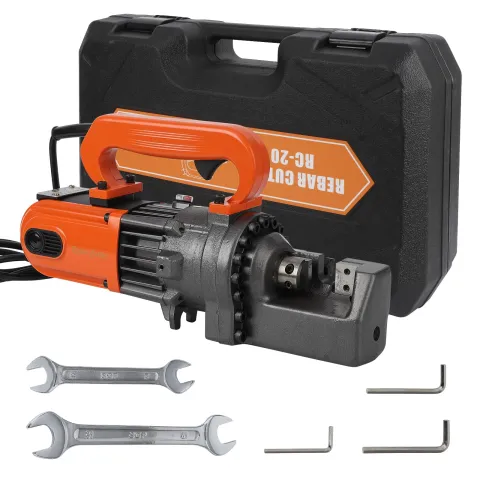 Garvee
Electric rebar cutter, up to #6
Cuts slab and footing bar to length in seconds, with no sparks.
Check price
Garvee
Electric rebar cutter, up to #6
Cuts slab and footing bar to length in seconds, with no sparks.
Check price
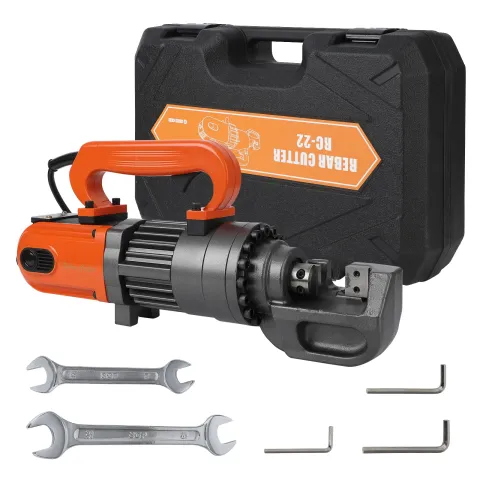 Garvee
Electric rebar cutter, up to #7
The larger cutter, for footing and wall bar up to 7/8 in.
Check price
Garvee
Electric rebar cutter, up to #7
The larger cutter, for footing and wall bar up to 7/8 in.
Check price
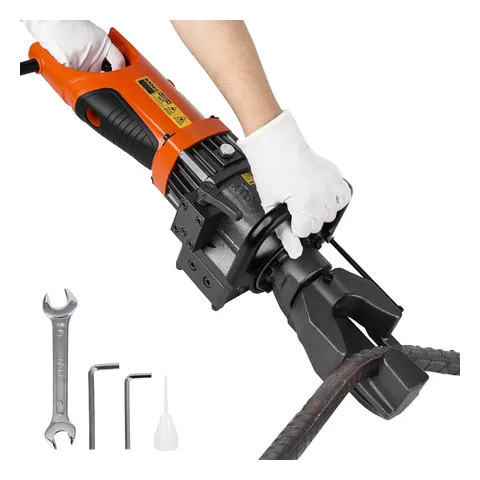 Garvee
Electric rebar bender, up to 5/8 in
Bends corner and hook bars for footings and walls in one stroke.
Check price
Garvee
Electric rebar bender, up to 5/8 in
Bends corner and hook bars for footings and walls in one stroke.
Check price
 Garvee
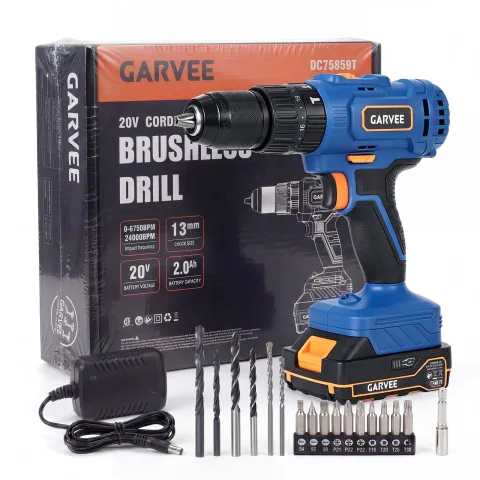
20V cordless hammer drill
Drills masonry and concrete for anchors, and drives screws everywhere else.
Check price
Garvee
20V cordless hammer drill
Drills masonry and concrete for anchors, and drives screws everywhere else.
Check price
 Garvee
Two-wheel wheelbarrow
Stable on two wheels for bagged concrete, block and soil.
Check price
Garvee
Two-wheel wheelbarrow
Stable on two wheels for bagged concrete, block and soil.
Check price
 Garvee
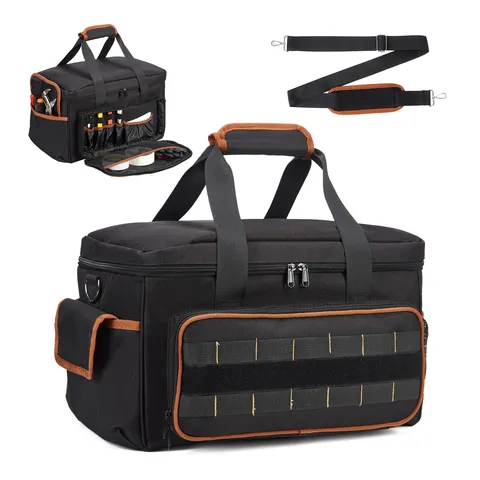
Tool bag, 17 in
Keeps the tape, knife, screws and chalk line together on the job.
Check price
Garvee
Tool bag, 17 in
Keeps the tape, knife, screws and chalk line together on the job.
Check price
Not the tool you were after? Browse the whole range at Garvee — the store these picks come from.