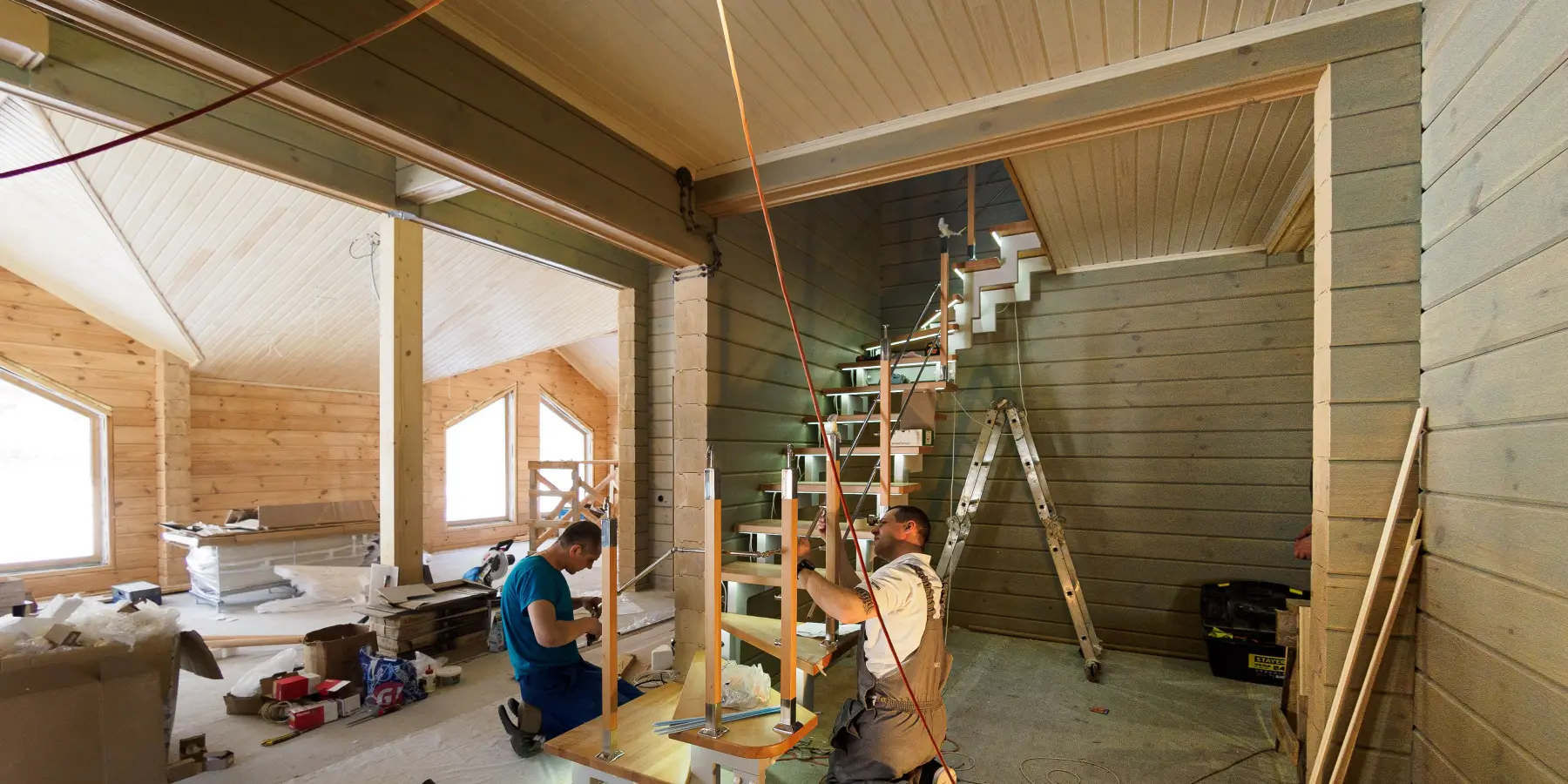
Engineering calculator
L-shaped stair calculator
An L-shaped stair divides the rise into equal risers just as a straight one does, then splits them at a square landing. A 9 ft rise takes 15 risers of about 7 3/16 in: 7 up to a landing 4 ft 2 3/8 in high, a quarter turn, then 8 more — in a footprint of 8 ft by 8 ft 10 in. Enter yours for both flights, the landing and the plan, drawn to scale and in 3D.
Enter your riseMore in this series
Other stair layouts
A straight flight is the simplest stair to lay out and the base the turning layouts build on.
Tools for the job
What makes this job easier
Tools and materials that suit this kind of job. These are affiliate links: if you buy through one, Renovimo may earn a commission at no extra cost to you. It never changes the figures on this page.
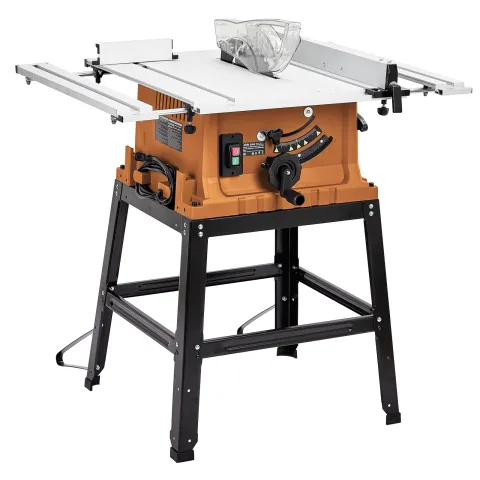 Garvee
10 in table saw
Rips 2 × 12 tread stock and riser boards to width, and trims oak treads to the stair width.
Check price
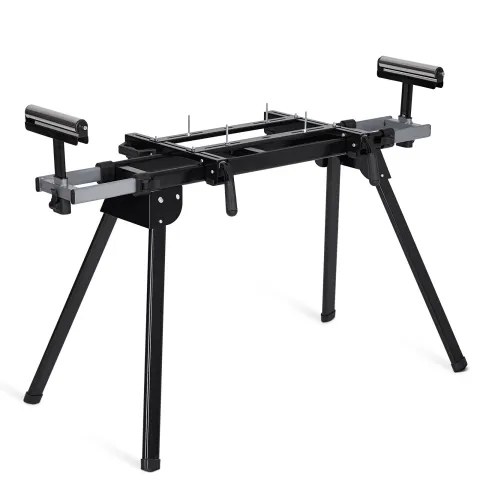 Garvee
Miter saw stand
Holds an 8 ft 2 × 12 level at the saw while you cut each flight's stringers to length and square the treads.
Check price
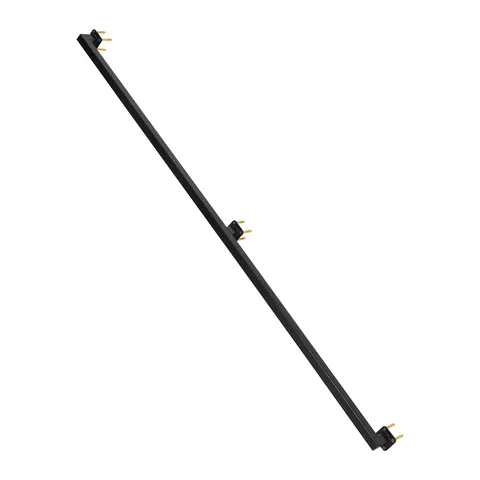 Garvee
Stair handrail, 6 ft
A graspable rail for a flight of four or more risers, mounted 34 to 38 in above the nosings.
Check price
 Dovoh
Cross-line laser level, green
Throws a level line for the header and the landing and a plumb line for the first riser, so the landing frame and both flights land where the plan says.
Check price
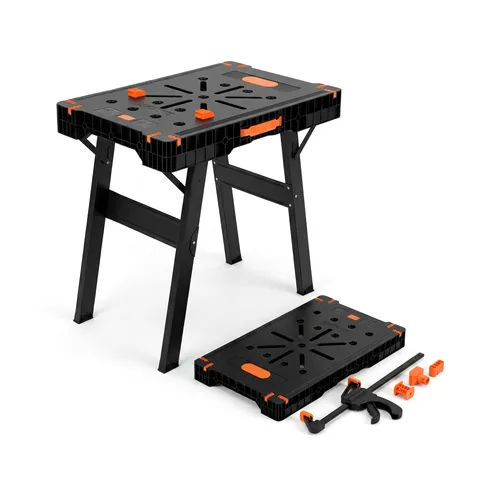 Garvee
Folding work table and sawhorse
A cutting station beside the stair for notching stringers with a circular saw and finishing the cuts by hand.
Check price
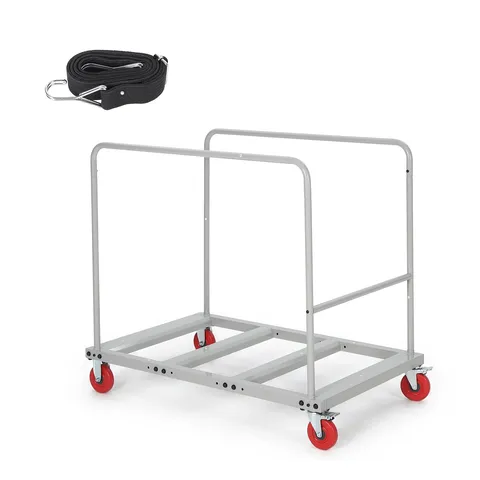 Garvee
Collapsible material cart, 1800 lb
Moves 2 × 12 stringer stock and a stack of treads from the truck to the stairwell in one trip.
Check price
Not the tool you were after? Browse the whole range at Garvee or Dovoh — the stores these picks come from.

Based on your result
What you'll need
Build and level the landing first: both flights take their height from it. Then cut one stringer for each flight and use it as the pattern for the rest.
- 2 × 12 stringers
- One set for each flight
- Calculate above
- Treads Amazon
- Oak stair treads or 2 × 12 lumber, cut to the stair width
- Calculate above
- Riser boards
- Primed 1 × 8, ripped to the riser height
- Calculate above
- Landing joist hangers Amazon
- Both ends of every inside landing joist
- Calculate above
- Stringer connectors Amazon
- One per stringer where it meets the landing or the header
- Calculate above
- Tread screws, 2½ in Amazon
- Two into every stringer under each tread
- Calculate above
- Construction adhesive Amazon
- A bead on every stringer cut before the tread goes down
- Calculate above
- Stair gauges Amazon
- Clamped on the framing square at the riser and the run
- Calculate above
As an Amazon Associate I earn from qualifying purchases.
The maths
How this stair calculator with landing works
A landing does not change the risers: every one in the stair is the same height, above and below it. It changes the treads and the floor plan, because each flight stops one tread short where the landing takes over.
below = your number, or half the risers
landing height = below × riser
treads = (below − 1) + (above − 1)
footprint = (lower run + landing) × (width + upper run)
stringer = the cut outline of each flight, tip to tip along the board (on the layout drawings)
- 01
Divide the rise
Exactly as for a straight stair: the total rise over the riser you would like, rounded to whole steps, with one more step if a riser comes out over 7¾ in.
- 02
Split at the landing
Half the risers below the landing unless you choose otherwise. Each flight may rise no more than 151 in, which is why a tall stair needs a landing at all.
- 03
Size the landing
A landing must be at least as wide as each flight it serves, measured across that flight. On a quarter turn that means at least square to the stair: 36 × 36 in for a 36 in stair.
- 04
Frame it first
The landing is a small floor: a 2 × 6 rim and joists on posts, lagged to the studs where it meets a wall, with plywood on top, built level at the landing height. If it gets a finished floor, drop the frame by that thickness so every riser stays equal. Both flights hang from it.
- 05
Cut a stringer for each flight
The two flights have different numbers of risers, so their stringers differ in length. Lay out each one with the same riser and run on the framing square.
Good to know
L-shaped stair calculator questions: landing, steps and space
At least as wide as each flight it serves, measured across that flight, so a quarter-turn landing is at least square to the stair: 36 × 36 in for a 36 in wide stair. The 36 in depth in the direction of travel that the code also mentions is written for landings on a straight run.
When one flight would rise more than 151 in (12 ft 7 in) between floors. Below that a landing is a choice, usually made to fit the stair into a shorter room by turning it.
Any number, as long as neither flight rises more than 151 in. Half below and half above is the common choice; moving the landing up or down changes how far each leg of the L reaches.
For a 9 ft rise with 10 in treads, 36 in width and a square landing: 8 ft along the first flight by 8 ft 10 in along the second. A straight stair with the same risers is 11 ft 8 in long.
It counts as the top of the lower flight, so the riser count does not change but you lose a tread: an L with one landing has two treads fewer than risers, against one fewer for a straight stair.
Yes, any flight with four or more risers needs a handrail on at least one side, 34 to 38 in above the nosings and continuous for that flight; it may stop at a newel post on the landing.
Yes, wherever its open side is more than 30 in above the floor below: a guard at least 36 in high, with no opening a 4 in sphere can pass. The same goes for the open side of each flight once it is more than 30 in up.
Headroom is 6 ft 8 in above the nosings and above the landing floor. If the landing is less than 6 ft 8 in below the underside of the upper floor — true of most evenly split stairs under about 15 ft of rise — the opening takes the whole upper flight, the whole landing and part of the lower flight. The calculator gives each length.