Reference
Concrete bag yields and mix ratios
Every figure you need to turn a measured volume into an order: what each bag size yields, how many bags make a cubic yard, how far a yard spreads at each slab thickness, and the mix proportions behind each strength class.
How many cubic feet is an 80 lb bag of concrete?
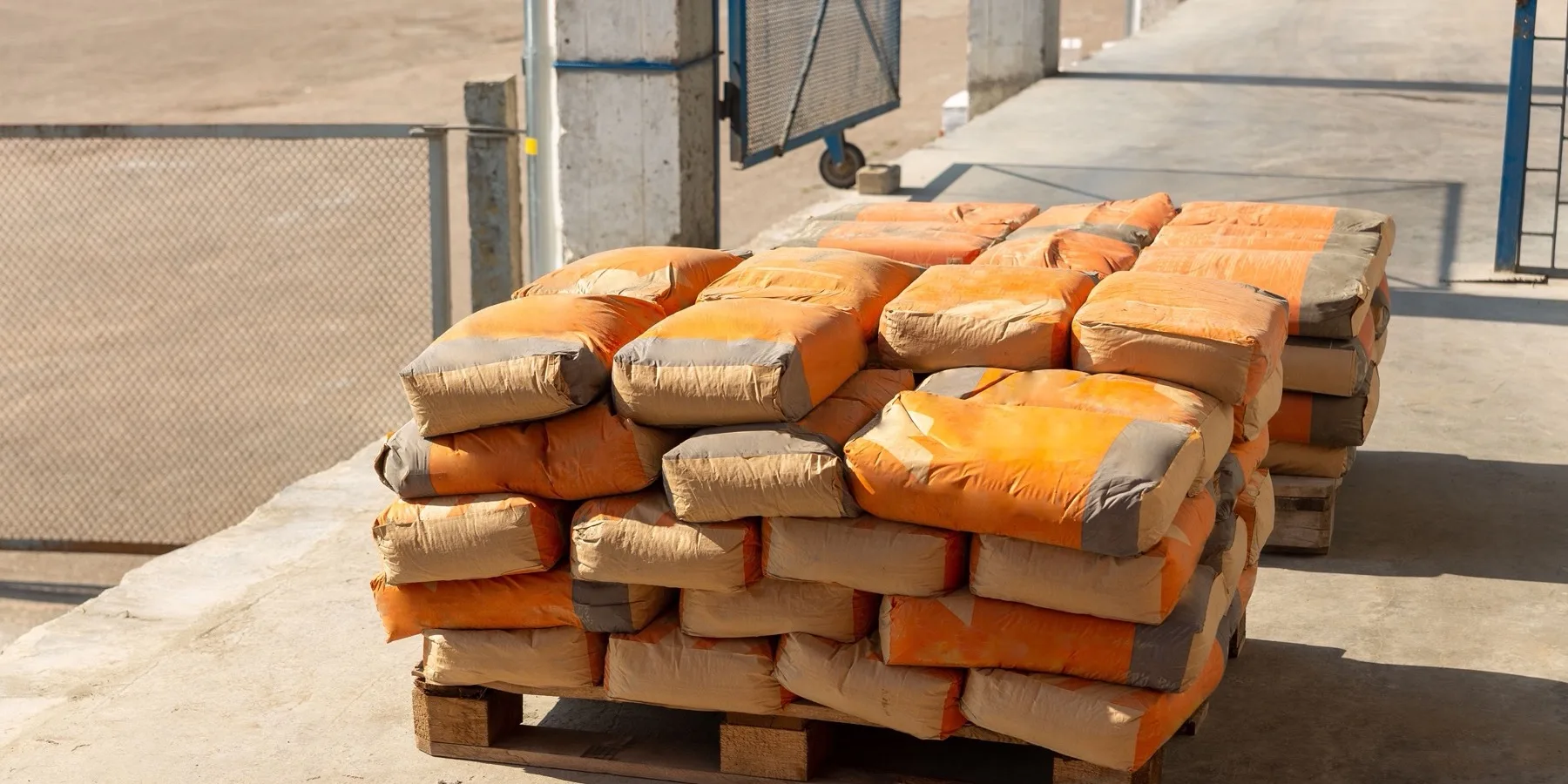
An 80 lb bag of ready-mix yields about 0.60 cubic feet of finished concrete. The yield is lower than the dry weight suggests because the mix compacts as water is added. A cubic yard is 27 cubic feet, so bag counts follow directly.
| Bag size | Yield | Bags per cubic yard | Bags per cubic metre |
|---|---|---|---|
| 40 lb (18 kg) | 0.30 cu ft | 90 | 118 |
| 50 lb (23 kg) | 0.375 cu ft | 72 | 95 |
| 60 lb (27 kg) | 0.45 cu ft | 60 | 79 |
| 80 lb (36 kg) | 0.60 cu ft | 45 | 59 |
Bag counts are rounded up: 45 eighty-pound bags give 27.0 cubic feet exactly, but nobody sells a partial bag, and a pour that runs short mid-way cannot be rescued.
How much is one yard of concrete, in coverage?
One cubic yard covers a fixed area that depends only on thickness. These are the numbers that decide whether a job is a bag job or a truck job.
| Slab thickness | Area per cubic yard | Typical use |
|---|---|---|
| 2 in (50 mm) | 162 sq ft | Topping and repair layers |
| 3 in (75 mm) | 108 sq ft | Footpaths and light pads |
| 4 in (100 mm) | 81 sq ft | Patios, shed bases, sidewalks |
| 5 in (125 mm) | 65 sq ft | Driveways for cars |
| 6 in (150 mm) | 54 sq ft | Garage floors, heavy vehicles |
| 8 in (200 mm) | 40 sq ft | Structural and load-bearing slabs |
Concrete mix ratio by strength and application
Ratios are cement : sand : coarse aggregate, measured by volume. Strengths are the figure a mix reaches at 28 days with a water-cement ratio of about 0.50 and reasonable compaction. Site-mixed concrete rarely beats the same nominal mix from a plant, so treat these as targets rather than guarantees.
| Mix ratio | Strength at 28 days | Where it is used |
|---|---|---|
| 1 : 3 : 6 | 2 000 psi (14 MPa) | Blinding layers, mass fill, kerb bedding |
| 1 : 3 : 5 | 2 500 psi (17 MPa) | Footpaths and other non-structural flatwork |
| 1 : 2 : 4 | 3 000 psi (21 MPa) | Patios, sidewalks and general ground slabs |
| 1 : 2 : 3 | 3 500–4 000 psi (24–28 MPa) | Driveways, garage floors, strip footings |
| 1 : 1.5 : 3 | 4 500 psi (31 MPa) | Structural slabs, columns, heavy loading |
Bagged ready-mix already contains cement, sand and aggregate in a fixed proportion — usually equivalent to a 1 : 2 : 3 mix at around 4 000 psi. Mix ratios matter when you are batching from separate materials, not when you are opening bags.
The formula for figuring concrete
Four steps, in the order they are actually done. Thickness is the step people get wrong, because it is quoted in inches while everything else is in feet.
cubic yards = volume ÷ 27
ordered = cubic yards × waste factor (1.05 to 1.15)
bags = ⌈ (ordered × 27) ÷ bag yield ⌉
Worked example. A 12 ft × 10 ft patio at 4 inches: 12 × 10 × 0.333 = 40 cubic feet, or 1.48 cubic yards. With a 10% allowance that is 1.63 yards — 44 cubic feet — which is 74 eighty-pound bags. At that point a ready-mix truck is cheaper, faster and stronger, which is the real reason the bag table matters.
Run these numbers for your slab →Water, waste and the two figures nobody adjusts
A water-cement ratio between 0.45 and 0.60 by weight is the usable band. Below it the mix will not compact; above it strength falls off sharply — roughly 10% of strength for every 0.05 of extra water. An 80 lb bag takes about 3 quarts, or 6 pints, of water.
Waste allowance runs 5% on solid formwork over a level, compacted sub-base, and 10–15% where the ground is soft, hand-dug or uneven. The allowance covers spillage, over-dig and the concrete left in the barrow — not a change of mind about thickness.
More in this series
Put these figures to work
These numbers are the inputs every concrete calculator on the site runs on — slabs, footings, steps and the posts set in them. Each tool applies them to one part of the job.
- Concrete Calculator Concrete volume, ready-mix bags, gravel base and rebar
- Rebar Calculator Grid bars, lap splices, tie wire and steel weight
- Post Hole Concrete Calculator Concrete per hole, bags, gravel base and total yards
- Fence Calculator Posts, rails, pickets or rolls, gates, and concrete per post with bags, by fence style and height
- Concrete Footing Calculator Piers, bell footings, strip footings, form tubes and yards
- Concrete Steps Calculator Stepped volume, landing slab, bags and cubic yards
- Self-Leveling Compound Calculator Underlayment bags, average depth, primer and coverage
- Concrete Removal Cost Calculator Debris weight, dumpsters and demolition cost
- Self-Leveling Concrete Thickness Minimum and maximum pour depth, gravel fills, and bags per 100 sq ft by thickness
- Concrete Curing and Drying Times When you can walk, load and drive on new concrete, how temperature changes it, and how long mortar takes
- Concrete Weight per Cubic Foot and Yard What a cubic foot, a cubic yard and a slab of concrete weigh, by type and thickness, and what a truck carries
- Fence Post Depth, Spacing and Sizes How deep to set a fence post by fence height, how far apart posts go by style, 4×4 or 6×6, bags of concrete per post, and how long each wood lasts
Tools for the job
What makes this job easier
Tools and materials that suit this kind of job. These are affiliate links: if you buy through one, Renovimo may earn a commission at no extra cost to you. It never changes the figures on this page.
 Garvee
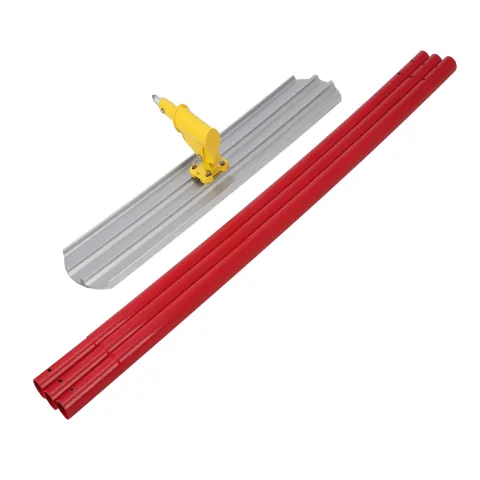
Bull float, 48 × 8 in
Levels a fresh slab and brings up the cream for finishing.
Check price
Garvee
Bull float, 48 × 8 in
Levels a fresh slab and brings up the cream for finishing.
Check price
 Garvee
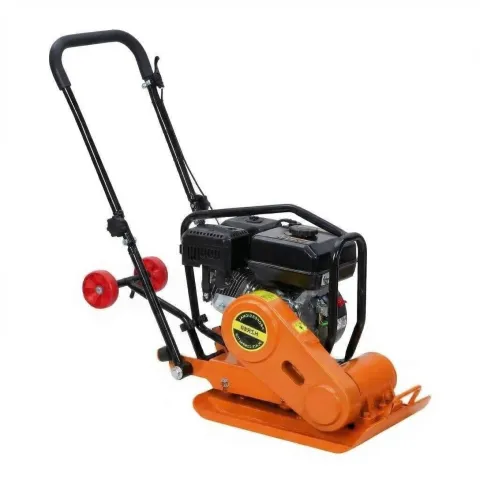
Plate compactor, 7 HP
Compacts gravel base in lifts so pavers and walls do not settle.
Check price
Garvee
Plate compactor, 7 HP
Compacts gravel base in lifts so pavers and walls do not settle.
Check price
 Plastic Place
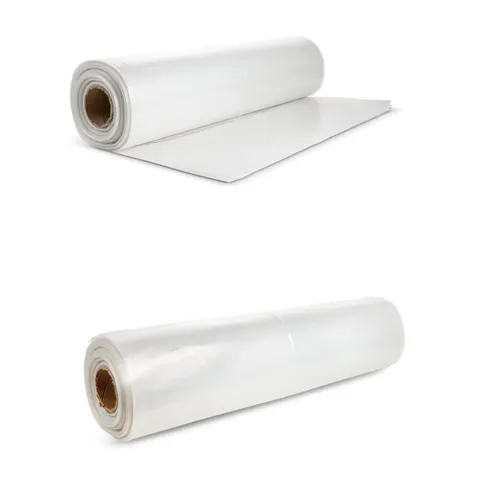
Poly sheeting, 6 mil, 10 × 100 ft
The vapor barrier under a slab on grade; lap the seams 6 in and tape them.
Check price
Plastic Place
Poly sheeting, 6 mil, 10 × 100 ft
The vapor barrier under a slab on grade; lap the seams 6 in and tape them.
Check price
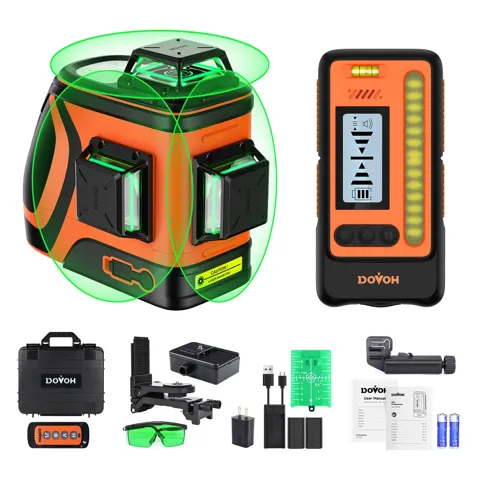 Dovoh
Outdoor laser level with receiver
The receiver finds the beam in full sun, so you can set forms, footings and base to grade alone.
Check price
Dovoh
Outdoor laser level with receiver
The receiver finds the beam in full sun, so you can set forms, footings and base to grade alone.
Check price
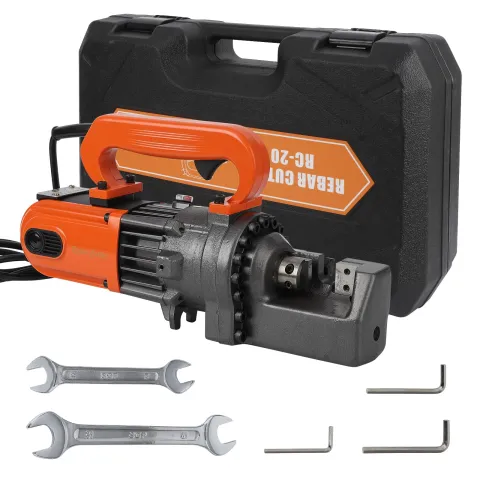 Garvee
Electric rebar cutter, up to #6
Cuts slab and footing bar to length in seconds, with no sparks.
Check price
Garvee
Electric rebar cutter, up to #6
Cuts slab and footing bar to length in seconds, with no sparks.
Check price
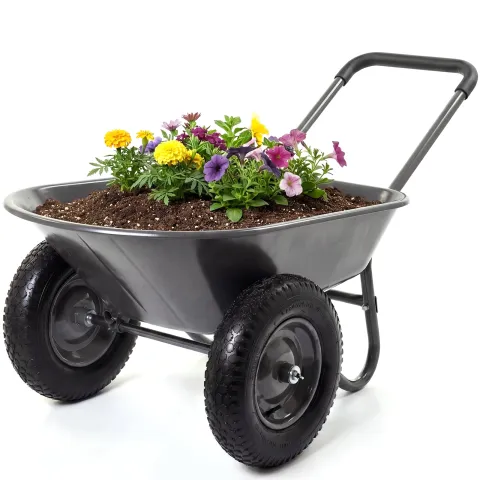 Garvee
Two-wheel wheelbarrow
Stable on two wheels for bagged concrete, block and soil.
Check price
Garvee
Two-wheel wheelbarrow
Stable on two wheels for bagged concrete, block and soil.
Check price
Not the tool you were after? Browse the whole range at Garvee, Plastic Place or Dovoh — the stores these picks come from.