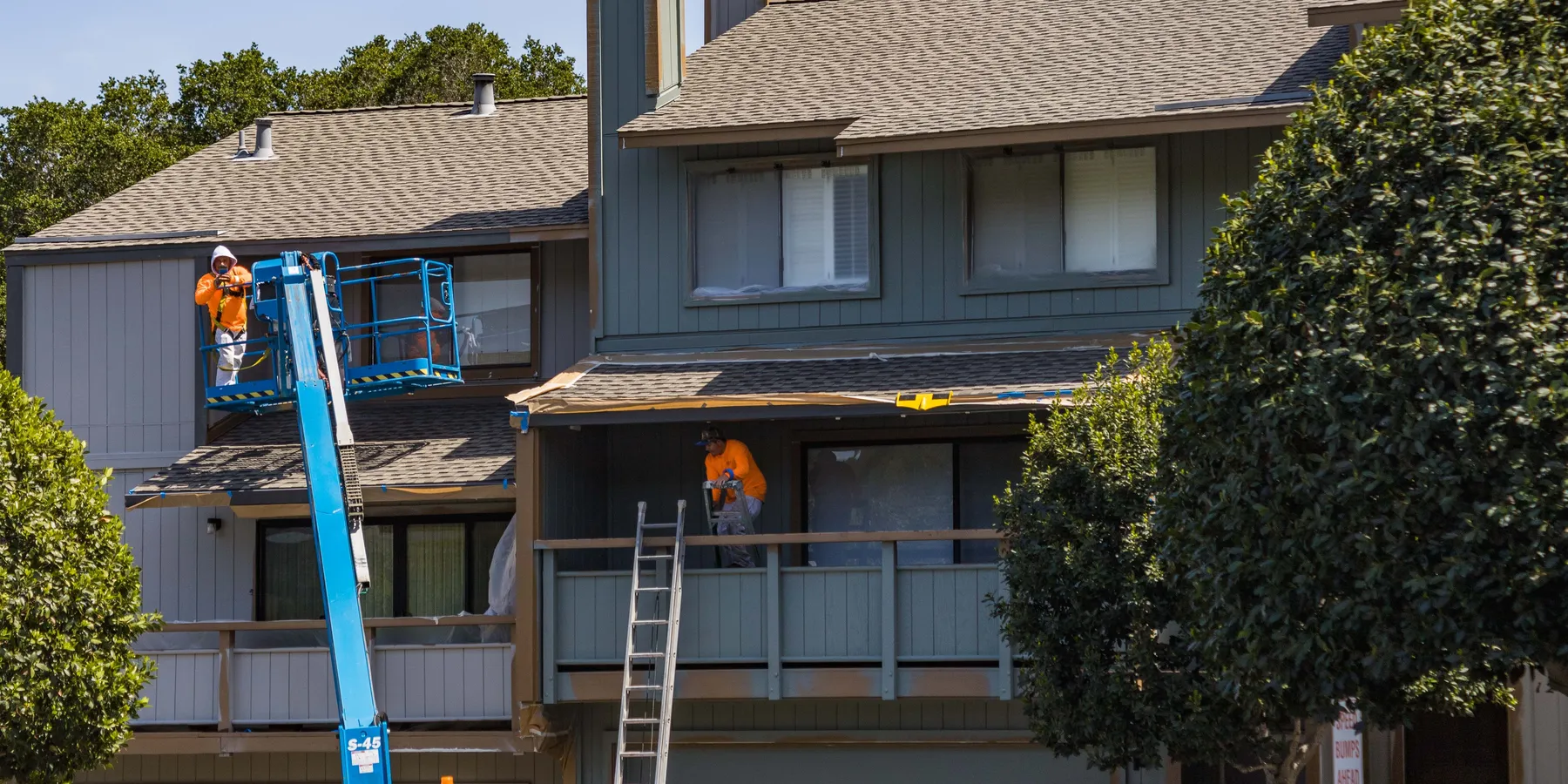
Exterior paint calculator
Exterior paint calculator:
gallons by siding type
A house has more wall than its footprint suggests — stories, gables, and a siding that may drink far more paint than a flat wall. This exterior house paint calculator measures the outside from the plan, takes out the windows and doors, and prices the paint, the primer and the trim separately.
Enter the houseOptional
What will it cost?
Every material the calculator worked out gets its own price. Each field starts at a typical US figure so you have something to work from — change any of them to what your own supplier charges.
These prices are approximate. They are national US retail figures, and what you actually pay varies with your region, your supplier, the season and how much you buy at once. Treat them as a starting point, not a quote — always price the job from your own supplier's current figures before you order.
Your prices
More in this series
The rest of the paint job
Each surface is bought as a different product. Work out the ones you are doing before the trip to the store.
- Paint Calculator Wall and ceiling paint, primer, rollers and tape
- Ceiling Paint Calculator Ceiling paint, stain-blocking primer, roller covers and tape
- Siding Calculator Squares of siding, panels and boxes of vinyl or planks of fiber cement, J-channel, starter strip, corner posts and nails
- Trim Paint Calculator Quarts of trim enamel and primer for baseboards, casing and crown by the linear foot, brushes, tape and caulk
- Cabinet Paint Calculator Quarts of cabinet enamel and primer for doors, drawers and frames, foam rollers, brushes and degreaser
- Fence Stain Calculator Gallons of stain or paint for both sides of a fence and its posts, by fence type and wood condition
- Primer Calculator Gallons of primer by surface and primer type, with the coats each surface needs, rollers and brushes
- Door Paint Calculator Quarts of enamel and primer for interior and front doors, one or both sides, with frames, brushes and foam rollers
- Paint Coverage per Gallon What a gallon covers on each surface, and gallons for common rooms
- Paint Sheen Chart Flat to gloss: durability, where each finish belongs, and the comparisons
- Paint Drying and Recoat Times Dry to the touch, recoat and cure times for latex, oil-based, primer, polyurethane and stain, and how weather changes them
- Spray Paint Drying Times Dry, handle, recoat and cure times for spray paint by type and surface, and how many cans a job takes
- How Many Coats of Paint and Primer Coats by color change and surface, how long to wait between coats, and coats of polyurethane and stain
- Primer Coats and Coverage How many coats of primer each surface needs, coverage per gallon by primer type, and how long each takes to dry
- Vinyl Siding Sizes and Squares What a square of siding is, vinyl panel lengths and pieces per box, Hardie and LP plank sizes, and trim per square
- Paint Can Sizes and Weights What a quart, gallon and 5 gallon bucket of paint weigh and how many square feet each one covers
Tools for the job
What makes this job easier
Tools and materials that suit this kind of job. These are affiliate links: if you buy through one, Renovimo may earn a commission at no extra cost to you. It never changes the figures on this page.
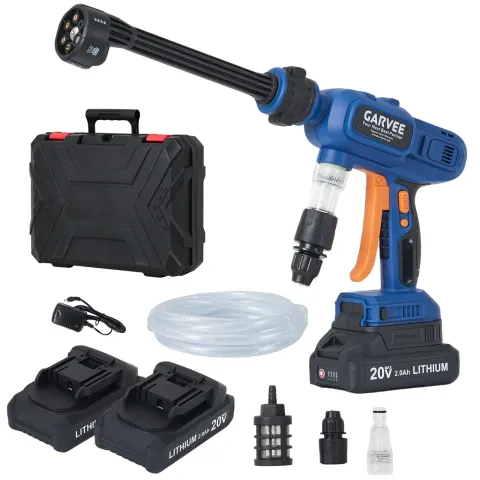 Garvee
Cordless pressure washer
Cleans a deck or patio before stain or sealer goes on.
Check price
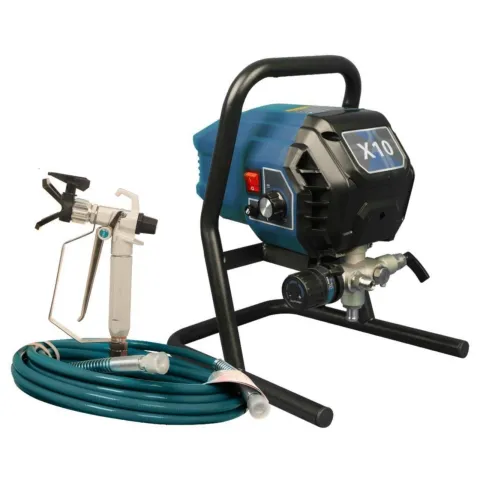 Garvee
Airless paint sprayer, 2900 PSI
Coats whole rooms, fences and siding far faster than a roller.
Check price
 Garvee
House painting kit, 25 pieces
Rollers, tray, pole and drop cloth for one room — the kit the gallon count assumes you already own.
Check price
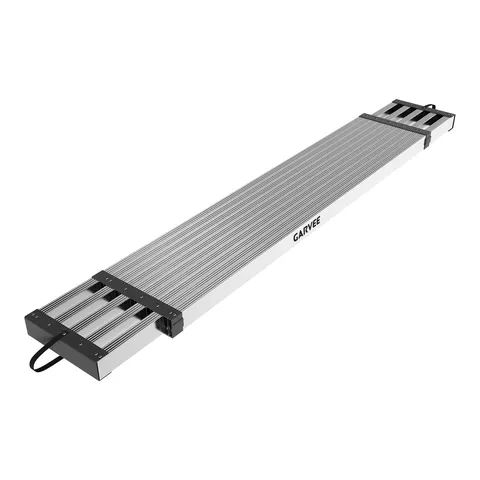 Garvee
Telescoping scaffold plank, 69–112 in
Spans two ladders for ceilings, crown and the top of the wall.
Check price
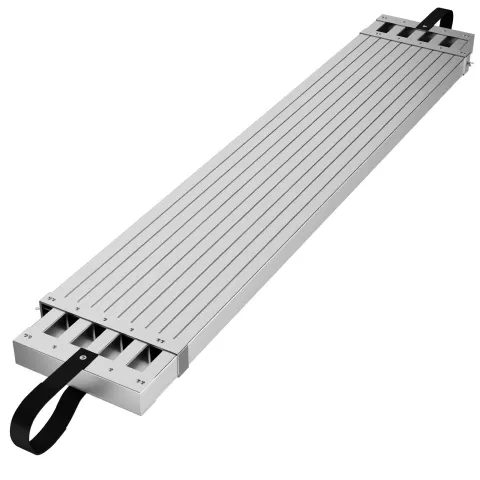 Garvee
Telescoping work platform
Spans two ladders or steps for ceilings, upper walls and stairwells.
Check price
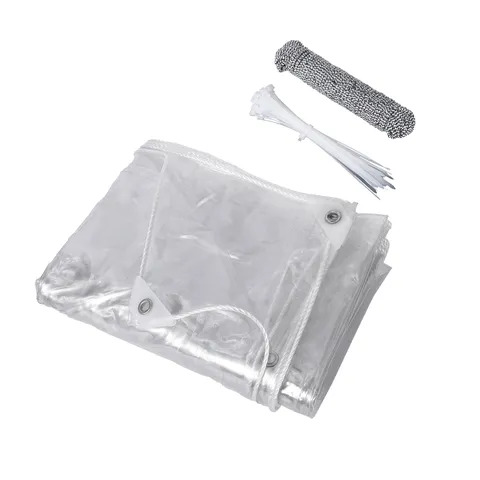 Garvee
Clear PVC tarp, 8 × 10 ft
Covers a fresh slab to cure, or keeps a lumber or drywall stack dry.
Check price
Not the tool you were after? Browse the whole range at Garvee — the store these picks come from.

Based on your result
What you'll need
Quantities update after every calculation. Rough siding wants a thicker nap and a sprayer saves days on stucco.
- Exterior paint
- Gallons for every coat, siding factor included; big jobs in 5-gallon pails
- Calculate above
- Exterior primer
- When you tick prime first
- —
- Trim enamel
- Quarts for casing, fascia and corners
- —
- Roller covers Amazon
- ¾ in nap or thicker on rough siding
- —
- Painter's tape Amazon
- Along the trim and the foundation line
- —
- Extension pole and ladder
- Second-story walls and gables
- 1 set
As an Amazon Associate I earn from qualifying purchases.
The maths
How much paint for the exterior of a house?
Perimeter times wall height times stories gives the walls; each gable is a triangle on top. Take out every window and door, then scale the rest by the siding — stucco, brick and block take nearly three times the paint of a smooth wall.
net wall = gross wall − windows − doors
surface = net wall × siding factor
gallons = ⌈ surface × coats ÷ 350 sq ft ⌉
trim quarts = ⌈ trim feet × width ÷ 12 × coats ÷ 350 × 4 ⌉
Exterior primer is counted at 250 sq ft per gallon, the low end for bare or chalky siding; the primer calculator sizes masonry primer and block filler at their own coverage.
- ×1.00
- vinyl, smooth
- ×1.15
- wood lap
- ×2.80
- stucco, brick, block
- 01
Measure the footprint
Length and width of the house at the foundation; the perimeter is twice their sum.
- 02
Multiply by the stories
Nine feet of wall per story is typical; measure yours at a corner.
- 03
Add the gables
Each gable end is a triangle: width times height, halved. Soffits and porch ceilings are not counted; measure them separately, length times depth.
- 04
Take out the openings
Every window, door and garage door at its own size — a garage door alone is over 100 sq ft.
- 05
Apply the siding factor
Stucco, brick and bare block cover about 125 sq ft a gallon against 350 on smooth siding, so they take 2.8 times the paint; wood lap siding takes about 15% more. This is the step a wall calculator cannot do.
- 06
Price the trim separately
Casing, fascia and corner boards are painted in a different product, in quarts, and taped off from the siding.
Coverage
Exterior paint coverage by siding type
| Siding | Factor | One gallon covers, one coat |
|---|---|---|
| Vinyl, fiber cement, smooth | ×1.00 | 350 sq ft |
| Wood lap or shingle | ×1.15 | 304 sq ft |
| Brick | ×2.80 | 125 sq ft |
| Concrete block | ×2.80 | 125 sq ft |
| Stucco | ×2.80 | 125 sq ft |
Stucco, brick and bare block follow the paint coverage per gallon guide, which puts them at 100–150 sq ft a gallon; the calculator uses the midpoint, 125. Smooth, previously painted masonry covers nearer 250–300, so treat these as the figures for textured or unpainted walls. Interior walls are on the paint calculator.
Good to know
Exterior paint calculator questions, answered
A single-story 2,000 sq ft house is roughly 40 × 50 ft — 180 ft of perimeter and about 1,620 sq ft of wall before gables and openings. With smooth siding and two coats that is about 10 gallons, two 5-gallon pails; stucco or brick pushes it to about 26. Enter your own footprint above rather than guessing from the floor area.
Double the wall area of the same footprint, so about 13 to 16 gallons for two coats on a 40 × 30 two-story with smooth siding, depending on the openings and gables — three 5-gallon pails covers most of them — and far more with stucco or brick. The calculator counts the stories and the gable triangles separately.
Yes, far more. Stucco, brick and bare block cover about 100–150 sq ft a gallon against 350 on smooth siding, and this calculator uses 125, so it counts 2.8 times the paint. Smooth, already-painted masonry covers better. A sprayer with back-rolling is the practical way to get paint into the texture.
Bare wood, chalking old paint, patched areas and a big color change all want a primer coat. Sound, clean paint in a similar color does not. Tick "prime first" and the primer is priced at its own, lower coverage.
Trim is thin and long, so it is bought in quarts. A typical house with 120 ft of casing and corner boards at 3½ in needs about a quart for two coats; wide fascia at 7¼ in more than doubles that.
Dry weather between 50 and 85 °F with no rain for 24 hours after — late spring and early fall in most of the US. Paint out of direct sun so the film does not skin before it levels.