Engineering calculator
Steps on a slope calculator
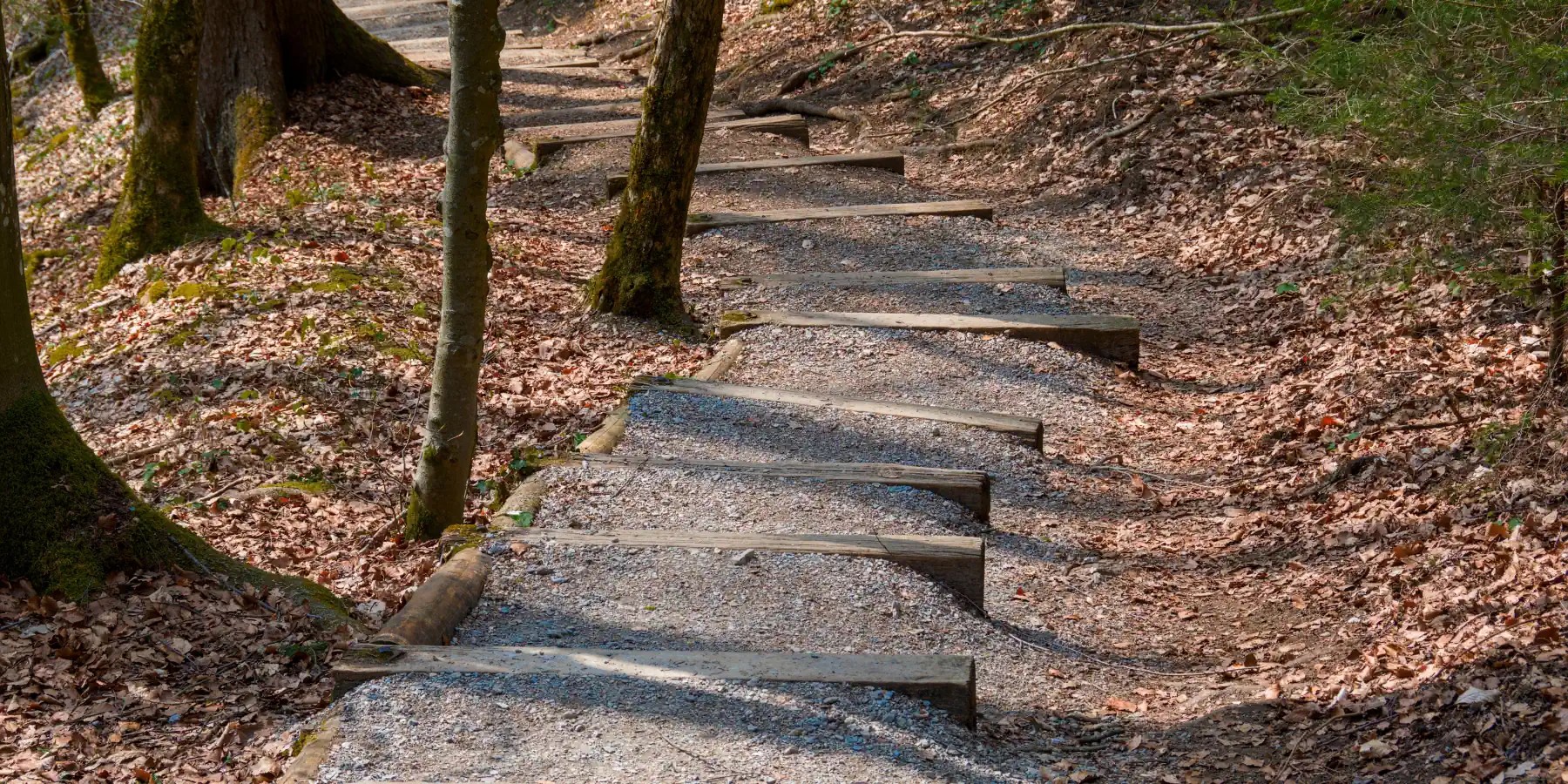
A slope that rises 3 ft over 7 ft takes six railroad tie steps: 7 in ties, each reaching 1 in below the tread in front of it, make 6 in risers and 14 in treads — twice the riser plus the tread is 26 in, a comfortable stride outdoors. Six 4 ft wide steps, boxed in at the sides, use 6 used 8 ft ties, 36 rebar pins 25 in long and 2½ cu ft of crushed stone. Enter your slope for the steps, a cut list, drawings and a 3D model.
Enter your slopeCode note. IRC 2021 R311.7 leaves out "stairways not within or serving a building, porch or deck" (Exception 1), so steps on a path across the yard are outside its stair rules — your building department still has the last word. Steps that lead to a door, a porch or a deck serve it: use the Stair Calculator or the Deck Stair Calculator. On house stairs the IRC asks for a handrail on four or more risers (R311.7.8); outdoors it is worth having too.
Tools for the job
What makes this job easier
Tools and materials that suit this kind of job. These are affiliate links: if you buy through one, Renovimo may earn a commission at no extra cost to you. It never changes the figures on this page.
 Garvee
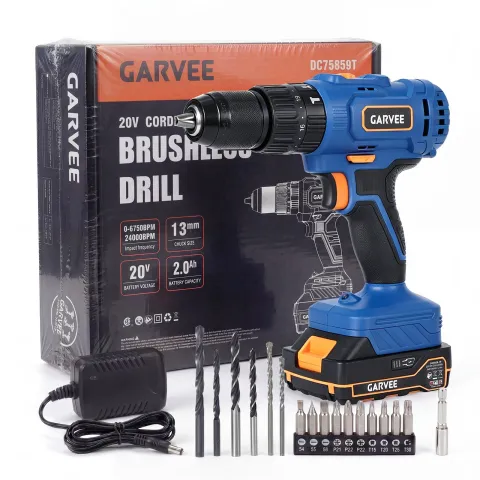
20V cordless hammer drill
Bores the holes through each timber for the rebar pins, with a long ½ or 9/16 in bit.
Check price
 Garvee
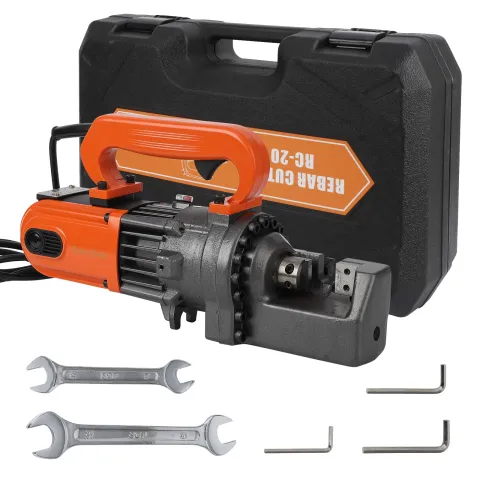
Electric rebar cutter, up to #6
Cuts #4 rebar to the pin length the calculator gives, square and without a grinder.
Check price
 Garvee
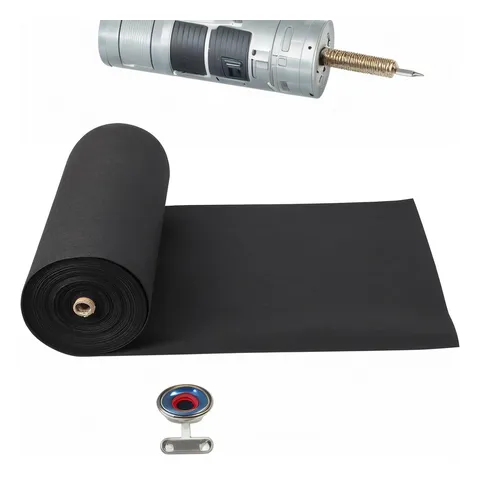
Geotextile landscape fabric, 4 × 50 ft
Lines each tread bed under the gravel so it does not sink into the soil.
Check price
 Garvee
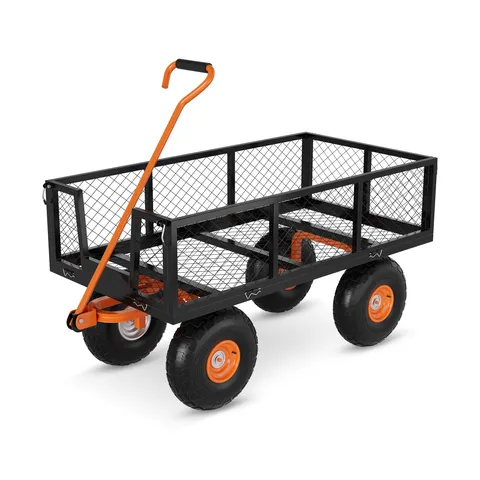
Steel garden cart, 900 lb
Moves timbers and bags of gravel up and down the slope.
Check price
 Garvee
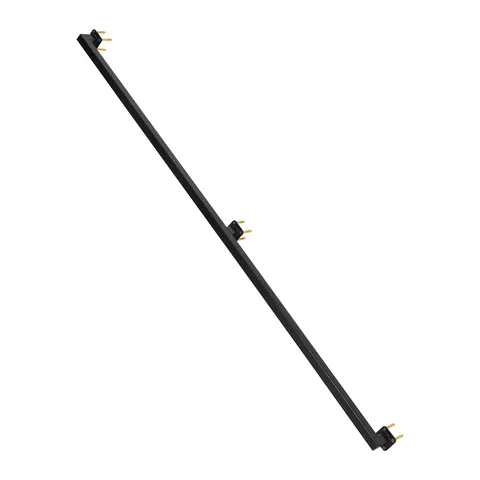
Stair handrail, 6 ft
A rail beside the steps; on four or more risers it is worth having outdoors too.
Check price
 Garvee
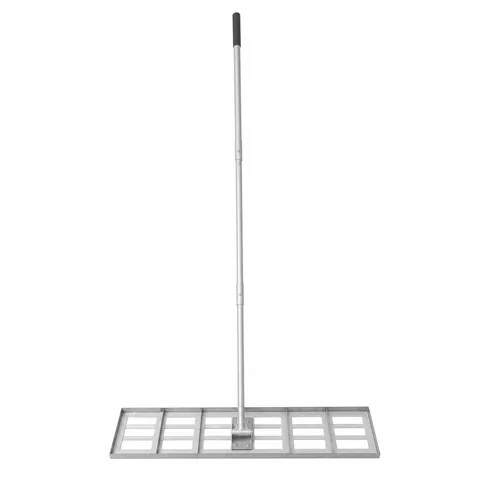
Lawn leveling rake, 30 in
Spreads and levels the gravel in each tread bed before it is tamped.
Check price
Not the tool you were after? Browse the whole range at Garvee — the store these picks come from.
Based on your result
What you'll need
Everything for timber steps on a slope as entered, from the bottom step up. Start at the toe: every timber above is set from the one below it. Railroad ties are heavy — about 190 lb for a used 8 ft 6 in tie, by the Railway Tie Association's figure — so plan on two people to carry and set each one.
- Timbers
- Railroad ties, landscape timbers or stone, cut to the plan in the list above
- Calculate above
- Rebar anchors Amazon
- #4 (½ in) through each riser and each return, 18 in into the soil
- Calculate above
- Landscape spikes Amazon
- Galvanized, joining each return to its riser timber
- Calculate above
- Tread fill
- Gravel or mulch behind each timber, to about 1 in below its top
- Calculate above
- Landscape fabric Amazon
- Non-woven geotextile under each tread bed, so the fill does not sink
- Calculate above
- Soil to dig
- The trenches and tread beds, measured in the ground
- Calculate above
- Hand tamper Amazon
- Firms the soil under each timber and the fill on top
- Calculate above
As an Amazon Associate I earn from qualifying purchases.
The maths
How this steps on a slope calculator works
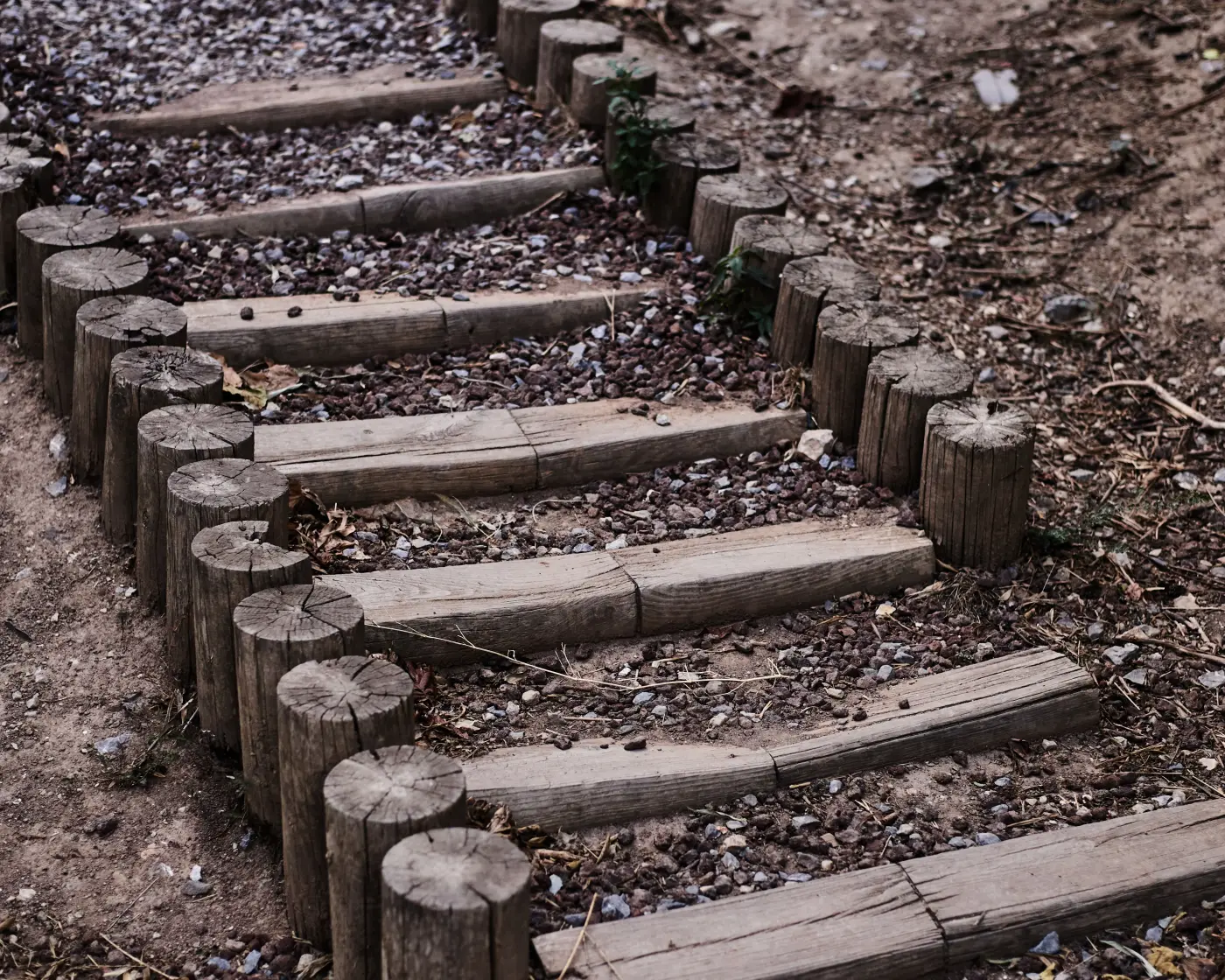
Landscaping steps on a slope are built one box at a time, and timber steps on a slope work the same with railroad ties or 6 × 6s: a timber across the front, a tread of gravel or mulch behind it filled to about 1 in below the timber's top. The steps climb from the toe of the slope, and the top step lands level with the upper grade. The timber you choose sets the steps; the slope sets the treads.
riser = rise ÷ steps
tread = run ÷ steps
embed = timber height − riser
stride = 2 × riser + tread, 24–27 in (26–27 outdoors)
rebar = timber height + 18 in; 2 a riser, 2 a return
fill = steps × (tread − timber depth) × width × depth
soil = ground above the timber and fill bottoms
- 01
Count the steps
A riser can be no taller than the timber that makes it, so the rise is divided by the timber's height and rounded up. 36 in over 7 in railroad ties is 5.1, so 6 steps of 6 in.
- 02
Split the run
The run divided by the steps gives each tread: 7 ft over 6 steps is 14 in. Twice the riser plus the tread should land between 24 and 27 in, the general rule of thumb; outdoors 26 or 27 in is the usual target. 2 × 6 + 14 = 26.
- 03
Pin every timber
With a 6 in riser, a 7 in tie reaches 1 in below the tread in front of it; when the rise divides evenly into whole timbers that is nothing at all, so it is the rebar, not the embed, that stops a timber kicking out. Each riser takes two #4 bars through holes 6 in from its ends and each return two more, 18 in into the soil: 36 pins of 25 in for these six boxed steps.
- 04
Fill the treads
Behind each timber the tread bed is the tread less the timber's depth: 14 − 9 = 5 in of crushed stone, 3 in deep, stopping about 1 in below the top of the tie, and 48 in wide. Six beds come to 2½ cu ft, five half-cubic-foot bags, on non-woven geotextile.
- 05
Dig what is in the way
The soil to dig is the ground above the bottom of every timber, return and tread bed, worked out step by step from the original slope line. Where the slope runs below a tread bed, soil goes back under it and is tamped; the rest is spare.
Good to know
Railroad tie steps on a slope: sizes, rebar and gravel
Measure the rise and run with stakes, a string and a line level, and divide them into steps as the calculator does. Start at the bottom: dig a level trench for the first tie so its top is one riser above the ground in front, set it, drill ½ in holes about 6 in from its ends and drive #4 rebar through them into the soil, flush with the top. If the steps are boxed, set a side timber (return) at each end, spike it to the tie and pin it with two more bars. Cut the slope behind level, line the bed with non-woven landscape fabric and fill with 3 in of crushed stone to about 1 in below the top of the tie. The next tie goes at the back of that tread, and so on up the slope.
Divide the rise by the height of your timber and round up. With 7 in railroad ties laid flat, a 36 in rise takes 6 steps of 6 in; with 6 × 6 landscape timbers, 5½ in high, it takes 7 steps of 5 1/8 in. The run decides the treads: over 7 ft, six steps give 14 in treads.
Outdoor steps are usually lower and deeper than indoor stairs: a rise of 5½ to 7 in and a tread of 12 to 18 in, with twice the riser plus the tread at about 26 or 27 in (Garden Gate). Keep every riser in a flight the same. For width, 36 in takes one person and about 4 ft is comfortable; go wider where two people will walk side by side.
Each timber reaches below the tread in front of it by its height less the riser — 1 in for 7 in ties with 6 in risers, and nothing at all when the rise divides evenly into whole timbers. That embed keeps the line neat, but it is the rebar that stops a timber kicking out: ½ in (#4) bars about 6 in from each end of every riser and two through each side timber, long enough to go through the timber and 18 in into the soil — 25 in for a railroad tie, 23½ in for a 6 × 6. Firm or rocky ground holds with less; soft fill wants more.
The tread bed is the tread less the timber's depth, times the step width, times the fill depth. With 14 in treads behind 9 in ties that is 5 × 48 × 3 in, about 0.42 cu ft a step — six steps take 2½ cu ft, five 0.5 cu ft bags or about 260 lb of #57 stone. Fill to about 1 in below the top of the timber, so the stone stays on the tread, and tamp it.
The timber caps the riser, so a steep slope shows up as short treads. Once a tread drops under 12 in, or twice the riser plus the tread under 24 in, the steps are too steep to walk comfortably. With 7 in ties that is at most 7 in of rise per 12 in of run — 58% (30°) — when the rise divides into whole 7 in risers; a 3 ft rise needs six 6 in risers and so at least 6 ft of run, 50% or 1 in 2. Steeper than that, angle the path across the slope, add a turn, or terrace the bank with a retaining wall. At the other end, a walk no steeper than 1 in 20 needs no steps at all.
Pressure-treated landscape timbers rated for ground contact are the safer choice. Used railroad ties are treated with creosote, and the EPA says creosote products are not available to homeowners; it notes that creosote-treated ties are sometimes recycled as landscaping timbers, that this reuse is not something it regulates under pesticide laws, and that treated wood should never be burned at home. NMSU Extension goes further: it advises that ties should not be used in landscapes at all and that vegetables should not be grown near them, quoting the EPA that there are no approved uses of creosote to treat wood for residential use. If you use ties anyway, keep them away from food beds and wear gloves and a dust mask when cutting them.
IRC 2021 R311.7 leaves out stairways not within or serving a building, porch or deck, so steps on a garden path are usually outside its stair rules — but your building department has the last word, and steps that lead to a door, a porch or a deck serve it and are a stairway. On house stairs the IRC asks for a handrail on four or more risers (R311.7.8); outdoors one is worth fitting too, especially where the steps are steep or used in the dark.